


Outline
- Introduction
- Understanding ThoughtSpot
- How ThoughtSpot Transforms Data Analytics
- Core Technologies Behind ThoughtSpot
- Benefits of Using ThoughtSpot
- Real-World Applications Across Industries
- Alternatives to ThoughtSpot
- Conclusion
Introduction
In the modern business landscape, data is the cornerstone of decision-making. Organizations rely on analytics platforms to uncover insights, predict trends, and drive growth. ThoughtSpot stands out as a leader in this field, offering a revolutionary approach that combines artificial intelligence (AI) and natural language search to make data analytics accessible to everyone. Founded in 2012, ThoughtSpot has grown rapidly, attracting major clients such as Walmart, Cisco, and Capital One. Its mission is simple yet powerful: to enable every employee, regardless of technical expertise, to explore and analyze data effortlessly.
Understanding ThoughtSpot
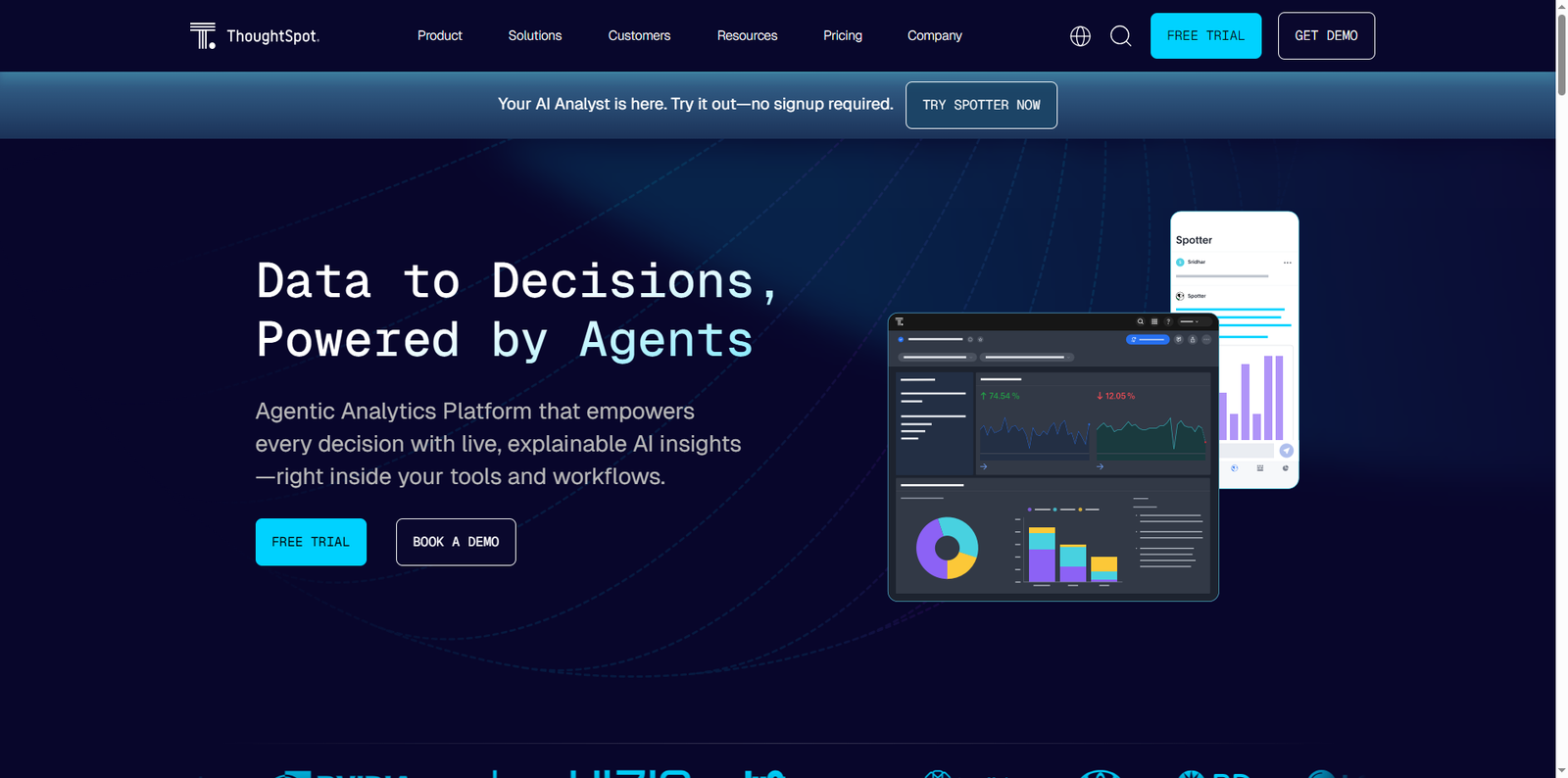
ThoughtSpot is a cloud-based analytics platform designed to simplify the process of data exploration. Unlike traditional business intelligence (BI) tools that require complex queries or technical expertise, ThoughtSpot allows users to ask questions in plain English and receive instant visual insights. This search-driven analytics model democratizes data access, empowering business users to make faster, data-backed decisions without relying heavily on data analysts.
According to Gartner’s 2023 Magic Quadrant for Analytics and Business Intelligence Platforms, ThoughtSpot was recognized as a visionary for its innovative use of AI and user-friendly interface. The platform integrates seamlessly with major cloud data warehouses such as Snowflake, Google BigQuery, and Amazon Redshift, enabling organizations to analyze massive datasets in real time.
How ThoughtSpot Transforms Data Analytics
Traditional BI tools often depend on pre-built dashboards and static reports, which can limit flexibility. ThoughtSpot changes this paradigm by allowing users to interact directly with data through search queries. For example, a marketing manager can type “total sales by region for Q2 2024” and instantly receive a dynamic visualization. This intuitive experience eliminates bottlenecks and accelerates decision-making.
Search-Driven Analytics
At the heart of ThoughtSpot’s innovation is its search-driven analytics capability. It uses an AI-powered engine that interprets natural language queries and translates them into complex SQL commands behind the scenes. This means users don’t need to understand database structures or coding languages to extract insights.
AI-Powered Insights
ThoughtSpot’s AI engine, known as SpotIQ, automatically identifies patterns, anomalies, and trends in data. It can highlight unexpected insights, such as sudden changes in customer behavior or emerging sales opportunities. This proactive approach helps organizations stay ahead of the curve by uncovering insights that might otherwise go unnoticed.
Core Technologies Behind ThoughtSpot
ThoughtSpot’s architecture is built for scalability, speed, and simplicity. It leverages several advanced technologies to deliver its powerful analytics capabilities:
- In-memory computation: Enables rapid query processing and real-time analytics.
- AI and machine learning: Powers automated insights and predictive analytics.
- Natural language processing (NLP): Allows users to interact with data using conversational language.
- Cloud-native design: Ensures seamless integration with major cloud data platforms.
These technologies work together to create a responsive, user-friendly experience that scales with organizational needs. ThoughtSpot’s integration with tools like Microsoft Excel, Salesforce, and Tableau further enhances its versatility within enterprise ecosystems.
Benefits of Using ThoughtSpot
Organizations adopting ThoughtSpot experience a range of benefits that extend beyond traditional analytics. Some of the most significant advantages include:
- Democratized data access: Empowers non-technical users to explore data independently.
- Faster decision-making: Reduces reliance on IT teams for report generation.
- Enhanced collaboration: Enables teams to share insights and dashboards effortlessly.
- Scalability: Supports growing data volumes without compromising performance.
- AI-driven discovery: Automatically surfaces hidden insights and trends.
These benefits contribute to improved operational efficiency and a stronger data-driven culture within organizations.
Real-World Applications Across Industries
ThoughtSpot’s versatility makes it suitable for a wide range of industries. Here are some examples of how different sectors leverage its capabilities:
Retail
Retailers use ThoughtSpot to analyze sales performance, customer preferences, and inventory trends. By enabling store managers to query data directly, companies can optimize product assortments and improve customer satisfaction. For instance, Walmart has utilized ThoughtSpot to empower its employees with self-service analytics, resulting in faster insights and better business outcomes.
Financial Services
Banks and financial institutions rely on ThoughtSpot to monitor risk, detect fraud, and analyze customer portfolios. The platform’s AI-driven insights help identify unusual transactions and improve compliance monitoring. By integrating with existing data systems, financial analysts can make more informed investment and lending decisions.
Healthcare
In healthcare, ThoughtSpot assists organizations in analyzing patient outcomes, resource utilization, and operational efficiency. Hospitals can use it to track key metrics such as patient wait times, treatment success rates, and staff performance, leading to improved care delivery and cost management.
Manufacturing
Manufacturers use ThoughtSpot to monitor production efficiency, supply chain performance, and quality control metrics. Real-time analytics enable quick responses to disruptions, reducing downtime and optimizing resource allocation.
Alternatives to ThoughtSpot
While ThoughtSpot offers a unique combination of AI and search-driven analytics, several other tools provide robust business intelligence capabilities. Below is a comparison table of popular alternatives:
| Tool Name | Description |
|---|---|
| Tableau | A leading data visualization platform known for its interactive dashboards and strong community support. |
| Power BI | Microsoft’s analytics tool that integrates seamlessly with Office 365 and Azure for enterprise reporting. |
| Looker | A Google Cloud-based platform focusing on data modeling and embedded analytics. |
| Qlik Sense | Offers associative data exploration and AI-driven insights for dynamic analytics experiences. |
Each of these tools has its strengths, and the choice depends on organizational needs, data infrastructure, and user preferences. However, ThoughtSpot’s focus on natural language search and AI-driven insights sets it apart in terms of accessibility and innovation.
Conclusion
ThoughtSpot has redefined how organizations interact with data. By merging AI, search-driven analytics, and cloud scalability, it empowers users across all levels to make data-informed decisions quickly and confidently. Its intuitive interface and powerful backend technologies bridge the gap between technical complexity and business usability, fostering a truly data-driven culture.
As businesses continue to generate vast amounts of data, the need for accessible analytics solutions will only grow. ThoughtSpot’s approach—centered on simplicity, intelligence, and speed—positions it as a frontrunner in the evolving analytics landscape. Whether for retail optimization, financial analysis, or healthcare improvement, ThoughtSpot provides the tools and intelligence needed to transform raw data into actionable insights.
In a world where data is the new currency, ThoughtSpot ensures that every decision-maker has the power to turn information into impact.