




Outline
- Introduction
- What is Great Expectations?
- Why Data Quality Matters in Modern Workflows
- How Great Expectations Works
- Core Components of Great Expectations
- Use Cases and Real-World Applications
- Integration with Data Ecosystems
- Alternatives to Great Expectations
- Conclusion
Introduction
In today’s data-driven world, organizations rely heavily on accurate, reliable, and consistent data to make critical business decisions. However, as data pipelines become increasingly complex, ensuring data quality has become a major challenge. Great Expectations (GX) has emerged as one of the most trusted open-source frameworks for data validation and quality assurance. It empowers data teams to detect errors early, maintain governance, and build confidence in their analytics and AI systems.
What is Great Expectations?
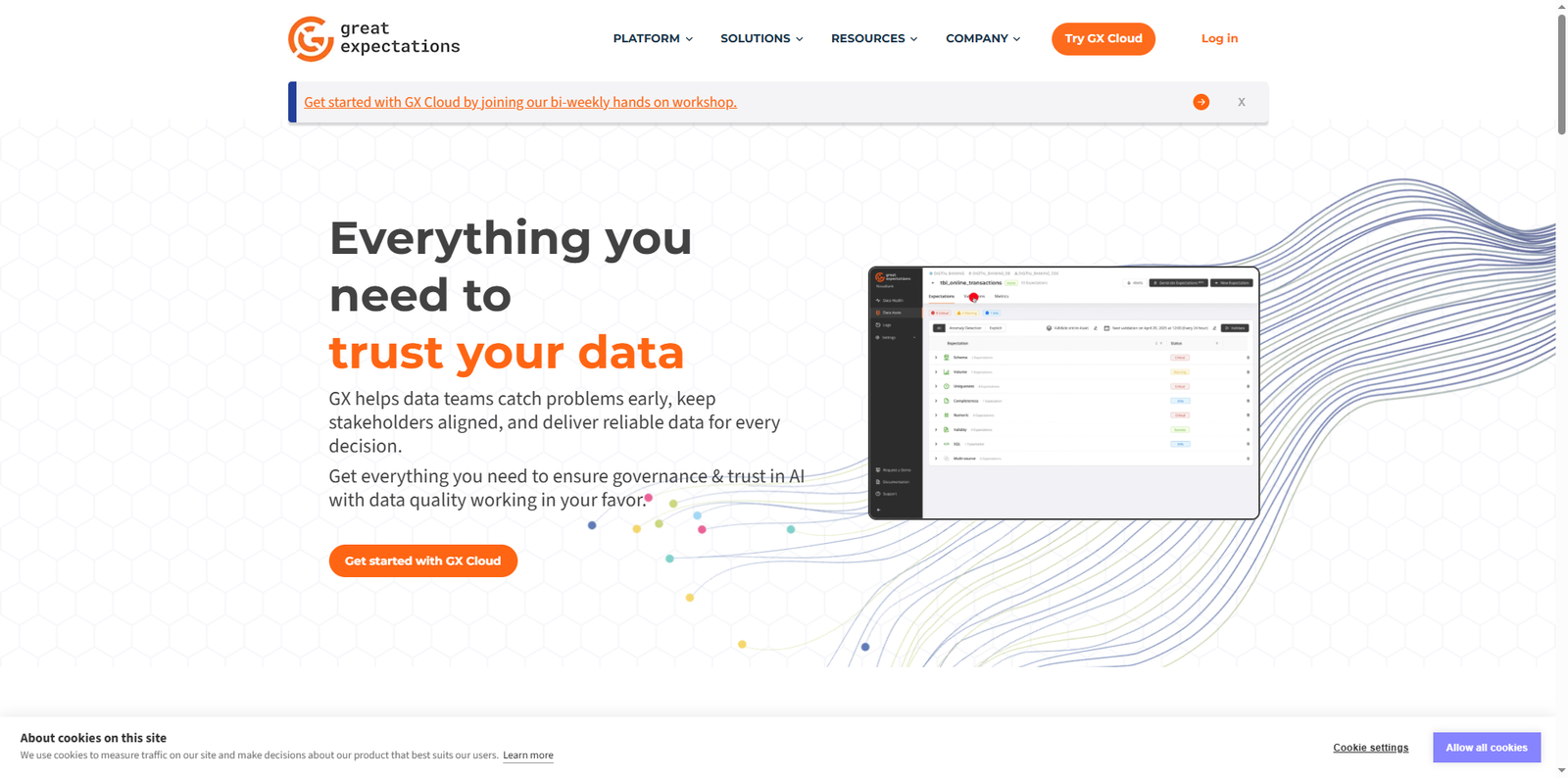
Great Expectations is an open-source data quality framework designed to help teams validate, document, and monitor their data. It provides a shared language for data quality, enabling collaboration between technical and business stakeholders. Originally developed by the open-source community, Great Expectations has evolved into a comprehensive platform that supports both local and cloud-based environments.
According to the official documentation, Great Expectations enables users to “catch problems early, keep stakeholders aligned, and deliver reliable data for every decision.” It integrates seamlessly with modern data stacks, including cloud warehouses, ETL tools, and machine learning pipelines.
Why Data Quality Matters in Modern Workflows
Data quality is the foundation of trustworthy analytics and AI. Poor data quality can lead to inaccurate insights, flawed models, and misguided decisions. A 2023 Gartner report estimated that organizations lose an average of $12.9 million annually due to poor data quality. As data volumes grow exponentially, manual validation becomes impractical, making automated tools like Great Expectations essential.
Ensuring data quality helps organizations:
- Improve decision-making accuracy
- Enhance compliance and governance
- Reduce operational costs from data errors
- Build trust among stakeholders
How Great Expectations Works
Great Expectations operates by defining “expectations,” which are essentially data tests that describe what valid data should look like. These expectations can be applied across datasets to validate schema, data types, ranges, and relationships. The tool automatically generates data documentation and validation reports, making it easier to share results across teams.
Key Workflow Steps
- Define Expectations: Create rules that describe valid data conditions, such as “no null values in customer_id.”
- Validate Data: Run validations against data sources to detect anomalies or inconsistencies.
- Generate Data Docs: Automatically produce human-readable documentation summarizing validation results.
- Monitor and Alert: Integrate with alerting systems to notify teams when data quality issues arise.
This process ensures that data quality checks become an integral part of the data lifecycle, from ingestion to production monitoring.
Core Components of Great Expectations
Great Expectations is built around a modular architecture that allows flexibility and scalability. Its main components include:
1. Expectations
These are declarative statements that define what “good” data looks like. For example, an expectation might assert that a column must contain unique values or that numerical data falls within a specific range.
2. Data Context
The Data Context acts as the central configuration hub, managing expectations, data sources, and validation results. It ensures consistency across environments and projects.
3. Checkpoints
Checkpoints are used to bundle and execute multiple validations at once. They can be scheduled or triggered automatically within CI/CD pipelines.
4. Data Docs
Data Docs provide a visual representation of validation results. These HTML-based reports make it easy for both technical and non-technical users to understand data quality status.
Use Cases and Real-World Applications
Great Expectations is widely adopted across industries, from finance to healthcare and e-commerce. Its flexibility allows teams to implement data quality checks at various stages of their workflows.
Common Use Cases
- ETL Validation: Ensuring that data transformations do not introduce errors or inconsistencies.
- Data Warehouse Monitoring: Continuously validating data stored in platforms like Snowflake or BigQuery.
- Machine Learning Pipelines: Verifying training data quality to prevent model bias or drift.
- Compliance and Governance: Supporting regulatory requirements by maintaining transparent data validation logs.
Example: Financial Data Integrity
In financial services, even minor data discrepancies can have significant consequences. A leading fintech company used Great Expectations to validate transaction data across multiple pipelines, reducing data-related incidents by 40% within six months.
Integration with Data Ecosystems
Great Expectations integrates seamlessly with modern data tools and platforms, allowing teams to embed validation directly into their existing workflows. It supports popular data frameworks such as:
- Apache Airflow
- dbt
- Snowflake
- Google BigQuery
- Amazon Redshift
- Databricks
Additionally, Great Expectations can be integrated with CI/CD systems like GitHub Actions or Jenkins, enabling automated validation during data deployment. This ensures that data quality checks are not an afterthought but a continuous process.
Cloud and Open-Source Flexibility
Great Expectations offers both open-source and cloud-based options. The open-source version (GX Core) is ideal for teams that want full control over their infrastructure, while GX Cloud provides a managed environment with built-in collaboration and observability tools. Both options share the same validation logic, ensuring consistency across environments.
Alternatives to Great Expectations
While Great Expectations is a leader in open-source data validation, several other tools also help ensure data quality and reliability. Below is a comparison of some popular alternatives:
| Tool Name | Description |
|---|---|
| Monte Carlo | An observability platform that monitors data pipelines for anomalies and downtime using machine learning. |
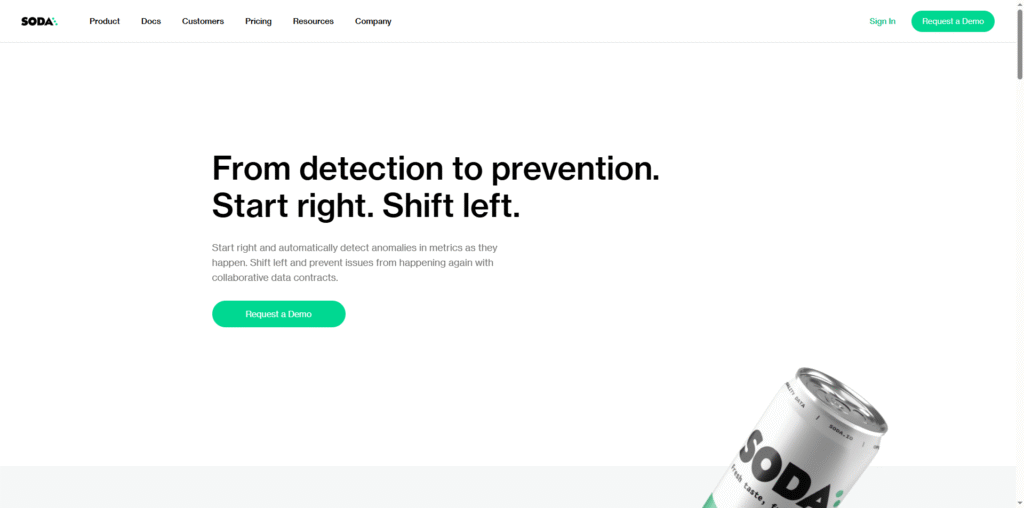
| Soda | Provides data quality monitoring and testing with a focus on collaboration between data engineers and analysts. |
| Validio | Offers real-time data validation and monitoring for streaming and batch data pipelines. |
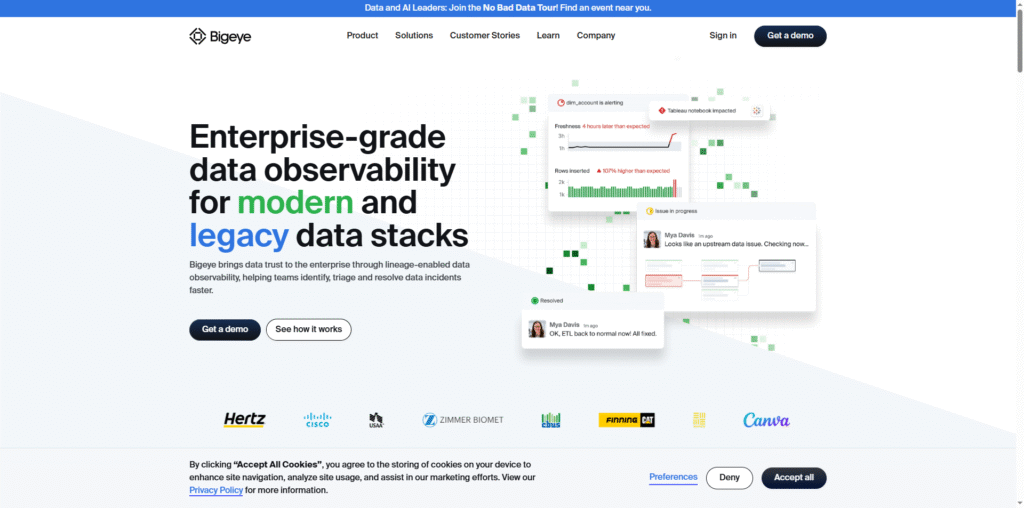
| Bigeye | Automates data quality monitoring and anomaly detection across modern data warehouses. |
Conclusion
Great Expectations has become the open-source standard for data quality testing, helping organizations build trust in their data assets. Its flexible architecture, strong community support, and seamless integration with modern data ecosystems make it a powerful choice for teams seeking to automate data validation and governance. By embedding Great Expectations into data workflows, teams can catch issues early, maintain transparency, and ensure that every decision is backed by reliable data.
As data continues to drive innovation across industries, tools like Great Expectations will remain essential for maintaining the integrity and reliability of the information that powers our digital world.