



Outline
- Introduction
- Understanding Synthetic Data
- How Tonic.ai Works
- Benefits of Using Tonic.ai
- Use Cases Across Industries
- Comparison with Alternative Tools
- Challenges and Considerations
- Future of Synthetic Data
- Conclusion
Introduction
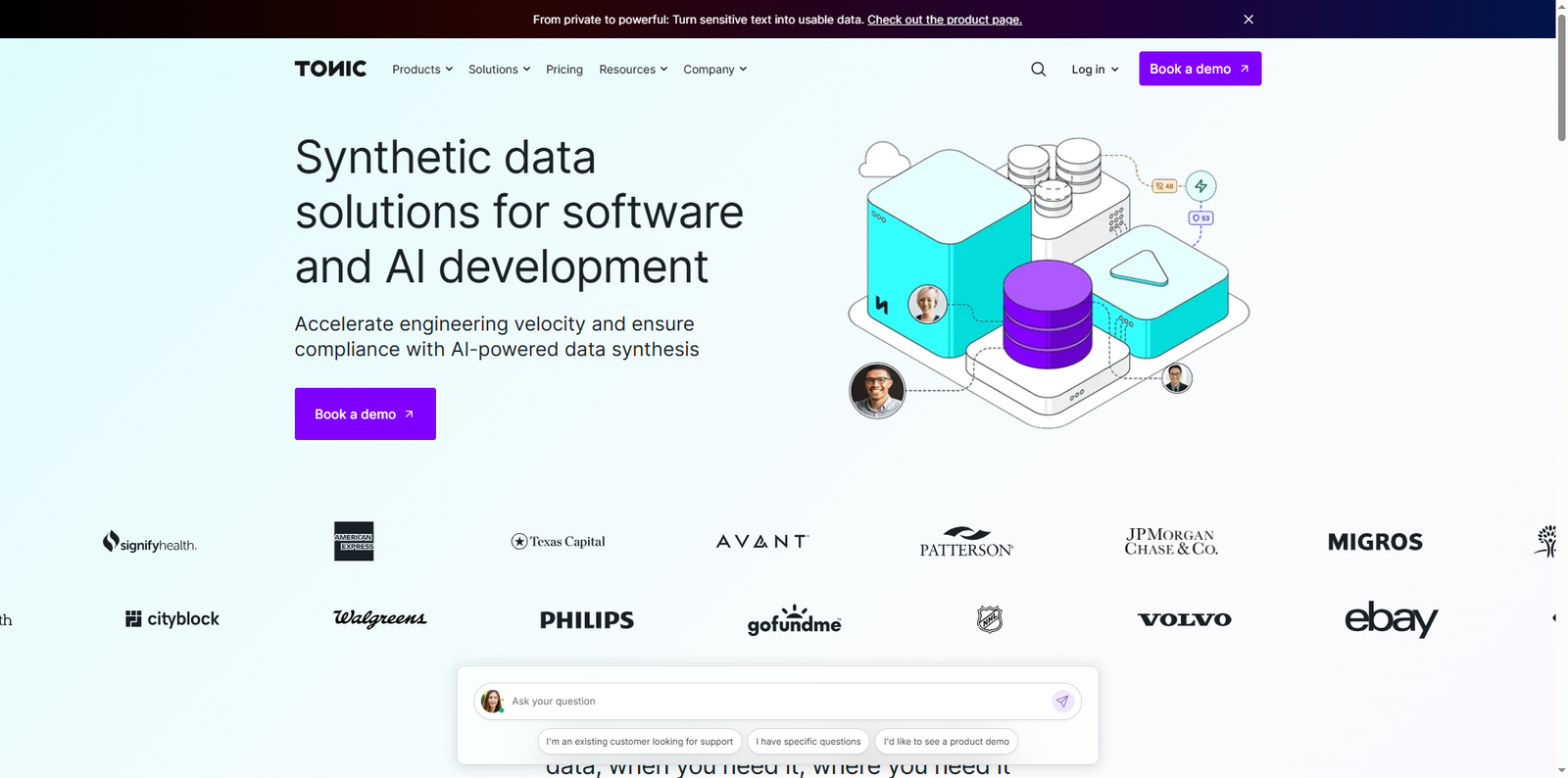
In the era of data-driven innovation, organizations face a growing challenge: how to leverage data for development and testing while maintaining privacy and compliance. Tonic.ai has emerged as a leading solution, providing synthetic data that mirrors real-world datasets without exposing sensitive information. Founded in 2018, Tonic.ai empowers engineering and data science teams to accelerate development cycles while ensuring data security and regulatory adherence.
Understanding Synthetic Data
Synthetic data refers to artificially generated data that replicates the statistical properties and structure of real data. Unlike anonymized or masked data, synthetic data is created using algorithms that learn from original datasets and produce entirely new, non-identifiable records. According to Gartner, by 2024, 60% of data used for AI and analytics projects will be synthetically generated, underscoring its growing importance in modern data ecosystems.
Why Synthetic Data Matters
- Privacy Protection: It eliminates the risk of exposing personally identifiable information (PII).
- Regulatory Compliance: Helps organizations comply with GDPR, HIPAA, and other data protection laws.
- Scalability: Enables teams to generate large volumes of realistic data for testing and training.
- Innovation Enablement: Facilitates AI model development without compromising data integrity.
How Tonic.ai Works
Tonic.ai uses advanced machine learning algorithms to analyze real datasets and produce synthetic versions that maintain the same statistical relationships and data distributions. The platform integrates seamlessly with popular databases and data warehouses, allowing teams to generate synthetic data directly from their existing infrastructure.
Data Generation Process
- Data Profiling: Tonic.ai scans the original dataset to understand its schema, data types, and relationships.
- Model Training: It trains generative models to capture the underlying patterns of the data.
- Data Synthesis: The system generates new, artificial records that preserve the statistical fidelity of the original dataset.
- Validation: Synthetic data is validated to ensure accuracy, utility, and compliance with privacy standards.
Integration and Workflow
Tonic.ai integrates with major data platforms such as PostgreSQL, MySQL, and Snowflake, making it easy for developers to incorporate synthetic data generation into their CI/CD pipelines. The platform also supports APIs for automation, enabling continuous data synthesis as part of agile development workflows.
Benefits of Using Tonic.ai
Organizations adopting Tonic.ai experience significant improvements in development speed, data security, and operational efficiency. By replacing sensitive production data with synthetic equivalents, teams can test applications, train AI models, and conduct analytics without the risk of data breaches.
Key Advantages
- Enhanced Data Privacy: Synthetic data ensures that no real user information is exposed during testing or analysis.
- Faster Development Cycles: Developers can access realistic datasets instantly, reducing dependency on production data.
- Improved Collaboration: Teams across departments can share synthetic datasets freely without compliance concerns.
- Cost Efficiency: Reduces the overhead associated with data governance and anonymization processes.
Use Cases Across Industries
Tonic.ai’s versatility makes it applicable across multiple sectors, from healthcare to finance and technology. Each industry benefits from synthetic data in unique ways, enabling innovation while maintaining strict privacy standards.
Healthcare
In healthcare, synthetic data allows researchers to develop predictive models and test healthcare applications without exposing patient information. Hospitals and research institutions use synthetic datasets to simulate clinical scenarios, improving diagnostic accuracy and patient outcomes.
Finance
Financial institutions use Tonic.ai to generate synthetic transaction data for fraud detection and risk modeling. This approach enables banks to test algorithms under realistic conditions while complying with data protection regulations.
Technology and Software Development
Software companies leverage synthetic data to test applications under diverse conditions. By using Tonic.ai, developers can replicate complex data environments, identify bugs, and optimize performance before deployment.
Public Sector
Government agencies utilize synthetic data to share insights and collaborate on policy research without compromising citizen privacy. This fosters transparency and innovation in public data initiatives.
Comparison with Alternative Tools
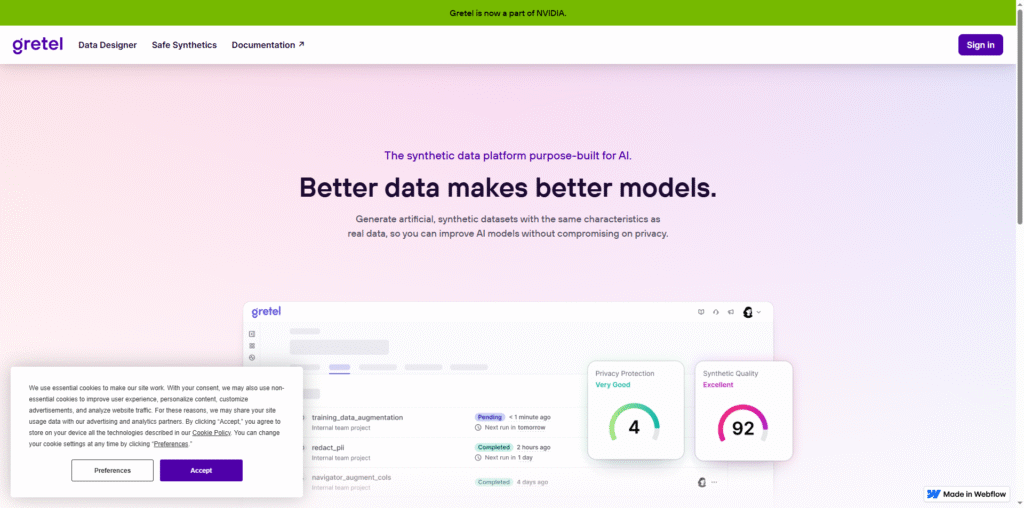
While Tonic.ai leads the synthetic data landscape, several other platforms also offer data generation and privacy solutions. The table below compares Tonic.ai with notable alternatives based on their focus areas and capabilities.
| Tool Name | Primary Focus | Best For |
|---|---|---|
| Mostly AI | AI-driven synthetic data generation | Enterprises seeking scalable, privacy-safe data for analytics |
| Gretel.ai | Developer-focused data synthesis and anonymization | Engineering teams building AI and ML models |
| Synthesized.io | Automated data generation and quality assurance | Organizations requiring compliance-ready datasets |
| Datomize | Privacy-preserving synthetic data for testing | Financial and healthcare institutions |
Challenges and Considerations
Despite its advantages, synthetic data generation is not without challenges. Ensuring that synthetic datasets retain analytical value while maintaining privacy can be complex. Overfitting during model training may lead to synthetic data that inadvertently reveals patterns from the original dataset. Therefore, organizations must implement rigorous validation and monitoring processes.
Ethical and Compliance Factors
- Bias Mitigation: Synthetic data should be carefully evaluated to avoid reproducing biases present in the source data.
- Transparency: Stakeholders must understand how synthetic data is generated and validated.
- Regulatory Alignment: Compliance with evolving data protection laws remains essential.
Future of Synthetic Data
The future of synthetic data looks promising as AI and machine learning technologies continue to evolve. According to a 2023 report by McKinsey, companies using synthetic data for AI development can reduce time-to-market by up to 40%. As data privacy regulations tighten globally, synthetic data will become a cornerstone of responsible innovation.
Emerging Trends
- AI-Augmented Data Generation: Integration of generative AI models like GANs and diffusion models for higher fidelity data.
- Federated Learning Integration: Combining synthetic data with federated learning to enhance privacy-preserving AI training.
- Cross-Industry Adoption: Expansion into sectors such as retail, logistics, and education.
- Automated Compliance: Tools like Tonic.ai will increasingly embed compliance checks into data generation workflows.
Conclusion
Tonic.ai is redefining how organizations approach data privacy, testing, and AI development. By providing high-quality synthetic data that mirrors real-world datasets, it enables teams to innovate faster while maintaining strict compliance with privacy regulations. As industries continue to embrace digital transformation, synthetic data will play a pivotal role in bridging the gap between innovation and data protection. With Tonic.ai leading the way, the future of secure, scalable, and ethical data-driven development looks brighter than ever.