


Outline
- Introduction
- Understanding Talend and Its Integration with Qlik
- Core Capabilities of Talend
- How Qlik Talend Enhances Data Integration
- Deployment Flexibility: Cloud, On-Premises, and Hybrid
- AI-Augmented and No-Code Pipelines
- Data Quality and Governance
- Alternatives to Talend
- Conclusion
Introduction
In today’s data-driven world, organizations rely on robust data integration and management platforms to ensure that their information is accurate, accessible, and actionable. Talend, now part of Qlik, has become a leading solution for enterprises seeking to unify their data integration, transformation, and governance processes. With the combined power of Qlik and Talend, businesses can create AI-ready, trusted data pipelines that fuel analytics, machine learning, and decision-making across the enterprise.
Understanding Talend and Its Integration with Qlik
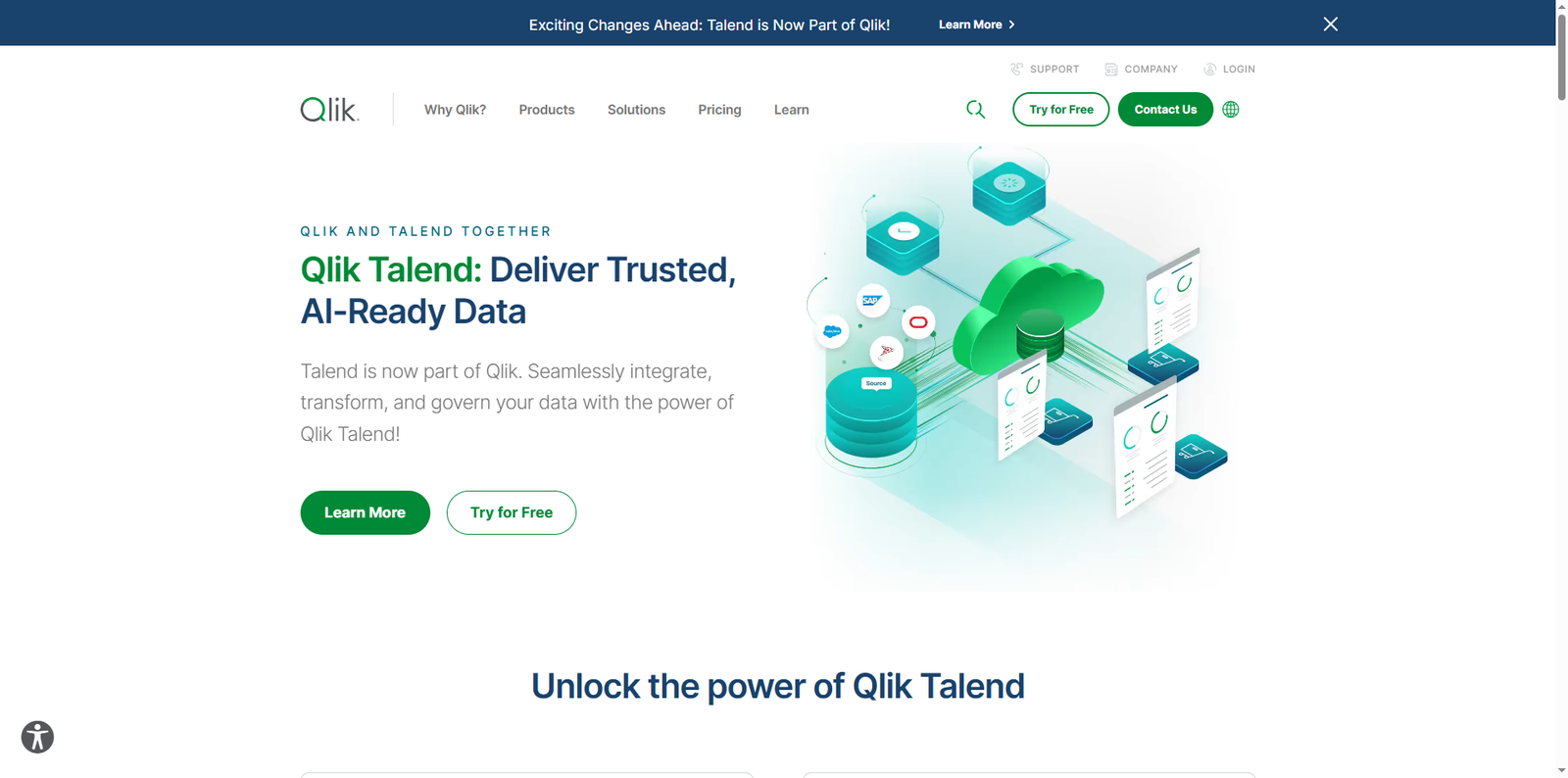
Talend, founded in 2005, has long been recognized for its open-source roots and enterprise-grade data integration capabilities. In 2023, Talend became part of Qlik, a global leader in data analytics and business intelligence. This merger created a unified platform that combines Qlik’s analytics expertise with Talend’s data integration and governance strengths, enabling organizations to seamlessly connect, transform, and manage data across diverse environments.
According to Qlik’s official announcement, the integration aims to eliminate barriers between business and IT by offering automated, AI-augmented, and cloud-independent solutions. This approach ensures that enterprises can maintain flexibility while meeting stringent data security and compliance requirements.
Core Capabilities of Talend
Talend provides a comprehensive suite of tools designed to simplify complex data operations. Its core capabilities include:
- Data Integration: Supports batch, real-time, ETL, ELT, and API-based integration patterns within a single platform.
- Data Transformation: Empowers users with both low-code visual tools and full-code control for advanced transformations.
- Data Governance: Ensures data quality, lineage, and compliance through automated workflows and reusable datasets.
- Data Fabric: Offers a unified environment that connects data across cloud and on-premises systems, ensuring consistency and accessibility.
These features make Talend a versatile solution for enterprises managing large-scale data ecosystems, supporting use cases from analytics to AI model training.
How Qlik Talend Enhances Data Integration
The integration of Qlik and Talend has resulted in a powerful data management ecosystem. Qlik Talend enables organizations to build end-to-end data pipelines that are both scalable and intelligent. By combining Qlik’s analytics capabilities with Talend’s integration and governance tools, businesses can achieve a holistic view of their data landscape.
Some of the key enhancements include:
- Unified Data Platform: A single environment for integration, transformation, and analytics.
- AI-Ready Data: Automated data preparation ensures that datasets are clean, consistent, and ready for machine learning applications.
- Cross-Platform Connectivity: Pre-built connectors for hundreds of data sources, including cloud services, databases, and APIs.
- Automation and Intelligence: AI-driven recommendations optimize data workflows and reduce manual intervention.
Deployment Flexibility: Cloud, On-Premises, and Hybrid
One of Talend’s standout strengths is its deployment flexibility. Organizations can choose to deploy Talend in the cloud, on-premises, or in hybrid environments, depending on their infrastructure and compliance needs. This flexibility ensures that businesses can adapt to evolving data residency and security requirements without compromising performance or scalability.
For example, enterprises operating in regulated industries can maintain sensitive data on-premises while leveraging cloud-based analytics for scalability and agility. This hybrid approach allows for optimal resource utilization and cost efficiency.
AI-Augmented and No-Code Pipelines
Talend’s AI-augmented, no-code pipelines empower users of all technical levels to build and manage data workflows efficiently. Data engineers can leverage advanced scripting capabilities, while business analysts can use intuitive drag-and-drop interfaces to design data flows without writing code. This democratization of data integration accelerates innovation and reduces dependency on specialized technical resources.
Additionally, AI-driven automation helps identify data anomalies, recommend transformations, and optimize performance, ensuring that data pipelines remain efficient and reliable over time.
Data Quality and Governance
Ensuring data trustworthiness is at the heart of Talend’s mission. The platform’s data quality and governance features enable organizations to maintain high standards of accuracy, consistency, and compliance. Through capabilities like data lineage tracking, validation rules, and automated cleansing, Talend helps enterprises create a single source of truth for their data assets.
According to Qlik’s documentation, Talend’s governance framework supports regulatory compliance initiatives such as GDPR and HIPAA, making it a reliable choice for industries with strict data management requirements. By integrating governance directly into data workflows, organizations can reduce risk and improve decision-making confidence.
Alternatives to Talend
While Talend offers a robust and comprehensive platform, several other tools provide competitive data integration and management capabilities. Below is a comparison table highlighting some popular alternatives:
| Tool Name | Description |
|---|---|
| Informatica | A leading enterprise data integration platform offering cloud-native solutions for data management and governance. |
| MuleSoft | Provides API-led connectivity and integration solutions that connect applications, data, and devices across environments. |
| IBM DataStage | Offers enterprise-grade ETL and data integration capabilities with strong support for hybrid and multi-cloud deployments. |
| Google Cloud Dataflow | A fully managed service for stream and batch data processing, ideal for analytics and machine learning workloads. |
| Azure Data Factory | Microsoft’s cloud-based data integration service that enables data movement and transformation across diverse sources. |
Conclusion
Talend, now part of Qlik, represents a significant advancement in the world of data integration and management. By combining Qlik’s analytics expertise with Talend’s powerful integration and governance tools, organizations can unlock the full potential of their data. The platform’s flexibility, AI-augmented capabilities, and focus on data quality make it an ideal choice for enterprises seeking to build trusted, AI-ready data ecosystems.
As data continues to grow in volume and complexity, solutions like Qlik Talend will play a crucial role in helping businesses stay agile, compliant, and competitive. Whether deployed in the cloud, on-premises, or hybrid environments, Talend empowers organizations to harness their data for smarter insights and better business outcomes.