




Outline
- Introduction
- Understanding Sumo Logic
- How Sumo Logic Enhances Security Operations
- AI and Automation in Sumo Logic
- Compliance and Data Protection
- Monitoring and Troubleshooting with Log Analytics
- Integration Ecosystem
- Alternative Tools
- Conclusion
Introduction
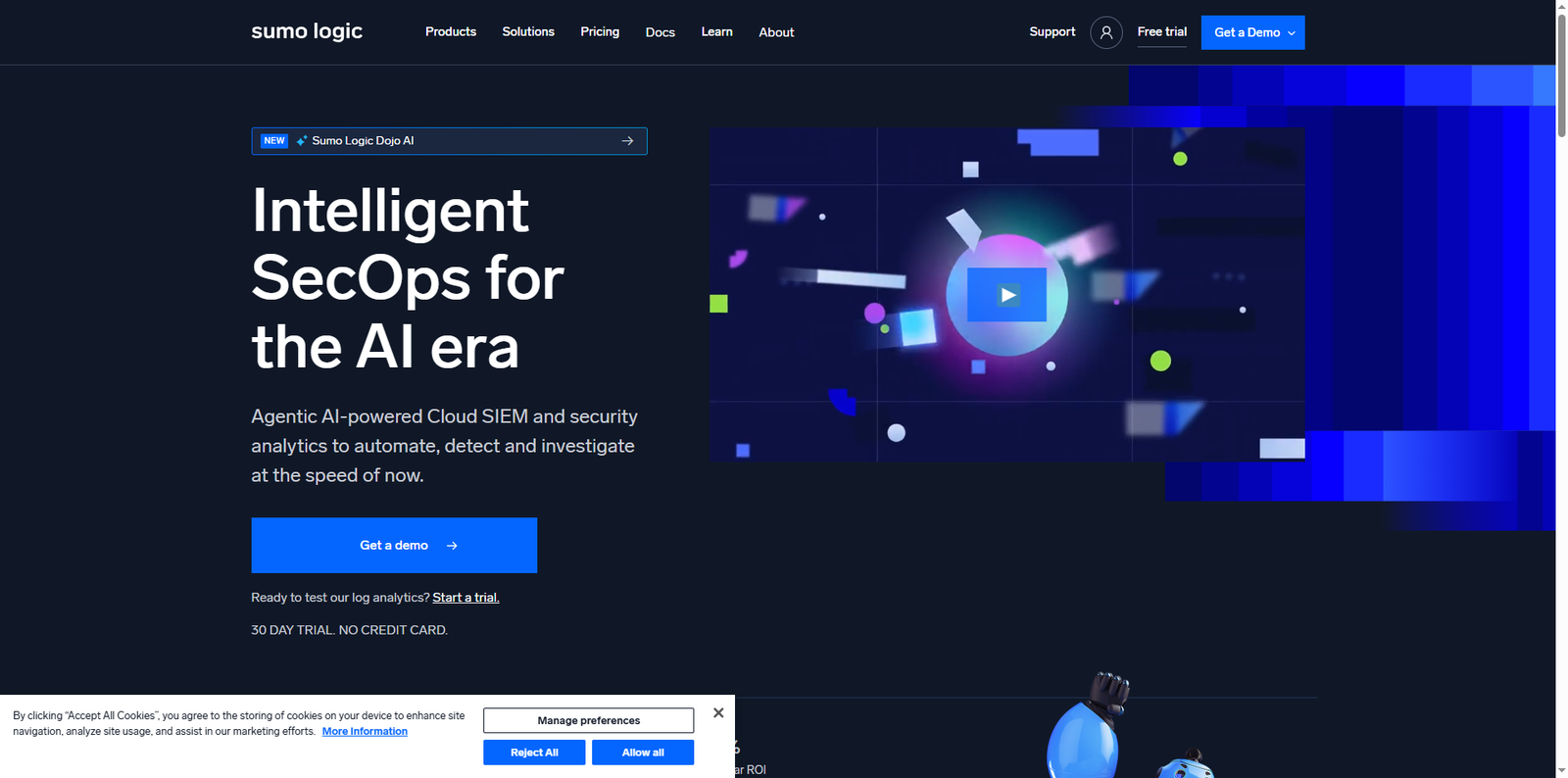
In today’s digital-first world, organizations rely heavily on cloud infrastructure to run their operations efficiently. However, as systems scale, so does the complexity of managing security, compliance, and performance. Sumo Logic stands out as a leading cloud-native platform designed to simplify this complexity through AI-driven analytics and automation. Trusted by thousands of enterprises globally, Sumo Logic enables teams to monitor, troubleshoot, and secure their digital ecosystems with unparalleled speed and intelligence.
Understanding Sumo Logic
Founded in 2010, Sumo Logic has evolved into a comprehensive cloud-native platform for log management, security analytics, and observability. The company’s mission is to empower organizations with continuous intelligence, helping them make data-driven decisions in real time. According to industry reports, Sumo Logic processes over 500 petabytes of data daily across millions of queries, serving customers in sectors like finance, healthcare, and technology.
Sumo Logic’s architecture is built on a multi-tenant SaaS model, ensuring scalability, reliability, and compliance. Its platform integrates seamlessly with cloud providers such as AWS, Azure, and Google Cloud, enabling unified visibility across hybrid environments.
How Sumo Logic Enhances Security Operations
Sumo Logic’s Cloud SIEM (Security Information and Event Management) solution is designed to accelerate threat detection and response. By leveraging advanced analytics, it automatically correlates events and identifies anomalies across diverse data sources. This helps security teams reduce Mean Time to Detect (MTTD) and Mean Time to Respond (MTTR) by up to 80%, according to internal performance metrics shared by the company.
The platform’s AI-driven triage system categorizes alerts based on severity and context, allowing analysts to focus on high-priority incidents. This automation not only enhances operational efficiency but also minimizes human error in threat investigations.
Key Benefits of Cloud SIEM
- Automated correlation of security events across multiple systems
- Real-time threat detection and prioritization
- Guided investigations powered by AI insights
- Comprehensive dashboards for compliance and audit readiness
AI and Automation in Sumo Logic
At the heart of Sumo Logic’s innovation lies Dojo AI—a multi-agent artificial intelligence framework that powers intelligent security operations. Dojo AI uses specialized agents to analyze massive volumes of log data, identify patterns, and provide actionable insights. This approach helps teams cut through noise and focus on what truly matters.
Sumo Logic’s AI capabilities extend beyond security. They also enhance performance monitoring, anomaly detection, and predictive analytics. By automating repetitive tasks, the platform allows IT and DevOps teams to allocate more time to strategic initiatives rather than manual troubleshooting.
AI-Driven Use Cases
- Incident Response Automation: Automatically triages alerts and suggests remediation steps.
- Predictive Analytics: Detects anomalies before they escalate into system outages.
- Root Cause Analysis: Correlates logs across distributed systems to pinpoint issues faster.
Compliance and Data Protection
Security and compliance are integral to Sumo Logic’s design. The platform adheres to global standards such as SOC 2 Type II, ISO 27001, FedRAMP Moderate, GDPR, HIPAA, PCI DSS 3.2, and CCPA. These certifications ensure that customer data is protected under the most stringent security frameworks.
Sumo Logic’s compliance dashboards provide real-time visibility into regulatory posture, enabling organizations to demonstrate adherence during audits effortlessly. The platform also supports data residency requirements, allowing enterprises to store logs in specific geographic regions to meet local compliance mandates.
Monitoring and Troubleshooting with Log Analytics
Beyond security, Sumo Logic excels in log analytics and performance monitoring. It collects and analyzes data from both cloud and on-premises systems, offering a unified view of infrastructure health. This proactive approach helps teams identify performance bottlenecks before they impact users.
Capabilities of Log Analytics
- Centralized log collection from diverse sources
- Real-time visualization through dynamic dashboards
- Custom queries for deep-dive investigations
- Integration with CI/CD pipelines for DevOps observability
For example, a global e-commerce company using Sumo Logic reported a 60% reduction in incident resolution time after implementing automated log correlation. This demonstrates the tangible impact of intelligent analytics on operational efficiency.
Integration Ecosystem
Sumo Logic’s platform supports over 450 integrations with popular tools and services, enabling seamless data ingestion and analysis. These integrations span across cloud providers, security tools, and DevOps platforms, ensuring that organizations can connect their entire technology stack effortlessly.
Examples of Integrations
- AWS CloudTrail and CloudWatch for cloud monitoring
- Microsoft Azure Monitor for hybrid visibility
- Google Cloud Operations Suite for multi-cloud observability
- Okta and CrowdStrike for identity and endpoint security
- Slack and PagerDuty for incident collaboration
This extensive ecosystem allows teams to unify their data streams, automate workflows, and gain contextual insights across all layers of their infrastructure.
Alternative Tools
While Sumo Logic is a leader in cloud-native analytics, several other tools offer similar capabilities for organizations seeking alternatives. Below is a comparison of notable platforms:
| Tool Name | Description |
|---|---|
| Splunk | A data analytics platform offering log management, security monitoring, and observability solutions for enterprise environments. |
| Datadog | Provides cloud monitoring and security analytics with real-time dashboards and AI-driven anomaly detection. |
| Elastic | Offers Elasticsearch-based observability and security analytics for scalable log and metrics analysis. |
| New Relic | Focuses on application performance monitoring and full-stack observability with AI-assisted insights. |
| Graylog | An open-source log management tool designed for security analytics and operational intelligence. |
Conclusion
Sumo Logic continues to redefine how organizations approach cloud security, observability, and analytics. By combining AI-driven intelligence, automation, and compliance-ready architecture, it empowers teams to detect threats faster, resolve incidents efficiently, and maintain resilient digital ecosystems. Its multi-agent Dojo AI framework, extensive integration ecosystem, and robust compliance posture make it a trusted partner for enterprises navigating the complexities of modern IT environments.
As the demand for real-time insights and automated security operations grows, Sumo Logic’s continuous innovation positions it at the forefront of the intelligent SecOps revolution. For businesses seeking to transform data into actionable intelligence, Sumo Logic offers a powerful, future-ready solution that bridges the gap between complexity and clarity.