




Outline
- Introduction
- What is Stitch Data?
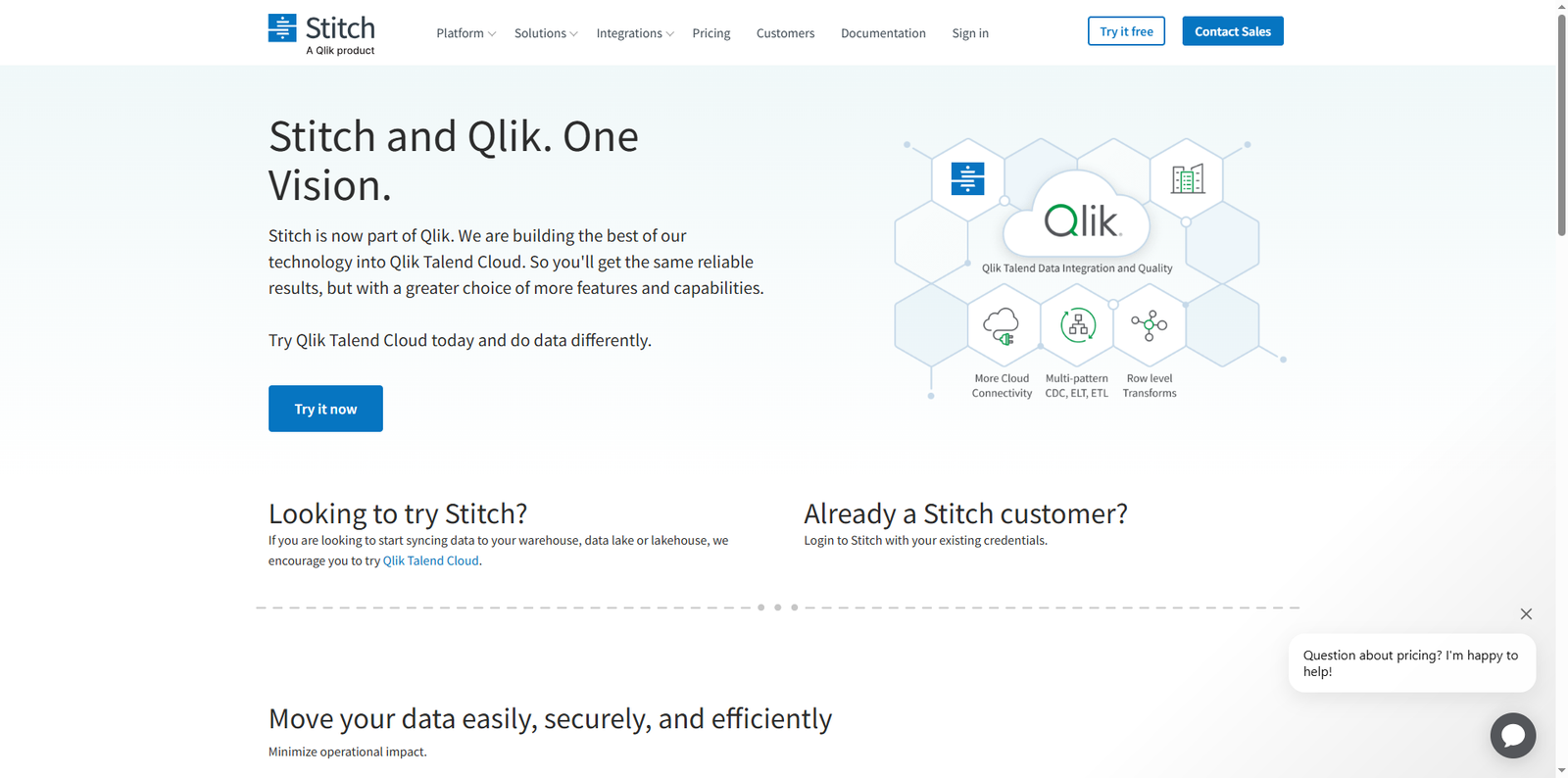
- The Evolution of Stitch: Now Part of Qlik
- How Stitch Simplifies Data Integration
- Key Benefits of Using Stitch
- Data Security and Compliance
- Alternatives to Stitch
- Real-World Use Cases
- Conclusion
Introduction
In today’s data-driven world, organizations rely heavily on seamless data integration to make informed decisions. Stitch Data has emerged as a trusted solution for businesses seeking to automate data pipelines and centralize analytics. Now part of Qlik, Stitch continues to empower data teams by enabling secure, efficient, and scalable data movement across platforms. This article explores how Stitch Data works, its evolution, and how it fits into the modern data ecosystem.
What is Stitch Data?
Stitch Data is a cloud-based, ETL (Extract, Transform, Load) service designed to simplify data integration. It allows organizations to connect multiple data sources—such as SaaS applications, databases, and APIs—to their preferred data warehouses or lakes. The platform’s primary goal is to eliminate the complexity of manual data handling, enabling teams to focus on analytics rather than infrastructure management.
According to Qlik’s official updates, Stitch supports over 130 data sources, including popular tools like Salesforce, Google Ads, and Shopify. This extensive connectivity ensures that businesses can unify data from diverse systems into one reliable source of truth.
The Evolution of Stitch: Now Part of Qlik
In 2018, Stitch became part of Qlik, a global leader in data analytics and business intelligence. This acquisition marked a significant milestone, integrating Stitch’s robust data pipeline technology into Qlik’s comprehensive analytics ecosystem. Today, Stitch’s capabilities are being merged into the Qlik Talend Cloud, offering users enhanced flexibility, scalability, and access to advanced data management features.
This evolution means that existing Stitch users can continue leveraging their familiar workflows while benefiting from Qlik’s broader data integration and analytics capabilities. The unified platform ensures that data engineers and analysts can work collaboratively to deliver faster, more accurate insights.
How Stitch Simplifies Data Integration
Stitch’s design philosophy centers around automation and simplicity. Instead of writing complex scripts or managing custom ETL processes, users can configure data pipelines through an intuitive interface. Once set up, Stitch automatically extracts data from connected sources, transforms it as needed, and loads it into the target destination.
Core Components of Stitch’s Workflow
- Extraction: Stitch connects to various data sources, capturing raw data efficiently.
- Transformation: Data is standardized and cleaned to ensure consistency across systems.
- Loading: The processed data is delivered to the chosen warehouse or lake, ready for analysis.
This automated process minimizes operational overhead and reduces the risk of human error. Moreover, Stitch’s scheduling and monitoring tools allow teams to maintain full visibility into their data pipelines.
Key Benefits of Using Stitch
Organizations adopt Stitch for several compelling reasons. Below are some of the most notable advantages:
- Ease of Use: The platform’s user-friendly interface allows non-technical users to set up and manage data pipelines effortlessly.
- Scalability: Stitch is built to handle growing data volumes, making it suitable for startups and enterprises alike.
- Automation: Once configured, pipelines run automatically, ensuring continuous data flow without manual intervention.
- Integration Flexibility: With support for hundreds of data sources, Stitch ensures compatibility with most modern business tools.
- Reliability: Stitch’s cloud-native architecture ensures high availability and minimal downtime.
Data Security and Compliance
Data security is a top priority for any integration platform, and Stitch is no exception. The service employs encryption both in transit and at rest, ensuring that sensitive information remains protected throughout the data lifecycle. Additionally, Stitch complies with major data protection standards, including GDPR and SOC 2, providing organizations with confidence in their data handling practices.
By leveraging Qlik’s infrastructure, Stitch users also benefit from enterprise-grade security protocols and governance tools. This combination allows businesses to maintain compliance while scaling their data operations globally.
Alternatives to Stitch
While Stitch is a powerful solution, several other tools offer similar capabilities. Below is a comparison table of popular alternatives that organizations often consider:
| Tool Name | Description |
|---|---|
| Fivetran | An automated data integration platform known for its prebuilt connectors and minimal maintenance requirements. |
| Airbyte | An open-source data integration tool offering customizable connectors and community-driven development. |
| Hevo Data | A no-code data pipeline platform that enables real-time data movement across multiple sources and destinations. |
| Matillion | A cloud-native ETL solution designed for enterprise-scale data transformation and orchestration. |
| Segment | A customer data platform that centralizes user data collection and routing for analytics and personalization. |
Real-World Use Cases
Stitch Data’s versatility makes it a valuable asset across industries. Here are some practical examples of how organizations use Stitch to enhance their data operations:
1. E-commerce Analytics
Online retailers often rely on multiple platforms—such as Shopify, Google Analytics, and Facebook Ads—to manage sales and marketing. Stitch consolidates this data into a single warehouse, enabling businesses to analyze customer behavior, optimize campaigns, and forecast demand more accurately.
2. SaaS Performance Monitoring
Software-as-a-Service companies use Stitch to integrate data from CRM systems, billing platforms, and product analytics tools. This unified view helps teams track user engagement, revenue metrics, and churn rates, leading to data-driven product improvements.
3. Financial Reporting
Finance departments benefit from Stitch’s ability to aggregate data from accounting software, ERP systems, and payment gateways. This automation reduces manual reconciliation efforts and ensures that reports are always based on the latest data.
4. Healthcare Data Integration
Healthcare organizations use Stitch to securely combine patient records, clinical data, and operational metrics. By centralizing this information, providers can improve patient outcomes and streamline administrative processes while maintaining compliance with healthcare regulations.
Conclusion
Stitch Data has transformed how businesses manage and integrate their data. By automating complex ETL processes and offering seamless connectivity across numerous platforms, Stitch empowers organizations to focus on insights rather than infrastructure. Its integration into Qlik’s ecosystem further enhances its capabilities, providing users with a unified, secure, and scalable data management solution.
As data continues to grow in volume and complexity, tools like Stitch play a critical role in enabling organizations to stay agile and competitive. Whether you are a data engineer seeking efficiency or a business analyst striving for accuracy, Stitch offers the foundation you need to build reliable, insight-driven operations.