


Outline
- Introduction
- Understanding Sigma Computing
- How Sigma Computing Transforms Financial Reporting
- Key Benefits for Modern Finance Teams
- Real-World Use Cases
- Integration and Collaboration Capabilities
- Alternatives to Sigma Computing
- Conclusion
Introduction
In today’s data-driven business environment, finance teams are under increasing pressure to deliver insights faster and more accurately. Traditional reporting tools often require extensive technical knowledge, leaving analysts dependent on data engineers for access and updates. Sigma Computing bridges this gap by providing a cloud-native analytics platform that enables real-time reporting and collaboration directly on cloud data warehouses. This article explores how Sigma Computing empowers organizations to make data-driven decisions efficiently and transparently.
Understanding Sigma Computing
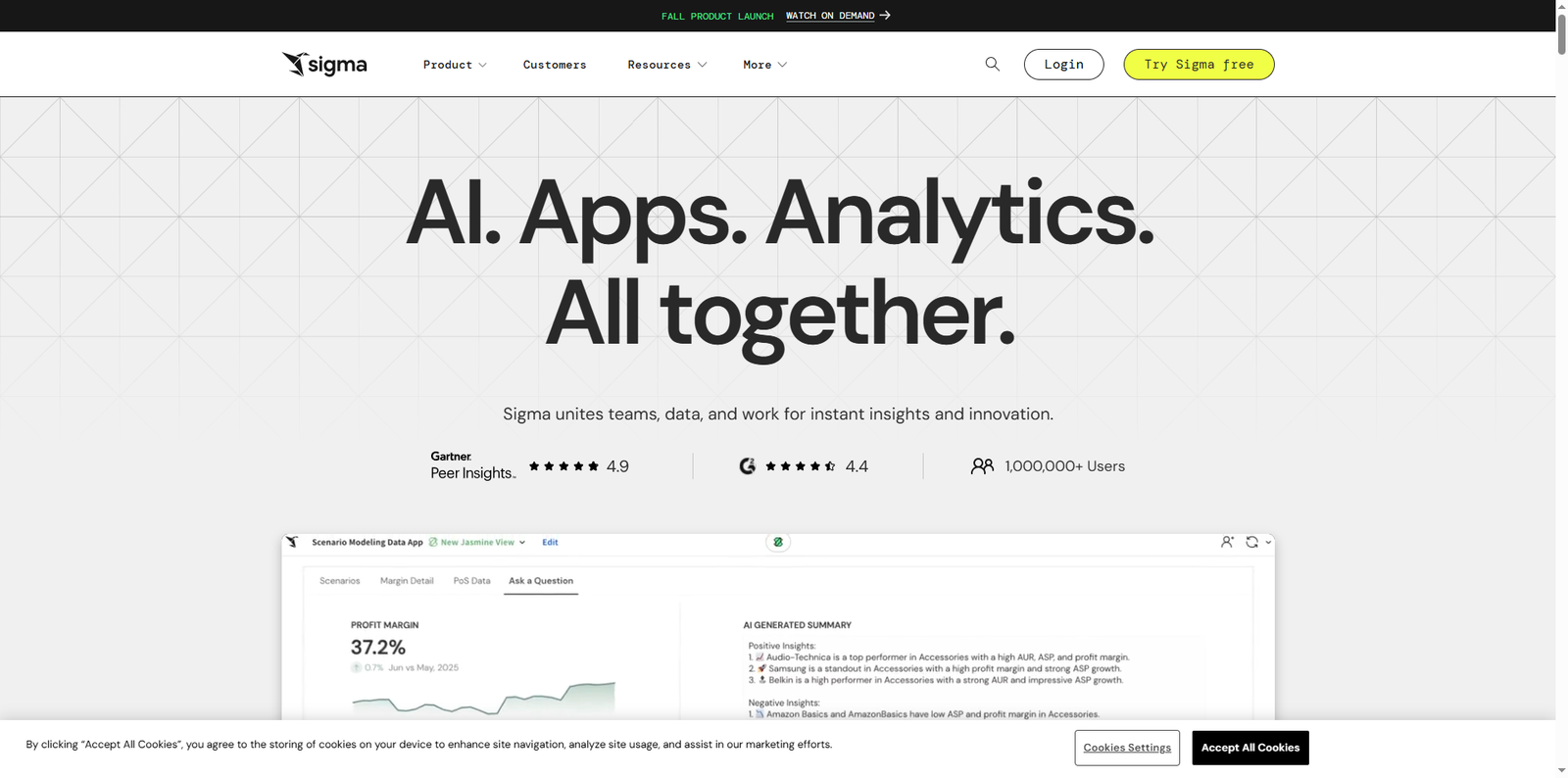
Sigma Computing is a modern business intelligence (BI) and analytics platform designed to work natively with cloud data warehouses such as Snowflake, Google BigQuery, and Amazon Redshift. Founded in 2014 and headquartered in San Francisco, Sigma’s mission is to make data accessible to everyone in an organization, not just technical users. The platform allows users to explore live data using a familiar spreadsheet interface, eliminating the need for complex SQL queries.
According to Sigma’s official resources, the platform connects directly to cloud data warehouses without requiring data extracts or movement. This ensures that all reports and dashboards reflect the most current data available, enabling real-time decision-making. The spreadsheet-like interface also makes it intuitive for finance professionals who are accustomed to tools like Excel but need the scalability and security of a modern BI solution.
How Sigma Computing Transforms Financial Reporting
Finance teams often struggle with fragmented data sources and delayed reporting cycles. Sigma Computing addresses these challenges by providing a single, unified environment where users can access, analyze, and share data instantly. By leveraging live connections to cloud data warehouses, Sigma ensures that financial reports are always up to date.
Real-Time Data Access
Unlike traditional BI tools that rely on static data extracts, Sigma Computing queries live data directly from the source. This means that when a CFO reviews a financial dashboard, the numbers reflect the latest transactions and updates. Real-time access reduces the risk of outdated insights and enables faster responses to changing business conditions.
Collaborative Analytics
One of Sigma’s standout features is its collaborative environment. Teams can work together on dashboards and reports simultaneously, similar to how multiple users can edit a Google Sheet in real time. This collaboration fosters transparency and ensures that everyone is aligned on the same data-driven insights.
Key Benefits for Modern Finance Teams
Modern finance teams require agility, accuracy, and accessibility in their analytics workflows. Sigma Computing delivers these benefits through its cloud-native architecture and user-friendly interface.
- Empowered Non-Technical Users: Finance professionals can perform complex analyses without relying on IT or data engineering teams.
- Enhanced Data Governance: Because Sigma connects directly to centralized data warehouses, organizations maintain strict control over data access and compliance.
- Scalability: As organizations grow, Sigma scales seamlessly with their data infrastructure, supporting large datasets without performance degradation.
- Faster Decision-Making: Real-time dashboards and automated reporting accelerate financial planning and forecasting cycles.
Real-World Use Cases
Several organizations across industries have adopted Sigma Computing to streamline their financial reporting and analytics processes. Below are some common use cases that demonstrate its versatility:
1. Financial Planning and Analysis (FP&A)
Finance teams use Sigma to consolidate data from multiple sources, such as ERP systems and CRM platforms, into unified dashboards. This enables real-time budget tracking, variance analysis, and forecasting without manual data manipulation.
2. Revenue and Expense Tracking
By connecting to live transactional data, Sigma allows finance teams to monitor revenue streams and expenses dynamically. This helps identify cost-saving opportunities and optimize resource allocation.
3. Audit and Compliance Reporting
With centralized data access and version control, Sigma simplifies audit preparation and compliance reporting. Teams can trace data lineage and ensure accuracy across all financial statements.
4. Executive Dashboards
Executives can access visual dashboards that summarize key performance indicators (KPIs) such as cash flow, profit margins, and operational efficiency. These dashboards update automatically as new data becomes available, reducing manual reporting efforts.
Integration and Collaboration Capabilities
Sigma Computing integrates seamlessly with leading cloud data platforms and collaboration tools. Its compatibility with Snowflake, BigQuery, and Redshift ensures that organizations can leverage their existing data infrastructure without additional setup. Furthermore, Sigma supports integration with communication tools like Slack and project management systems, enabling real-time sharing of insights across departments.
Data Security and Governance
Security is a top priority for finance teams handling sensitive information. Sigma adheres to enterprise-grade security standards, including SOC 2 Type II compliance and role-based access controls. Because all computations occur within the organization’s data warehouse, sensitive data never leaves the secure environment.
Collaboration Across Teams
Sigma’s collaborative features empower cross-functional teams to work together efficiently. Finance, operations, and marketing departments can share dashboards, annotate insights, and comment directly within the platform. This eliminates the need for static reports and ensures that all stakeholders are working from the same data source.
Alternatives to Sigma Computing
While Sigma Computing offers a powerful solution for real-time financial reporting, several other tools provide similar capabilities. Below is a comparison table of notable alternatives that organizations may consider:
| Tool Name | Description |
|---|---|
| Looker | A Google Cloud-based BI platform that enables data exploration and embedded analytics through a modeling layer called LookML. |
| Tableau | A widely used data visualization tool that helps users create interactive dashboards and visual analytics from multiple data sources. |
| Power BI | Microsoft’s analytics service that integrates with Office 365 and Azure, offering robust data modeling and visualization capabilities. |
| Qlik Sense | A self-service analytics platform that provides associative data exploration and AI-driven insights for business users. |
| Domo | A cloud-based BI solution that combines data integration, visualization, and collaboration in a single platform. |
Conclusion
Sigma Computing stands out as a transformative tool for finance teams seeking real-time insights and collaborative analytics. Its spreadsheet-like interface democratizes data access, empowering non-technical users to perform advanced analyses without coding expertise. By connecting directly to cloud data warehouses, Sigma ensures that every report and dashboard reflects live, accurate information. This eliminates data silos, accelerates decision-making, and enhances organizational agility.
As businesses continue to embrace digital transformation, tools like Sigma Computing are redefining how finance teams operate. They enable a culture of transparency, collaboration, and data-driven strategy. While alternatives such as Looker, Tableau, and Power BI offer valuable capabilities, Sigma’s unique combination of real-time connectivity and user-friendly design makes it particularly well-suited for modern financial reporting. Ultimately, adopting such a platform allows organizations to move beyond static spreadsheets and into a future where data truly drives performance.