


Outline
- Introduction
- What Is Select Star?
- How Select Star Works
- Key Benefits of Using Select Star
- Use Cases Across Industries
- Integration and Compatibility
- Alternatives to Select Star
- Real-World Impact and Customer Success
- Conclusion
Introduction
In today’s data-driven world, organizations rely heavily on accurate, accessible, and well-governed data. However, as data ecosystems grow more complex, managing and discovering relevant datasets becomes increasingly challenging. This is where Select Star steps in. Designed to simplify data discovery and governance, Select Star provides automated data cataloging that helps teams understand, trust, and use their data efficiently. According to a 2023 Gartner report, over 60% of enterprises struggle with data discoverability, making tools like Select Star essential for modern analytics workflows.
What Is Select Star?
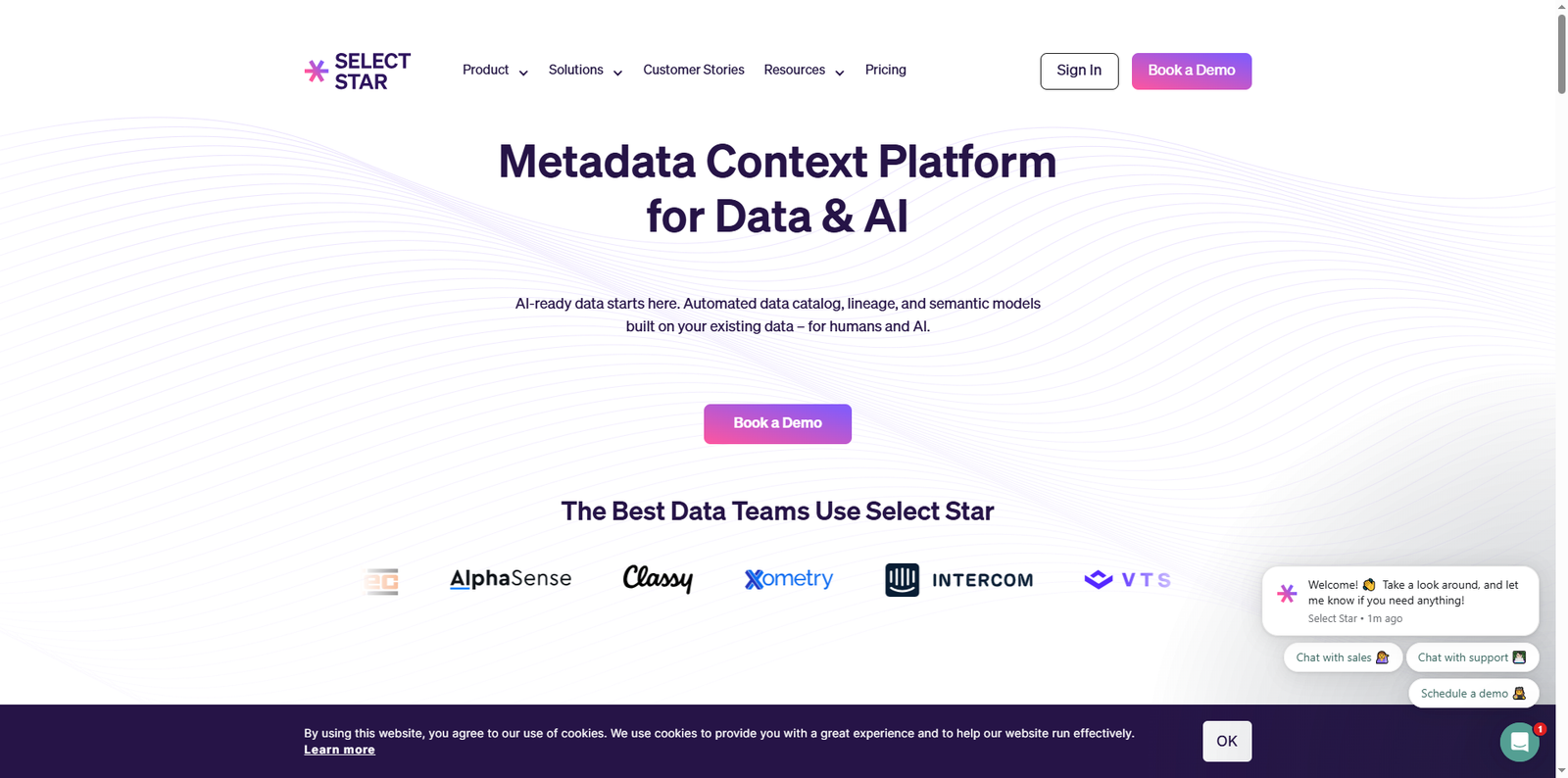
Select Star is an intelligent data discovery and cataloging platform that automatically documents data assets across an organization. It connects to various data sources, such as cloud data warehouses, BI tools, and data lakes, and uses machine learning to identify relationships, lineage, and usage patterns. Founded in 2020, Select Star has quickly gained traction among data teams seeking to improve data governance and collaboration.
Unlike traditional data catalogs that require manual tagging and documentation, Select Star automates this process, ensuring that metadata stays up to date. This automation allows data engineers, analysts, and business users to find the right data faster and make informed decisions with confidence.
How Select Star Works
Select Star integrates seamlessly with modern data stacks. Once connected, it automatically scans metadata and usage logs to build a comprehensive data map. The platform uses machine learning to detect relationships between datasets, dashboards, and queries, creating a unified view of data usage across the organization.
Core Workflow
- Connection: Integrate with data sources such as Snowflake, BigQuery, Redshift, or Looker.
- Metadata Extraction: Automatically pull schema, lineage, and usage data.
- Contextualization: Identify relationships between tables, dashboards, and queries.
- Discovery: Enable users to search and explore data assets with natural language queries.
- Governance: Apply consistent documentation and ownership policies across datasets.
Data Lineage Visualization
One of Select Star’s standout features is its ability to visualize data lineage. This helps teams trace data flow from source to dashboard, ensuring transparency and compliance. For example, if a metric in a dashboard changes unexpectedly, users can quickly identify which upstream dataset caused the issue.
Key Benefits of Using Select Star
Organizations adopting Select Star report significant improvements in data accessibility and governance. Below are some key advantages:
- Automated Documentation: Reduces manual effort by automatically generating and updating metadata.
- Enhanced Collaboration: Promotes data literacy by allowing teams to share and annotate datasets.
- Improved Data Trust: Provides visibility into data lineage, ensuring users understand data origins.
- Faster Onboarding: New team members can quickly find and understand relevant data assets.
- Compliance Support: Helps maintain data governance standards required by regulations such as GDPR and CCPA.
Use Cases Across Industries
Select Star’s versatility makes it valuable across multiple sectors. Below are some examples of how different industries leverage its capabilities:
Technology and SaaS
Tech companies use Select Star to manage complex data environments spanning multiple analytics tools. By centralizing metadata, teams can reduce redundant queries and improve reporting accuracy.
Finance and Banking
Financial institutions rely on Select Star to maintain data lineage and ensure compliance with strict regulatory standards. The platform’s automated governance features help auditors trace data flow effortlessly.
Retail and E-commerce
Retailers use Select Star to unify customer data across platforms, enabling better personalization and demand forecasting. Automated cataloging ensures that marketing and analytics teams work with consistent data definitions.
Healthcare and Life Sciences
Healthcare organizations benefit from Select Star’s ability to ensure data integrity and security. By mapping data lineage, they can maintain compliance with HIPAA and other data protection regulations.
Integration and Compatibility
Select Star integrates with a wide range of modern data tools, making it a flexible addition to any data stack. Common integrations include:
- Data Warehouses: Snowflake, BigQuery, Amazon Redshift
- BI Tools: Looker, Tableau, Mode
- Data Transformation: dbt, Airflow
- Collaboration Platforms: Slack, Jira
These integrations allow teams to maintain a single source of truth for all their data assets. For instance, when a dbt model is updated, Select Star automatically reflects the change in its catalog, ensuring metadata accuracy.
Alternatives to Select Star
While Select Star offers a robust solution for automated data discovery, several other tools provide similar capabilities. Below is a comparison table of popular alternatives:
| Tool Name | Description |
|---|---|
| Alation | A leading data catalog platform that focuses on data governance and stewardship with AI-driven recommendations. |
| Collibra | Enterprise-grade data intelligence platform offering governance, cataloging, and privacy management solutions. |
| Atlan | Modern data workspace designed for collaboration and metadata management across data teams. |
| data.world | Cloud-native data catalog that supports data discovery, governance, and knowledge graph integration. |
| CastorDoc | Automated data catalog that simplifies documentation and improves data accessibility for organizations. |
Real-World Impact and Customer Success
Organizations using Select Star have reported measurable improvements in data efficiency and collaboration. For example, a global fintech company reduced its data discovery time by 40% after implementing Select Star. Similarly, a large e-commerce platform improved its analytics accuracy by ensuring consistent data definitions across teams.
According to customer reviews on G2 and Capterra, users appreciate Select Star’s intuitive interface and automation capabilities. Many highlight that the platform reduces dependency on data engineering teams by empowering analysts to find and understand data independently.
Quantifiable Outcomes
- 40% reduction in time spent searching for data assets
- 30% improvement in analytics accuracy
- 50% faster onboarding for new data analysts
- Significant reduction in duplicated datasets
Conclusion
Select Star represents a new generation of data cataloging tools that prioritize automation, usability, and collaboration. By leveraging machine learning to map data relationships and lineage, it empowers organizations to build trust in their data and make faster, more informed decisions. As data ecosystems continue to expand, the need for intelligent discovery and governance tools will only grow. Whether you’re a data engineer, analyst, or business leader, adopting a solution like Select Star can transform how your organization manages and utilizes data. For those exploring alternatives, platforms such as Alation, Collibra, and Atlan also provide strong capabilities in this evolving space. Ultimately, the future of data governance lies in automation and accessibility—and Select Star is leading the way.