



Outline
- Introduction
- Understanding Secoda and Its Purpose
- How Secoda Enhances Data and Analytics Workflows
- Core Components of Secoda’s AI-Powered Platform
- Benefits of Using Secoda for Data Teams
- Real-World Use Cases and Applications
- Comparison with Alternative Tools
- Challenges and Considerations
- Conclusion
Introduction
In today’s data-driven world, organizations are constantly seeking ways to streamline analytics, improve data governance, and empower teams to make faster, more informed decisions. Secoda has emerged as a leading AI-powered platform designed to unify data discovery, documentation, and governance. By integrating context across the entire data stack, Secoda enables teams to find trusted answers quickly and at scale. This article explores how Secoda transforms data workflows, its key components, and how it compares to other tools in the market.
Understanding Secoda and Its Purpose
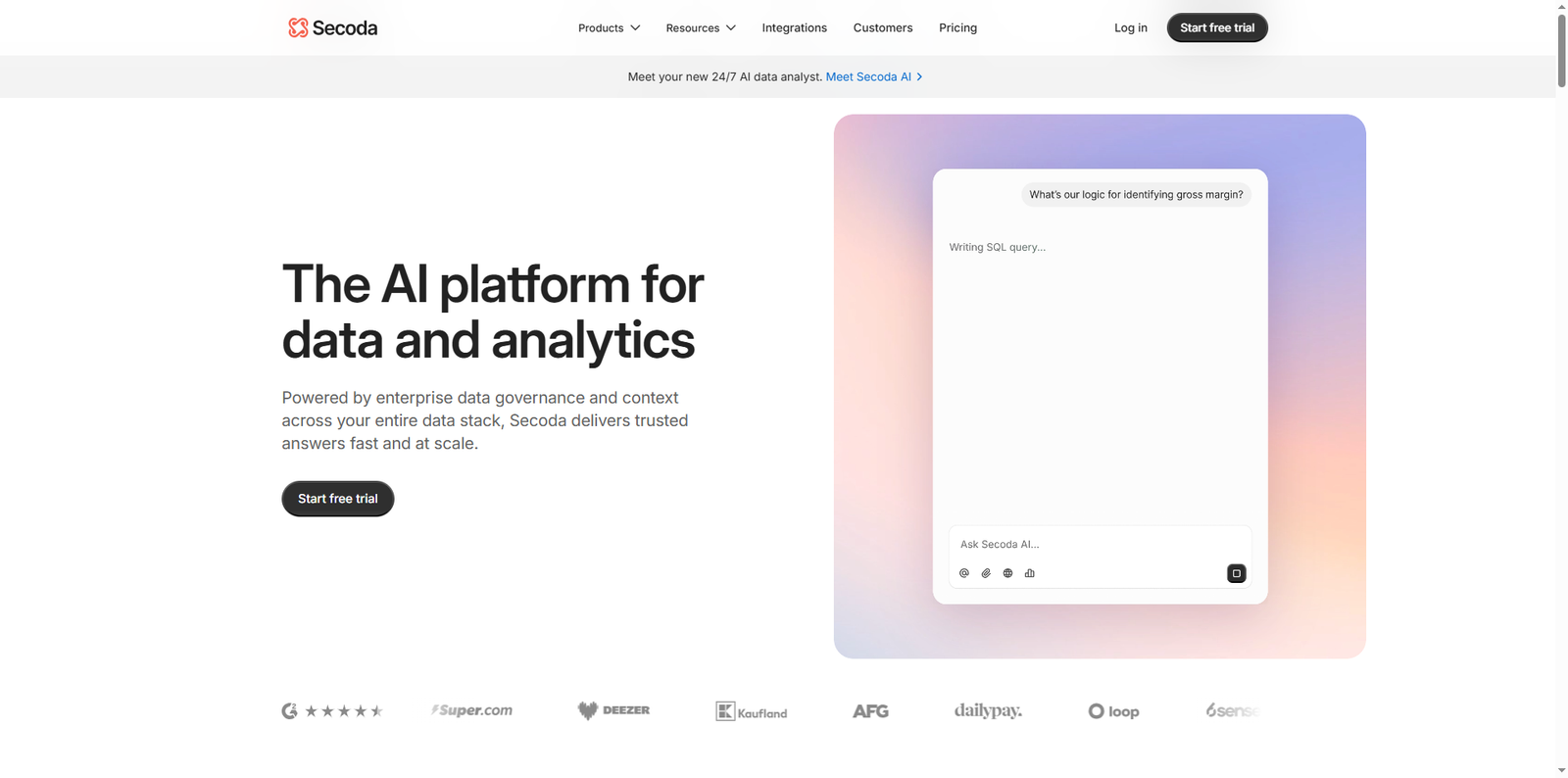
Secoda is an AI-driven data management and analytics platform that centralizes data knowledge, governance, and collaboration. It helps teams organize and understand their data assets by connecting to multiple data sources, including warehouses, BI tools, and data catalogs. The platform’s mission is to eliminate data silos and make data knowledge accessible to everyone in an organization, from analysts to business users.
According to industry reports, data professionals spend nearly 30% of their time searching for information or verifying data accuracy. Secoda addresses this inefficiency by creating a unified workspace where users can search, document, and collaborate on data assets seamlessly.
How Secoda Enhances Data and Analytics Workflows
Secoda integrates with modern data stacks, connecting tools like Snowflake, BigQuery, Looker, and dbt to provide a single source of truth. The platform leverages AI to automatically generate documentation, detect data lineage, and surface relevant insights. This automation reduces manual effort and ensures that data teams can focus on analysis rather than maintenance.
AI-Powered Data Discovery
Through natural language search, Secoda allows users to query data assets conversationally. For instance, a user can ask, “Which dashboard tracks monthly revenue?” and instantly receive the relevant dataset or report. This capability democratizes data access and reduces dependency on technical experts.
Data Governance and Compliance
Secoda’s governance framework ensures that data is properly cataloged, secured, and compliant with organizational policies. By maintaining lineage and access controls, it helps teams adhere to industry standards such as GDPR and SOC 2. This is particularly important for enterprises managing sensitive or regulated data.
Core Components of Secoda’s AI-Powered Platform
Secoda’s architecture is built around three main pillars: context, automation, and collaboration. Each component contributes to a more efficient and transparent data ecosystem.
- Context: Secoda enriches data assets with metadata, ownership details, and usage history, helping users understand the “why” behind the data.
- Automation: AI-driven workflows automate documentation, lineage tracking, and data quality checks, minimizing human error.
- Collaboration: Teams can comment, tag, and share insights directly within the platform, fostering a culture of shared data ownership.
Benefits of Using Secoda for Data Teams
Organizations adopting Secoda experience measurable improvements in productivity and data trust. Below are some of the key benefits:
- Centralized Knowledge: All data assets are searchable and documented in one place, reducing time spent on redundant queries.
- Improved Accuracy: Automated lineage tracking ensures that data sources are up-to-date and reliable.
- Enhanced Collaboration: Cross-functional teams can work together without switching between multiple tools.
- Scalability: Secoda’s AI capabilities adapt to growing data volumes and evolving business needs.
Real-World Use Cases and Applications
Secoda is used across industries including finance, healthcare, and e-commerce to streamline data operations. Below are a few practical examples:
1. Data Documentation Automation
In large organizations, maintaining accurate documentation can be a daunting task. Secoda automates this process by generating metadata and descriptions for new datasets, ensuring that documentation remains consistent and up-to-date.
2. Data Discovery for Business Teams
Non-technical users often struggle to find the right data for analysis. Secoda’s AI search allows business users to locate relevant datasets quickly, empowering them to make data-driven decisions without relying on data engineers.
3. Governance and Compliance Management
For enterprises subject to strict compliance requirements, Secoda provides visibility into data lineage and access permissions. This transparency helps organizations pass audits and maintain regulatory compliance efficiently.
Comparison with Alternative Tools
While Secoda offers a comprehensive AI-driven approach, several other tools also support data cataloging, governance, and collaboration. The table below compares Secoda with some notable alternatives.
| Tool Name | Primary Function | Best For |
|---|---|---|
| Alation | Data catalog and governance | Enterprises seeking advanced governance and metadata management |
| Collibra | Data intelligence and compliance | Organizations prioritizing data quality and regulatory compliance |
| Atlan | Modern data collaboration platform | Data teams focusing on collaboration and workflow automation |
| data.world | Cloud-native data catalog | Companies looking for flexible and scalable data discovery |
Challenges and Considerations
While Secoda offers numerous advantages, organizations should consider a few factors before implementation:
- Integration Complexity: Connecting multiple data sources may require initial setup and configuration efforts.
- Change Management: Teams must adapt to new workflows and governance structures to fully leverage the platform.
- Data Quality Dependency: The effectiveness of AI-driven insights depends on the underlying data’s accuracy and consistency.
Despite these challenges, the long-term benefits of improved data accessibility and governance often outweigh the initial learning curve.
Conclusion
Secoda represents a significant leap forward in how organizations manage and interact with their data. By combining AI-driven automation, contextual understanding, and collaborative features, it empowers teams to find trusted answers faster and make more informed decisions. As data ecosystems continue to grow in complexity, platforms like Secoda will play a crucial role in simplifying workflows and ensuring data reliability. For organizations seeking to modernize their data operations, Secoda offers a unified, intelligent solution that bridges the gap between governance and accessibility. Exploring its capabilities can be a transformative step toward building a truly data-driven culture.