




Outline
- Introduction
- Understanding Pyramid Analytics
- The Core Components of Pyramid Analytics
- Data Preparation and Science
- Semantics and Logic
- Business Analytics
- Collaboration and Distribution
- Governance and Security
- How Pyramid Analytics Supports Decision Intelligence
- Benefits of Using Pyramid Analytics
- Alternative Tools to Pyramid Analytics
- Conclusion
- Data Preparation and Science
- Semantics and Logic
- Business Analytics
- Collaboration and Distribution
- Governance and Security
Introduction
In today’s data-driven business environment, organizations are constantly seeking ways to transform raw data into actionable insights. Pyramid Analytics stands out as a comprehensive decision intelligence platform that bridges the gap between data science, business intelligence, and analytics. Designed to simplify complex data processes, it empowers both technical and non-technical users to make smarter, faster decisions. With its AI-driven approach and integrated analytics capabilities, Pyramid Analytics redefines how businesses interact with their data.
Understanding Pyramid Analytics
Pyramid Analytics is an enterprise-grade decision intelligence platform that unifies data preparation, business analytics, and machine learning into a single, integrated environment. Unlike traditional BI tools that require multiple systems for data modeling, visualization, and reporting, Pyramid Analytics offers a centralized platform. This integration helps reduce complexity and accelerates the analytics lifecycle, allowing organizations to focus on insights rather than infrastructure.
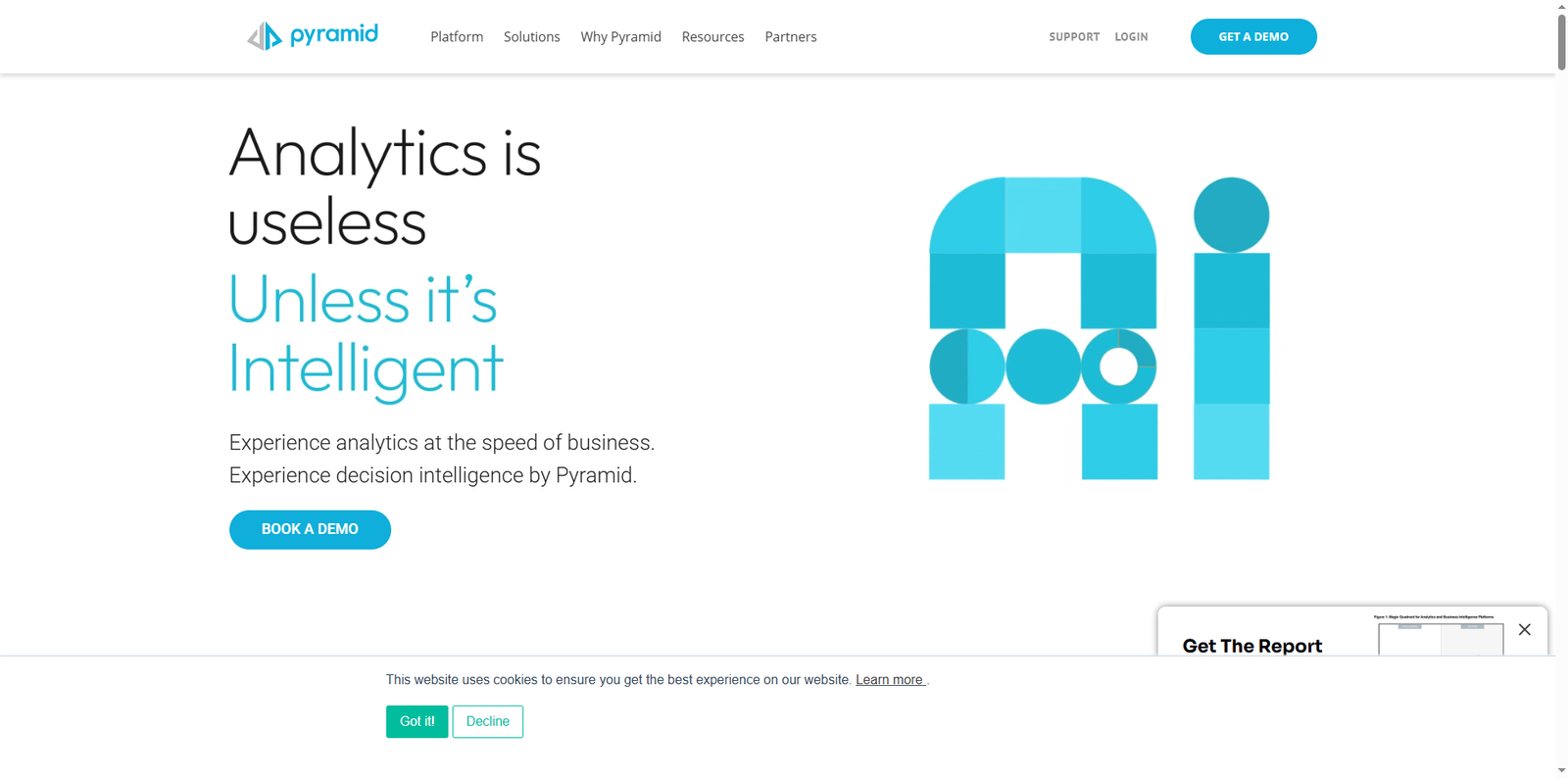
According to the company’s overview, Pyramid Analytics enables users to experience “analytics at the speed of business.” It combines automation, AI, and intuitive interfaces to deliver intelligent analytics experiences that adapt to the needs of modern enterprises. The platform’s architecture supports direct querying from live data sources, ensuring real-time insights without the need for data extraction or duplication.
The Core Components of Pyramid Analytics
Data Preparation and Science
Data preparation is often one of the most time-consuming aspects of analytics. Pyramid Analytics simplifies this process through its built-in data connectors and direct query engine. Users can connect to hundreds of data sources, including cloud platforms, databases, and enterprise applications. The platform supports advanced data wrangling, transformation, and enrichment processes, enabling users to prepare data efficiently for analysis.
Beyond preparation, Pyramid Analytics integrates data science capabilities such as predictive modeling and machine learning. Users can build, train, and deploy models directly within the platform, eliminating the need for external tools. This seamless integration ensures that data scientists and business analysts can collaborate effectively within a unified environment.
Semantics and Logic
One of Pyramid Analytics’ standout features is its semantic modeling layer. This layer abstracts the complexity of underlying databases, allowing users to create virtual semantic models that simplify querying and analysis. These models define relationships, hierarchies, and business logic that can be reused across the organization, ensuring consistency and accuracy in reporting.
Users can define custom formulas, dynamic calculations, and business rules that align with organizational standards. This semantic layer not only enhances analytical flexibility but also promotes governance by centralizing logic definitions in one place.
Business Analytics
Pyramid Analytics offers a robust suite of business analytics tools designed for interactive data exploration. Users can query live data sources using AI-driven natural language queries, drag-and-drop interfaces, or spreadsheet-like environments. This flexibility caters to a wide range of users—from business executives seeking quick insights to analysts performing deep dives into complex datasets.
The platform supports the creation of interactive visualizations, dashboards, and infographics. Users can enrich their analyses with contextual commentary, external content, and dynamic slicers. Real-time dashboards enable decision-makers to monitor key metrics and respond swiftly to emerging trends.
Collaboration and Distribution
Modern analytics is not just about generating insights—it’s about sharing them effectively. Pyramid Analytics facilitates collaboration by transforming reports and dashboards into interactive workspaces. Teams can annotate, comment, and tag data points in real time, ensuring that discussions remain data-driven and contextual.
The platform’s distribution capabilities allow users to schedule and share reports in multiple formats. Whether it’s embedding dashboards into enterprise applications or exporting static reports, Pyramid Analytics supports a variety of delivery methods that enhance accessibility and engagement across the organization.
Governance and Security
Data governance and security are critical in enterprise analytics. Pyramid Analytics provides robust, role-based access control, ensuring that users only access data relevant to their roles. Its centralized business logic library promotes consistency, while built-in auditing and usage monitoring support compliance and transparency.
Features such as version control and standardized metrics help maintain data integrity across departments. With enterprise-grade security measures, organizations can confidently scale their analytics operations without compromising data protection.
How Pyramid Analytics Supports Decision Intelligence
Decision intelligence is the next evolution of business analytics, combining data science, AI, and human expertise to enhance decision-making. Pyramid Analytics embodies this concept by integrating machine learning, automation, and intuitive interfaces into a single platform. It empowers users to explore data, test hypotheses, and simulate outcomes—all within a governed environment.
For instance, a retail company can use Pyramid Analytics to analyze sales performance across regions, predict future demand, and optimize inventory levels. By leveraging AI-driven insights, decision-makers can make proactive adjustments that improve profitability and efficiency. This holistic approach transforms analytics from a reactive process into a strategic advantage.
Benefits of Using Pyramid Analytics
- Unified Platform: Combines data preparation, analytics, and machine learning in one environment.
- Real-Time Insights: Direct querying from live data sources ensures up-to-date analysis.
- Enhanced Collaboration: Built-in tools for commenting, tagging, and sharing insights.
- Scalability: Designed to handle enterprise-level data volumes and user bases.
- Governed Analytics: Centralized control over business logic and data access.
These benefits make Pyramid Analytics a powerful solution for organizations seeking to democratize data access and foster a culture of informed decision-making.
Alternative Tools to Pyramid Analytics
While Pyramid Analytics offers a comprehensive decision intelligence platform, several other analytics tools provide valuable alternatives depending on organizational needs. Below is a table highlighting some notable options:
| Tool Name | Description |
|---|---|
| Tableau | A leading data visualization platform that enables users to create interactive dashboards and share insights across teams. |
| Microsoft Power BI | Offers self-service analytics and AI-driven insights integrated with Microsoft’s ecosystem, ideal for organizations using Office 365. |
| Looker | A modern business intelligence tool that focuses on data modeling and embedded analytics, now part of Google Cloud. |
| Qlik Sense | Provides associative analytics and AI-powered insights for dynamic data exploration and visualization. |
| Sisense | Enables organizations to infuse analytics into applications and workflows, promoting data-driven decision-making. |
Conclusion
Pyramid Analytics represents a significant advancement in the field of decision intelligence. By unifying data preparation, analytics, and machine learning within a single platform, it empowers organizations to harness the full potential of their data. Its semantic modeling, real-time querying, and collaborative features make it a versatile solution for enterprises seeking agility and governance in their analytics workflows.
As businesses continue to navigate complex data landscapes, tools like Pyramid Analytics will play a crucial role in driving smarter, faster, and more informed decisions. Whether you’re a data scientist, business analyst, or executive, embracing such a platform can transform how your organization interprets and acts on data—turning information into a strategic asset that fuels growth and innovation.