




Outline
- Introduction
- What is Neptune.ai?
- Why Experiment Tracking Matters
- How Neptune.ai Works
- Core Capabilities and Benefits
- Use Cases in Machine Learning and AI
- Integration with Popular ML Tools
- Alternatives to Neptune.ai
- Conclusion
Introduction
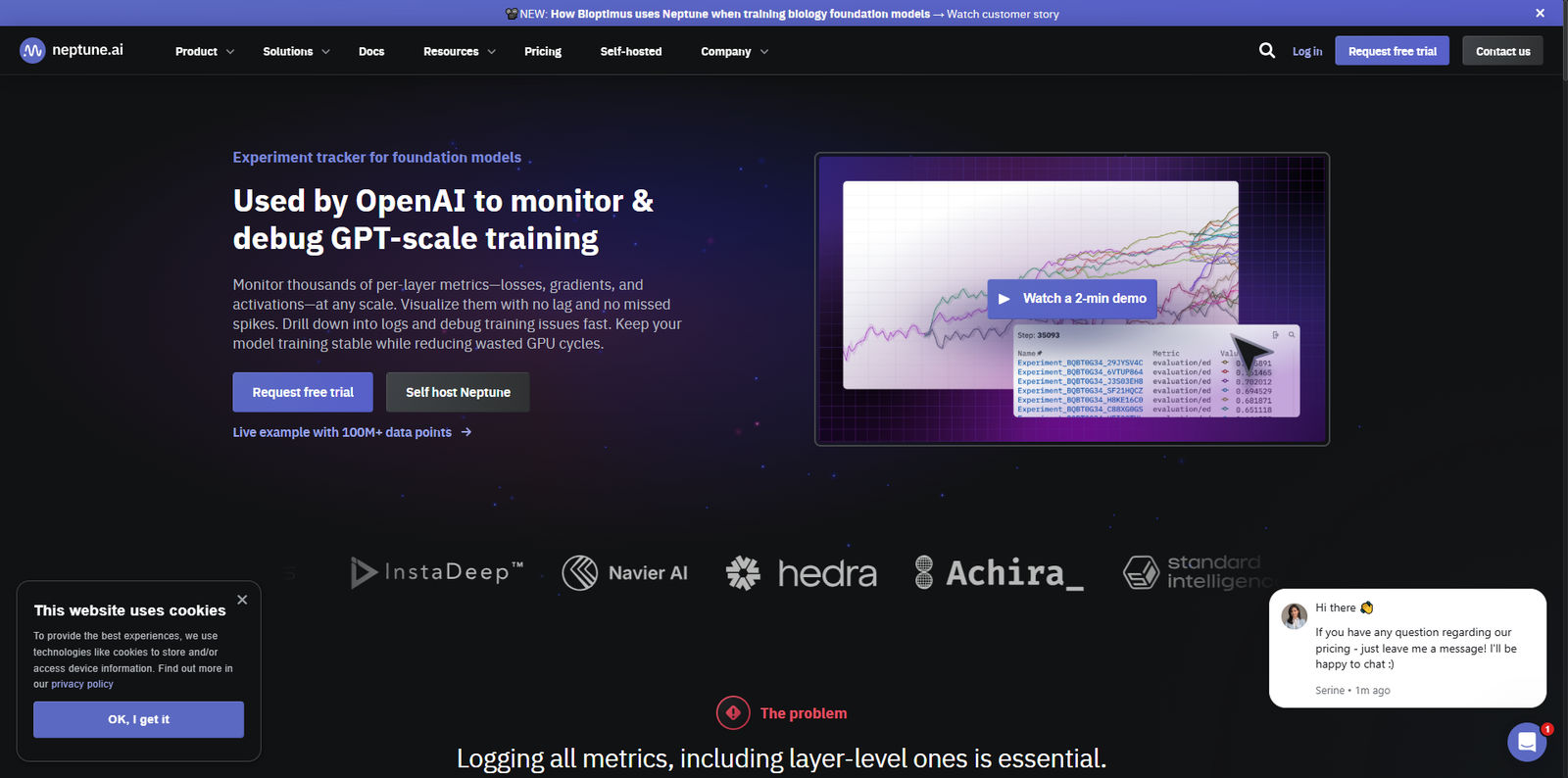
In the rapidly evolving world of machine learning (ML) and artificial intelligence (AI), managing experiments efficiently is crucial. As models grow in complexity—sometimes reaching trillions of parameters—tracking metrics, visualizing results, and debugging training issues become increasingly challenging. Neptune.ai has emerged as a powerful solution designed to simplify and streamline this process. Used by industry leaders like OpenAI, it provides a centralized platform for monitoring, visualizing, and managing experiments at scale.
What is Neptune.ai?
Neptune.ai is a metadata store for MLOps, built to help teams manage all aspects of their machine learning experiments. It allows users to log, organize, and visualize metrics, parameters, artifacts, and model versions in real time. The platform is particularly well-suited for large-scale projects, enabling users to monitor thousands of per-layer metrics such as losses, gradients, and activations without performance degradation.
According to Neptune.ai’s documentation, the platform can handle over 100 million data points in live examples, offering seamless visualization and deep debugging capabilities. This makes it a go-to tool for teams working on foundation models and large-scale neural networks.
Why Experiment Tracking Matters
Machine learning experimentation involves numerous variables—data preprocessing steps, hyperparameters, architectures, and random seeds. Without proper tracking, reproducing results or identifying performance bottlenecks becomes nearly impossible. Experiment tracking ensures:
- Reproducibility: Every experiment can be replicated with the same configuration and data.
- Transparency: Teams can easily understand what changes led to performance improvements.
- Collaboration: Centralized tracking allows multiple team members to contribute effectively.
- Efficiency: Reduces wasted GPU cycles by identifying failing experiments early.
How Neptune.ai Works
Neptune.ai integrates seamlessly into existing ML workflows. Users can log metrics directly from their training scripts using a lightweight client library. The logged data is then visualized in an interactive dashboard, allowing users to explore metrics across runs, compare experiments, and detect anomalies.
One of Neptune’s standout features is its ability to monitor per-layer metrics in real time. This enables data scientists to identify issues like vanishing gradients or unstable activations before they derail training. The platform’s architecture ensures no lag or missed spikes, even when handling massive datasets.
Workflow Overview
- Install the Neptune client and initialize a project.
- Log metrics, parameters, and artifacts during training.
- Visualize results in the Neptune dashboard.
- Compare runs, fork experiments, and debug issues efficiently.
Core Capabilities and Benefits
Neptune.ai’s design focuses on scalability, speed, and flexibility. It supports both cloud-hosted and self-hosted deployments, giving organizations full control over their data. The platform’s key benefits include:
- Scalable Tracking: Handles experiments with billions of parameters and thousands of metrics per run.
- Deep Debugging: Enables layer-level analysis to detect subtle training issues.
- Real-Time Visualization: Offers instant feedback on model performance.
- Collaboration Tools: Facilitates teamwork through shared dashboards and versioned experiments.
- Integration Flexibility: Works with popular ML frameworks and orchestration tools.
Use Cases in Machine Learning and AI
Neptune.ai is widely used across industries for various ML and AI applications. Below are some common use cases:
1. Foundation Model Training
Organizations training large-scale models, such as language models or vision transformers, rely on Neptune.ai to monitor thousands of metrics simultaneously. This ensures stability and helps prevent costly training failures.
2. Research and Experimentation
Academic and corporate research teams use Neptune.ai to manage complex experiments, compare results, and maintain reproducibility. The ability to fork runs and test multiple configurations accelerates innovation.
3. Production Monitoring
Once models are deployed, Neptune.ai continues to provide value by tracking performance drift, monitoring data quality, and ensuring consistent behavior across environments.
Integration with Popular ML Tools
Neptune.ai integrates smoothly with many popular tools in the ML ecosystem. This interoperability allows teams to incorporate Neptune into their existing pipelines without major changes. Some of the most common integrations include:
- TensorFlow and PyTorch for deep learning model training.
- Scikit-learn for traditional machine learning workflows.
- Kubeflow and MLflow for orchestration and pipeline management.
- Weights & Biases and Comet for complementary experiment tracking and visualization capabilities.
These integrations make Neptune.ai a flexible choice for teams using diverse ML frameworks and tools.
Alternatives to Neptune.ai
While Neptune.ai is a powerful platform, several other tools also offer experiment tracking and model management capabilities. Below is a comparison of popular alternatives that teams might consider:
| Tool Name | Description |
|---|---|
| Weights & Biases | A leading experiment tracking and collaboration platform that provides real-time visualizations and model versioning for ML projects. |
| MLflow | An open-source platform for managing the ML lifecycle, including experiment tracking, model packaging, and deployment. |
| Comet | Offers experiment tracking, model optimization, and dataset management with an emphasis on collaboration and reproducibility. |
| ClearML | Provides experiment management, orchestration, and data versioning capabilities for end-to-end ML operations. |
| DVC | Focuses on version control for data and models, integrating with Git to ensure reproducibility and collaboration. |
Conclusion
Neptune.ai stands out as a robust and scalable solution for experiment tracking and model monitoring in the machine learning ecosystem. Its ability to handle massive datasets, visualize per-layer metrics, and support deep debugging makes it indispensable for teams working on complex AI models. By integrating seamlessly with popular ML frameworks and tools, Neptune.ai empowers data scientists and engineers to maintain full visibility into their experiments, ensuring stability, reproducibility, and efficiency.
As organizations continue to scale their AI initiatives, platforms like Neptune.ai will play a critical role in enabling transparency and control over the ML lifecycle. Whether you are a researcher, engineer, or enterprise team, adopting a structured experiment tracking solution is key to accelerating innovation and maintaining high-quality results in machine learning projects.