





Outline
- Introduction
- What Is Monte Carlo?
- How Monte Carlo Works
- Why Data Observability Matters
- Core Components of Monte Carlo’s Platform
- Benefits of Using Monte Carlo
- Real-World Use Cases
- Alternative Tools for Data Observability
- Conclusion
Introduction
In today’s data-driven world, organizations rely heavily on accurate, reliable, and timely data to make critical business decisions. However, as data pipelines become increasingly complex, ensuring data quality and observability has become a major challenge. Monte Carlo is a leading platform that addresses this challenge by providing end-to-end data observability solutions. It helps teams detect, resolve, and prevent data reliability issues before they impact business outcomes. This article explores how Monte Carlo transforms data operations, its underlying technology, and why it’s becoming an essential tool for modern data teams.
What Is Monte Carlo?
Monte Carlo is a data observability platform designed to monitor and ensure the health of data pipelines. Founded in 2019 by Barr Moses and Lior Gavish, the company has quickly become a pioneer in the data reliability space. The platform provides automated monitoring, anomaly detection, and root cause analysis for data systems, allowing organizations to trust their data without manual oversight.
According to industry reports, data downtime—periods when data is missing, inaccurate, or delayed—costs businesses millions annually. Monte Carlo helps mitigate these losses by offering real-time visibility into data pipelines, ensuring that teams can identify and address issues before they escalate.
How Monte Carlo Works
Monte Carlo integrates seamlessly with modern data stacks, including data warehouses, data lakes, ETL tools, and BI platforms. Once connected, it continuously monitors data movement and transformation across the pipeline. The platform uses machine learning algorithms to detect anomalies in data volume, schema, and freshness, alerting teams when something goes wrong.
Monte Carlo’s architecture focuses on five key pillars of data observability:
- Freshness: Ensures data is updated on time and reflects the most recent changes.
- Volume: Tracks the completeness of data to detect missing or duplicated records.
- Schema: Monitors structural changes that could break downstream processes.
- Lineage: Provides visibility into how data flows across systems and transformations.
- Quality: Detects anomalies in data values that may indicate corruption or errors.
Why Data Observability Matters
Data observability is the foundation of trustworthy analytics and AI. Without it, organizations risk making decisions based on flawed or incomplete data. As data ecosystems grow in complexity, manual monitoring becomes impractical. Automated observability tools like Monte Carlo provide a scalable solution, enabling teams to maintain confidence in their data pipelines.
According to Gartner, poor data quality costs organizations an average of $12.9 million per year. By implementing observability practices, companies can significantly reduce these costs while improving operational efficiency and decision-making accuracy.
Core Components of Monte Carlo’s Platform
1. Automated Data Monitoring
Monte Carlo automatically tracks data health metrics across multiple systems. It uses statistical models to learn normal data behavior and flags deviations that may indicate issues. This proactive approach minimizes downtime and reduces the need for manual checks.
2. End-to-End Lineage Visualization
Understanding where data comes from and how it changes is critical for debugging issues. Monte Carlo provides detailed lineage maps that show the flow of data from source to destination. This transparency helps teams quickly identify the root cause of problems and assess their impact.
3. Intelligent Alerting and Incident Management
Monte Carlo integrates with communication tools like Slack and PagerDuty to deliver real-time alerts. Teams can prioritize incidents based on severity and collaborate efficiently to resolve them. The platform also offers post-incident analysis to prevent future occurrences.
4. Integration with Modern Data Stacks
Monte Carlo supports popular data platforms such as Snowflake, BigQuery, Databricks, and Redshift. It also integrates with orchestration tools like Airflow and dbt, ensuring comprehensive coverage across the entire data lifecycle.
Benefits of Using Monte Carlo
Organizations adopting Monte Carlo experience numerous benefits, including improved data reliability, faster issue resolution, and enhanced collaboration between data engineering and analytics teams. By automating observability, teams can focus more on innovation and less on firefighting data issues.
- Reduced Data Downtime: Continuous monitoring ensures that data issues are detected early.
- Improved Trust in Analytics: Reliable data builds confidence in business intelligence and AI models.
- Operational Efficiency: Automation reduces manual workload and accelerates troubleshooting.
- Scalability: Monte Carlo’s architecture supports large-scale data environments with ease.
Real-World Use Cases
Monte Carlo is used across industries such as finance, healthcare, e-commerce, and technology. For example, a global retail company leveraged Monte Carlo to monitor its supply chain data pipelines. Within weeks, the company reduced data-related incidents by 40% and improved reporting accuracy. Similarly, a fintech firm used Monte Carlo to ensure compliance by maintaining consistent and traceable data flows across regulatory systems.
These examples highlight how data observability is not just a technical necessity but a strategic advantage that drives better business outcomes.
Alternative Tools for Data Observability
While Monte Carlo is a leader in the field, several other tools offer complementary or alternative approaches to data observability. Below is a comparison table of notable alternatives:
| Tool Name | Description |
|---|---|
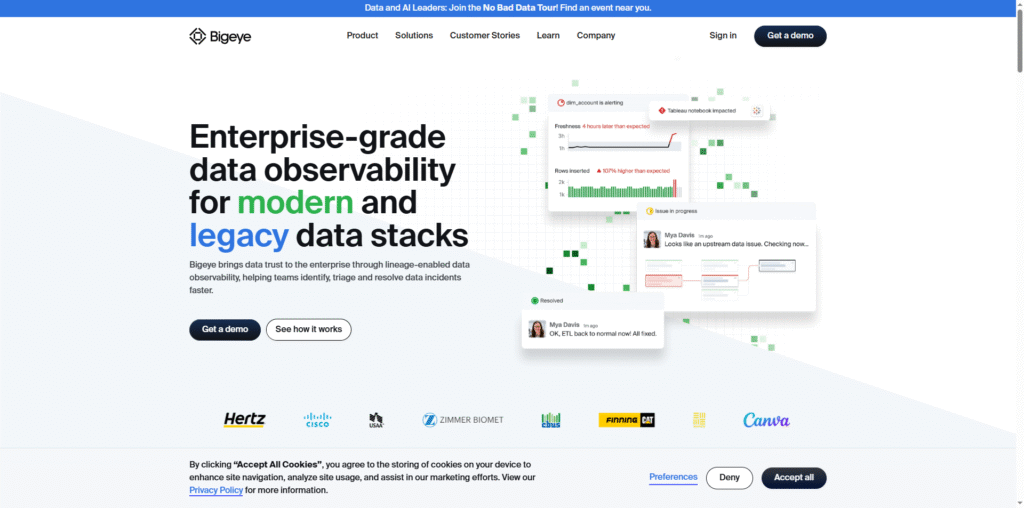
| Bigeye | Provides automated data quality monitoring and anomaly detection for data pipelines. |
| Databand | Focuses on data pipeline observability, offering real-time insights into data flow and performance. |
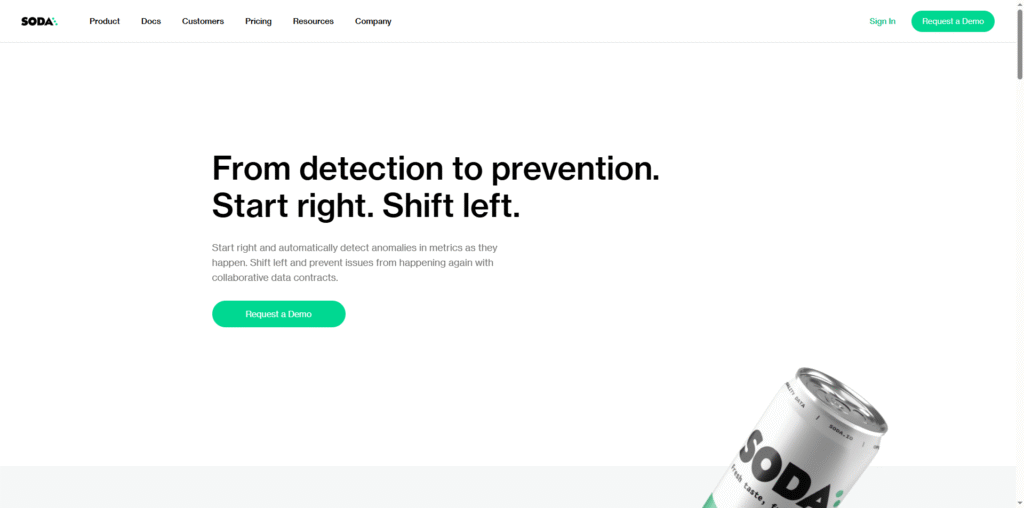
| Soda | Enables data teams to test and monitor data quality using a declarative approach. |
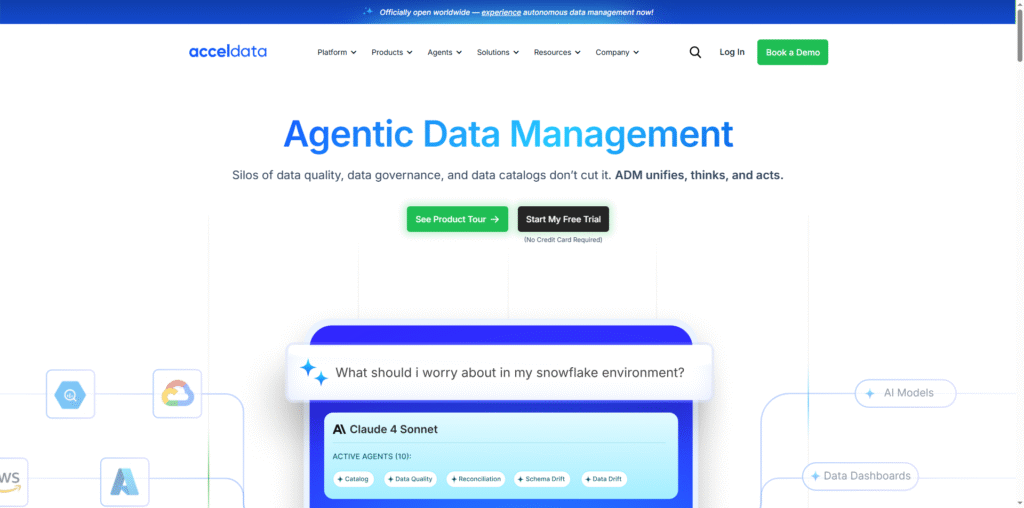
| Acceldata | Delivers full-stack data observability, covering data, compute, and cost optimization. |
| Lightup | Specializes in real-time data quality monitoring for streaming and batch data systems. |
Conclusion
Monte Carlo has redefined how organizations approach data reliability and observability. By automating the detection and resolution of data issues, it empowers teams to maintain trust in their analytics and AI systems. As data ecosystems continue to evolve, the importance of observability will only grow. Tools like Monte Carlo provide the foundation for a future where data-driven decisions are not just fast but also accurate and dependable.
Whether you’re a data engineer, analyst, or business leader, investing in data observability is no longer optional—it’s essential. Monte Carlo stands out as a powerful ally in this journey, ensuring that your data remains reliable, actionable, and ready to drive innovation.