


Outline
- Introduction
- What Is MicroStrategy?
- Core Components of MicroStrategy
- How MicroStrategy Empowers Data-Driven Decision Making
- Key Benefits of Using MicroStrategy
- Real-World Applications and Case Studies
- Alternatives to MicroStrategy
- Conclusion
Introduction
In today’s data-driven world, organizations rely heavily on analytics platforms to transform raw data into actionable insights. MicroStrategy is one of the most established names in the business intelligence (BI) and analytics landscape. Founded in 1989, the company has evolved into a global leader in enterprise analytics, offering a unified platform that empowers businesses to make smarter, faster decisions. This article explores MicroStrategy’s capabilities, its role in modern enterprises, and how it compares to other analytics tools in the market.
What Is MicroStrategy?
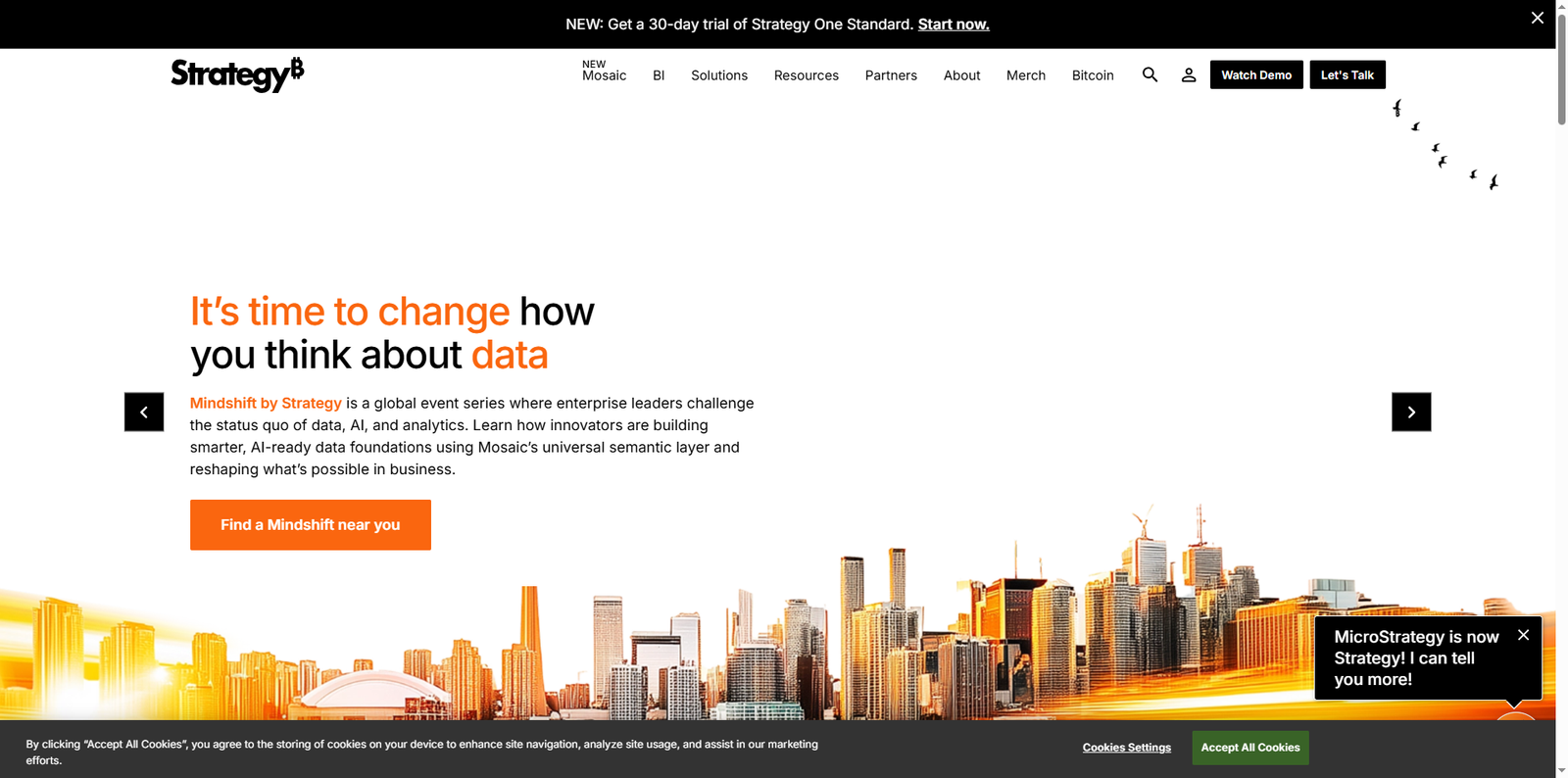
MicroStrategy is an enterprise analytics and mobility platform designed to help organizations harness the power of data. It enables users to analyze large datasets, visualize insights, and share reports across departments. The platform supports cloud, on-premises, and hybrid deployments, offering flexibility for businesses of all sizes. According to Gartner, MicroStrategy consistently ranks among the top BI tools for its scalability and robust governance features.
Company Overview
Headquartered in Tysons Corner, Virginia, MicroStrategy Incorporated serves clients across industries such as finance, healthcare, retail, and government. The company is also known for its strategic investments in Bitcoin, positioning itself as one of the largest corporate holders of cryptocurrency. However, its core business remains focused on delivering enterprise-grade analytics solutions that drive digital transformation.
Core Components of MicroStrategy
MicroStrategy’s architecture is built around several integrated components that work together to deliver a seamless analytics experience. These include:
- MicroStrategy Analytics Platform: Provides tools for data discovery, visualization, and advanced analytics.
- MicroStrategy Cloud: Offers a scalable, secure cloud environment for analytics deployment.
- MicroStrategy Library: A centralized hub where users can access dashboards, reports, and visualizations.
- MicroStrategy Workstation: A desktop interface for developers and analysts to design and manage BI content.
- HyperIntelligence: A unique feature that delivers contextual insights directly within everyday applications like email and browsers.
How MicroStrategy Empowers Data-Driven Decision Making
MicroStrategy enables organizations to integrate data from multiple sources, including databases, cloud services, and enterprise applications. Its semantic graph technology ensures consistent definitions and metrics across the organization, reducing data silos and improving collaboration. The platform’s AI and machine learning integration allows predictive analytics, helping businesses anticipate trends and optimize operations.
Data Integration and Governance
Data governance is a critical aspect of enterprise analytics. MicroStrategy ensures that data remains accurate, secure, and compliant with regulations such as GDPR and HIPAA. The platform supports role-based access control, encryption, and audit trails, ensuring transparency and accountability in data usage.
Visualization and Reporting
MicroStrategy’s visualization tools allow users to create interactive dashboards and reports that simplify complex data. These visualizations can be embedded into web portals or mobile apps, enabling decision-makers to access insights anytime, anywhere. The platform’s drag-and-drop interface makes it accessible even to non-technical users, promoting a culture of self-service analytics.
Key Benefits of Using MicroStrategy
Organizations choose MicroStrategy for its enterprise-grade capabilities and scalability. Some of the key benefits include:
- Unified Platform: Combines analytics, mobility, and security in one environment.
- Scalability: Supports thousands of users and massive datasets without compromising performance.
- AI-Powered Insights: Integrates with machine learning models to deliver predictive analytics.
- HyperIntelligence: Provides instant insights within commonly used business tools.
- Robust Security: Ensures data protection through advanced encryption and access controls.
Real-World Applications and Case Studies
MicroStrategy’s impact spans multiple industries, demonstrating its versatility and reliability. Here are some notable examples:
Financial Services
In the financial sector, MicroStrategy helps institutions monitor risk, detect fraud, and optimize customer engagement. For instance, a leading global bank used MicroStrategy to consolidate data from over 50 systems, reducing reporting time by 60% and improving compliance reporting accuracy.
Retail and E-Commerce
Retailers leverage MicroStrategy to analyze customer behavior, track sales performance, and manage inventory. A major retail chain implemented MicroStrategy dashboards to monitor real-time store performance, resulting in a 15% increase in operational efficiency.
Healthcare
Healthcare organizations use MicroStrategy to improve patient outcomes and operational efficiency. By integrating data from electronic health records (EHRs), hospitals can identify treatment trends and enhance care quality while maintaining compliance with data privacy regulations.
Public Sector
Government agencies utilize MicroStrategy for transparency and performance management. For example, a state government used the platform to track public health data during the pandemic, enabling faster decision-making and resource allocation.
Alternatives to MicroStrategy
While MicroStrategy is a powerful BI platform, several alternatives offer comparable capabilities. Below is a table highlighting some popular options:
| Tool Name | Description |
|---|---|
| Tableau | A leading data visualization platform known for its intuitive interface and strong community support. |
| Power BI | Microsoft’s analytics solution that integrates seamlessly with Office 365 and Azure services. |
| Looker | A Google Cloud-based BI tool that focuses on data modeling and embedded analytics. |
| Qlik Sense | An associative analytics platform that enables users to explore data freely without predefined queries. |
| Sisense | A modern analytics platform designed for embedding analytics into applications and workflows. |
Why Choose MicroStrategy Over Competitors?
MicroStrategy stands out for its enterprise scalability, governance, and innovative HyperIntelligence feature. Unlike many competitors, it offers a single platform that unifies analytics, mobility, and embedded intelligence. This holistic approach reduces complexity and ensures consistency across all data-driven initiatives. Additionally, MicroStrategy’s open architecture allows integration with popular cloud services like AWS, Azure, and Google Cloud, giving organizations flexibility in deployment.
Future Outlook for MicroStrategy
As organizations continue to embrace digital transformation, the demand for advanced analytics platforms will only grow. MicroStrategy’s focus on AI, cloud, and embedded intelligence positions it well for the future. The company’s ongoing investment in innovation ensures that it remains competitive in an evolving BI landscape. According to IDC, the global business intelligence market is expected to surpass $40 billion by 2027, and MicroStrategy’s comprehensive platform is poised to capture a significant share of this growth.
Conclusion
MicroStrategy has established itself as a cornerstone of enterprise analytics, empowering organizations to unlock the full potential of their data. Its robust architecture, advanced governance, and innovative HyperIntelligence feature make it a preferred choice for businesses seeking scalable, secure, and insightful analytics solutions. While alternatives like Tableau, Power BI, and Looker offer strong competition, MicroStrategy’s unified platform and enterprise focus set it apart. As data continues to drive business success, adopting a platform like MicroStrategy can be a transformative step toward smarter, faster, and more informed decision-making.