





Outline
- Introduction
- What Is Meltano?
- How Meltano Works
- Core Components of Meltano
- Benefits of Using Meltano
- Exploring Meltano Hub and SDK
- Version Control and Transparency
- Alternatives to Meltano
- Real-World Use Cases
- Conclusion
Introduction
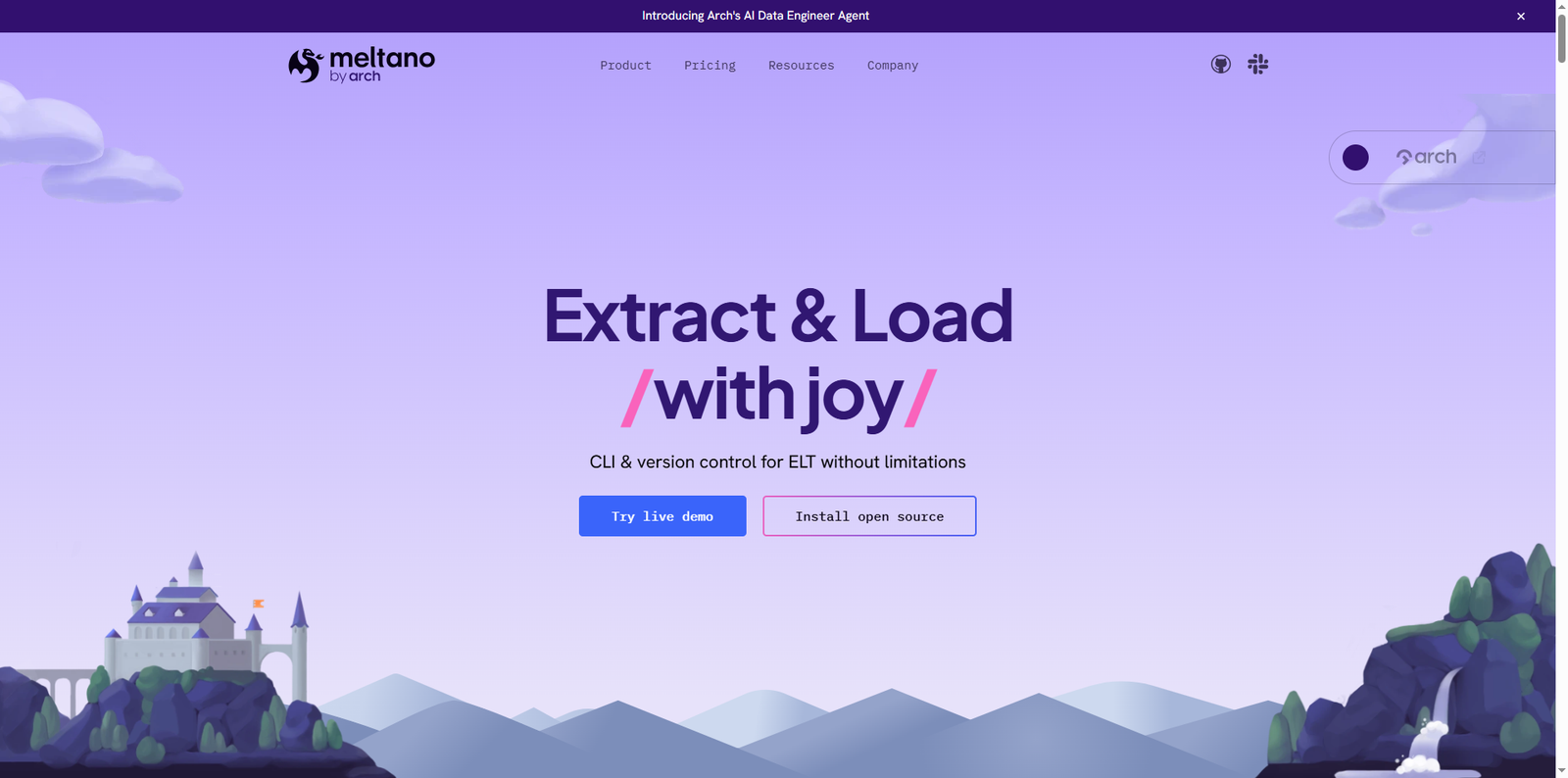
In the modern data-driven world, organizations rely on efficient data pipelines to extract, load, and transform information from multiple sources. Meltano has emerged as a leading open-source ELT (Extract, Load, Transform) platform designed to give data engineers complete control and visibility over their data workflows. Built with transparency and flexibility in mind, Meltano enables teams to manage, customize, and scale their data pipelines without the limitations of proprietary systems.
What Is Meltano?
Meltano is an open-source data integration platform that allows teams to build, run, and manage ELT pipelines using a command-line interface (CLI) and version-controlled workflows. Originally developed by GitLab in 2018 and later spun out as an independent company, Meltano aims to make data engineering as efficient and collaborative as software development. The name “Meltano” itself is derived from Model, Extract, Load, Transform, Analyze, Notebook, and Orchestrate, reflecting its comprehensive approach to data operations.
How Meltano Works
Meltano operates on the principle of modularity. It uses extractors (known as “taps”) to pull data from sources and loaders (known as “targets”) to send that data to destinations. These components are built on the Singer specification, ensuring compatibility across hundreds of data connectors. Meltano’s CLI enables users to define, run, and monitor pipelines directly from the terminal, while version control ensures every change is tracked and reproducible.
Example Workflow
A typical Meltano workflow might involve extracting data from a PostgreSQL database, loading it into a Snowflake data warehouse, and then transforming it using dbt. This can be executed with simple commands such as:
meltano add extractor tap-postgresmeltano add loader target-snowflakemeltano run tap-postgres target-snowflake dbt-snowflake
This simplicity allows teams to focus on building insights rather than managing complex infrastructure.
Core Components of Meltano
1. Extractors and Loaders
Meltano supports over 600 connectors through the Meltano Hub, covering databases, SaaS APIs, files, and custom sources. Users can also build their own connectors using the Meltano SDK, allowing integration with niche or internal systems.
2. Meltano SDK
The Meltano SDK provides a framework for developing custom extractors and loaders. It simplifies the process of creating connectors that adhere to the Singer specification, enabling developers to quickly extend Meltano’s capabilities.
3. CLI and Configuration Management
All Meltano projects are managed through a CLI and configuration files stored in version control systems like Git. This setup ensures that every pipeline is reproducible, auditable, and easily shared across teams.
4. Orchestration and Integration
Meltano integrates seamlessly with orchestration tools such as Apache Airflow and Prefect, allowing users to schedule and monitor their data workflows efficiently.
Benefits of Using Meltano
Transparency and Control
Unlike many managed ELT platforms, Meltano provides full visibility into pipeline execution. Users can inspect logs, review connector code, and modify configurations without relying on vendor support. This transparency fosters trust and accelerates debugging.
Version Control and Collaboration
Because Meltano projects are stored as code, they integrate naturally with Git-based workflows. Teams can collaborate on data pipelines just like they do on software projects, using pull requests, code reviews, and continuous integration.
Flexibility and Customization
Meltano’s open architecture allows users to adapt it to their unique needs. Whether it’s masking sensitive data before loading, adding new data sources, or tweaking existing connectors, Meltano empowers engineers to innovate without constraints.
Cost Efficiency
By being open-source and self-managed, Meltano helps organizations reduce dependency on expensive proprietary systems. Teams pay only for the infrastructure they use, making it a cost-effective choice for scaling data operations.
Exploring Meltano Hub and SDK
The Meltano Hub is a centralized repository of connectors that allows users to discover and install pre-built extractors and loaders. With over 600 available connectors, it covers a vast range of data sources—from databases like PostgreSQL and MySQL to SaaS platforms like Salesforce and HubSpot.
The Meltano SDK further enhances this ecosystem by enabling developers to create custom connectors using Python. This flexibility ensures that even the most specialized data sources can be integrated into Meltano pipelines.
Version Control and Transparency
Meltano’s commitment to transparency is evident in its version-controlled approach. Every configuration, connector, and transformation is stored in plain text, allowing teams to track changes and roll back when necessary. Detailed pipeline logs provide insights into every run, helping engineers diagnose issues quickly and maintain data integrity.
Moreover, Meltano encourages open collaboration by allowing users to fork connectors, modify them, and contribute improvements back to the community. This open-source ethos has fostered a vibrant ecosystem of contributors and data professionals.
Alternatives to Meltano
While Meltano stands out for its open-source flexibility and developer-friendly design, several other tools also serve the ELT and data integration space. Below is a comparison of popular alternatives:
| Tool | Description |
|---|---|
| Airbyte | An open-source data integration platform offering a large library of connectors and a user-friendly interface for building ELT pipelines. |
| Fivetran | A managed ELT service that automates data extraction and loading with minimal configuration, ideal for teams seeking a fully hosted solution. |
| Stitch | A cloud-based ETL tool that simplifies data movement from multiple sources to destinations, focusing on ease of use and reliability. |
| Hevo Data | A no-code data pipeline platform that supports real-time data integration and transformation for analytics and reporting. |
Real-World Use Cases
Meltano is used by data teams across industries to streamline their data workflows. Some common use cases include:
- Centralized Data Integration: Organizations consolidate data from multiple SaaS applications, databases, and APIs into a single warehouse for unified analytics.
- Custom Data Pipelines: Teams build specialized connectors for internal systems using the Meltano SDK, ensuring complete coverage of their data landscape.
- Data Governance and Compliance: Meltano’s transparent configuration and logging help maintain compliance with data regulations by providing full audit trails.
- Collaborative Data Engineering: Version-controlled pipelines enable cross-functional teams to collaborate efficiently and deploy changes confidently.
Conclusion
Meltano represents a new era of open-source data engineering—one where transparency, flexibility, and collaboration take center stage. By combining the power of version control, modular components, and an active community, Meltano empowers data teams to build and manage ELT pipelines with confidence and creativity. Whether you’re a startup seeking cost-effective data integration or an enterprise aiming for full control over your data workflows, Meltano provides the foundation to make it happen. As the data ecosystem continues to evolve, Meltano’s open and extensible approach ensures it will remain a cornerstone of modern data infrastructure.