




Outline
- Introduction to KNIME
- What Makes KNIME Unique?
- How KNIME Empowers Data-Driven Decision Making
- Key Components of the KNIME Platform
- Real-World Use Cases and Success Stories
- Alternatives to KNIME
- Getting Started with KNIME
- Conclusion
Introduction to KNIME
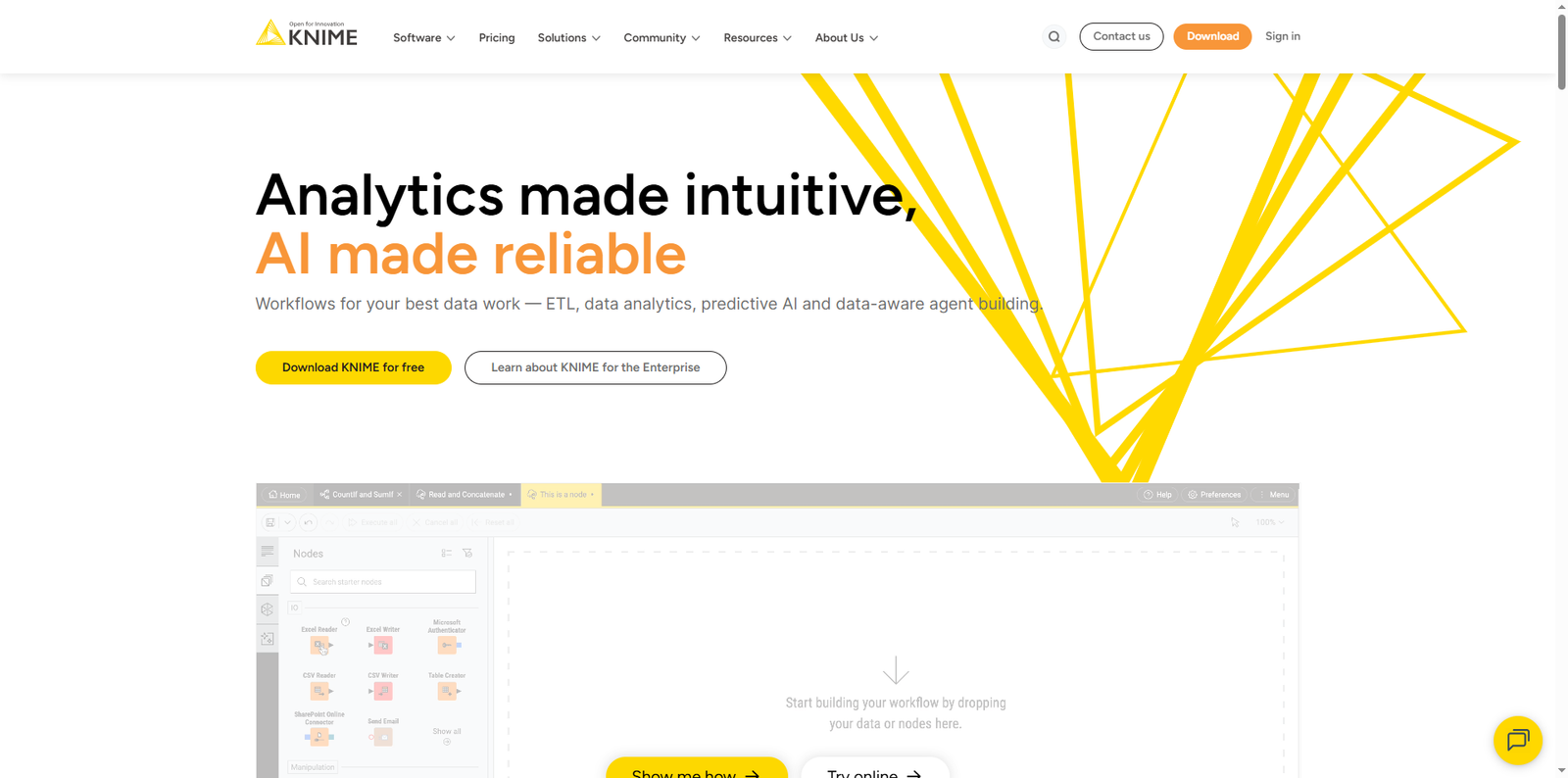
In today’s data-driven world, organizations rely heavily on analytics to make informed decisions. KNIME (Konstanz Information Miner) stands out as a leading open-source platform for data analytics, reporting, and integration. Developed at the University of Konstanz in Germany, KNIME has evolved into a global tool trusted by enterprises, researchers, and data enthusiasts alike. Its visual workflow interface allows users to design, execute, and automate data processes without extensive coding knowledge, making it ideal for both beginners and experts.
According to the company, KNIME is “easy to learn and adopt” and has become a cornerstone in many corporate data science training programs. For instance, Allan Luk, Director of Data Science and Analytics Business Solutions, highlighted that engineers have transitioned from beginners to analytics practitioners within months using KNIME. This demonstrates the platform’s accessibility and educational value.
What Makes KNIME Unique?
KNIME’s uniqueness lies in its open-source foundation and modular architecture. It integrates seamlessly with various data sources, including databases, spreadsheets, and cloud services. The platform supports a wide range of analytics tasks—from simple data cleaning to advanced machine learning and predictive modeling. Unlike many proprietary tools, KNIME offers transparency and flexibility, allowing users to customize workflows according to their specific needs.
Another distinguishing factor is KNIME’s strong community support. Thousands of contributors and users share workflows, extensions, and best practices through the KNIME Hub, a collaborative repository that fosters innovation and learning. This community-driven approach ensures continuous improvement and accessibility for all users.
How KNIME Empowers Data-Driven Decision Making
KNIME enables organizations to transform raw data into actionable insights through its intuitive drag-and-drop interface. Users can connect data sources, perform transformations, and visualize results—all within a single environment. This streamlined process reduces the dependency on specialized programming skills and accelerates the analytics lifecycle.
Benefits of Using KNIME for Businesses
- Accessibility: KNIME’s visual workflows make data analytics approachable for non-technical users.
- Scalability: It can handle small datasets as well as enterprise-level data pipelines.
- Integration: KNIME connects easily with tools like Python, R, and TensorFlow, enabling hybrid workflows.
- Automation: The platform supports scheduling and automation, ensuring consistent and repeatable results.
- Collaboration: Teams can share workflows and results, promoting transparency and teamwork.
Key Components of the KNIME Platform
KNIME’s architecture is built around several core components that enhance its versatility and performance. Each component serves a distinct purpose, ensuring that users can address diverse data challenges efficiently.
1. KNIME Analytics Platform
This is the open-source desktop application that allows users to create data workflows visually. It includes a wide range of pre-built nodes for data manipulation, statistical analysis, and machine learning. The platform supports integration with programming languages like Python and R, giving users the flexibility to extend their workflows.
2. KNIME Server
KNIME Server provides enterprise-level capabilities such as workflow automation, collaboration, and deployment. It enables teams to share workflows securely, schedule tasks, and manage version control. This component is essential for organizations looking to scale their analytics operations.
3. KNIME Hub
The KNIME Hub is an online repository where users can discover and share workflows, nodes, and extensions. It serves as a community-driven knowledge base, promoting best practices and innovation. Users can browse thousands of publicly available workflows to learn new techniques or solve specific problems.
4. KNIME Extensions
Extensions expand the functionality of the KNIME Analytics Platform. They include integrations with external tools, connectors for databases, and specialized nodes for machine learning, text mining, and image processing. This modularity ensures that KNIME remains adaptable to evolving data science trends.
Real-World Use Cases and Success Stories
KNIME’s versatility has made it a preferred choice across industries such as finance, healthcare, manufacturing, and marketing. Organizations use it to streamline operations, enhance decision-making, and uncover hidden insights from data.
1. Healthcare Analytics
Hospitals and research institutions use KNIME to analyze patient data, predict disease outcomes, and optimize resource allocation. The platform’s ability to handle large datasets and integrate with machine learning models makes it ideal for medical research and diagnostics.
2. Financial Services
Banks and insurance companies leverage KNIME for fraud detection, risk assessment, and customer segmentation. By automating data workflows, financial institutions can respond quickly to market changes and regulatory requirements.
3. Manufacturing Optimization
Manufacturers use KNIME to monitor production processes, identify inefficiencies, and predict equipment failures. Predictive maintenance powered by KNIME helps reduce downtime and operational costs.
4. Marketing and Customer Analytics
Marketing teams employ KNIME to analyze customer behavior, segment audiences, and measure campaign performance. The platform’s integration with CRM systems and social media analytics tools enhances marketing intelligence.
Alternatives to KNIME
While KNIME is a powerful and flexible platform, several other tools offer similar capabilities for data analytics and workflow automation. Below is a comparison table of popular alternatives:
| Tool Name | Description |
|---|---|
| RapidMiner | An intuitive data science platform that supports visual workflow design and advanced analytics for enterprises. |
| Alteryx | A data analytics tool that simplifies data preparation, blending, and predictive modeling through a drag-and-drop interface. |
| Tableau | A leading data visualization platform that helps users create interactive dashboards and share insights across teams. |
| Power BI | Microsoft’s business analytics service that provides interactive visualizations and business intelligence capabilities. |
| SAS | A comprehensive analytics suite used for statistical analysis, predictive modeling, and data management. |
Getting Started with KNIME
Starting with KNIME is straightforward, even for those new to data analytics. The platform offers extensive documentation, tutorials, and community support to help users at every stage of their learning journey.
Steps to Begin
- Download and Install: Obtain the KNIME Analytics Platform from the official website and install it on your system.
- Explore Sample Workflows: Access pre-built workflows from the KNIME Hub to understand basic concepts and best practices.
- Connect Data Sources: Import data from spreadsheets, databases, or APIs to start building your workflows.
- Experiment with Nodes: Use drag-and-drop nodes to clean, transform, and analyze data visually.
- Visualize Results: Create charts, graphs, and reports to communicate findings effectively.
- Join the Community: Engage with other users through forums, webinars, and online courses to expand your knowledge.
Learning Resources
KNIME provides a variety of learning materials, including video tutorials, documentation, and certification programs. Users can also participate in the KNIME Forum to ask questions and share insights. For those seeking structured learning paths, KNIME offers courses that guide users from beginner to advanced levels.
Conclusion
KNIME has established itself as a cornerstone in the world of data analytics, offering an open-source, user-friendly, and highly extensible platform. Its visual workflow interface empowers users of all skill levels to harness the power of data without extensive programming expertise. With strong community support, continuous innovation, and integration capabilities, KNIME remains a top choice for organizations aiming to build a data-driven culture. Whether you are a data scientist, business analyst, or researcher, KNIME provides the tools and flexibility needed to transform data into meaningful insights and drive smarter decisions.