


Outline
- Introduction
- Understanding Informatica and Its Role in Data Management
- The Power of the Intelligent Data Management Cloud™
- AI and Automation: Driving Smarter Data Strategies
- Real-World Success Stories
- How Informatica Enhances Supply Chain Resilience
- Alternatives to Informatica
- Conclusion
Introduction
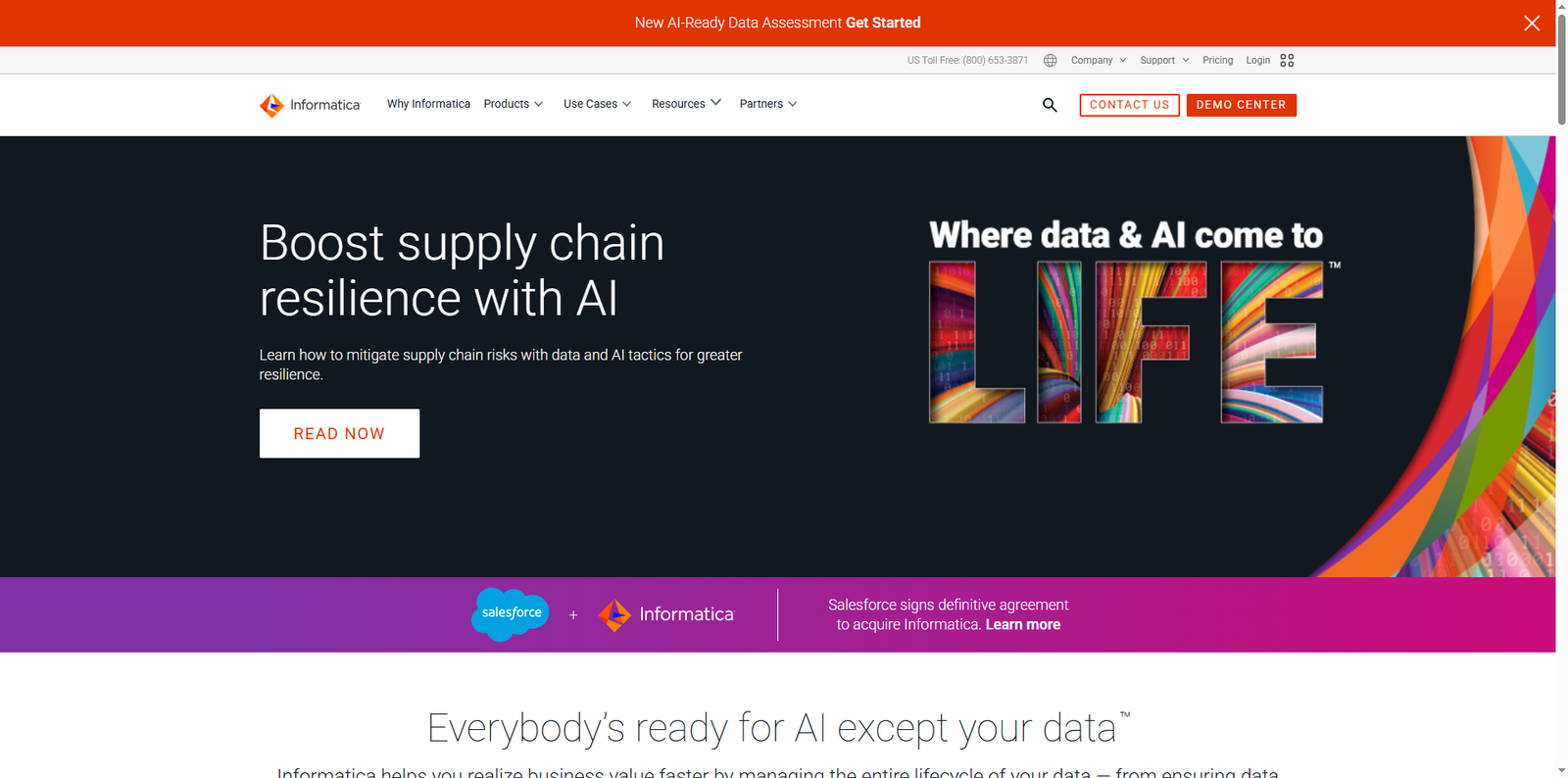
In today’s data-driven world, organizations depend on trusted, high-quality data to make informed decisions, enhance customer experiences, and drive innovation. Informatica stands at the forefront of this transformation, offering a comprehensive suite of AI-powered cloud data management solutions that help enterprises harness the full potential of their data. With over 50,000 metadata-aware connections and a global presence, Informatica enables businesses to unify, govern, and activate their data across hybrid and multi-cloud environments.
Understanding Informatica and Its Role in Data Management
Founded in 1993, Informatica has evolved into a global leader in enterprise cloud data management. The company’s mission is to help businesses realize value faster by managing the entire lifecycle of their data—from integration and governance to analytics and AI readiness. Informatica’s approach centers on ensuring data health, trust, and accessibility across all systems.
Informatica’s platform is built around the Intelligent Data Management Cloud™ (IDMC), powered by its proprietary CLAIRE® AI engine. This architecture allows organizations to automate complex data processes, maintain compliance, and scale operations efficiently. Whether it’s managing customer data, integrating applications, or ensuring data quality, Informatica provides a unified ecosystem that supports enterprise-level scalability and security.
The Power of the Intelligent Data Management Cloud™
The IDMC is a cloud-native, AI-powered platform designed to simplify data access and management across diverse environments. It supports multi-cloud and hybrid infrastructures, enabling seamless data movement between on-premises systems and cloud platforms such as AWS, Microsoft Azure, and Google Cloud.
Core Capabilities of IDMC
- Data Integration: Automates data ingestion and transformation across systems.
- Data Governance: Ensures compliance with privacy regulations and internal policies.
- Data Quality: Monitors and improves data accuracy and consistency.
- Master Data Management (MDM): Creates a single, trusted view of enterprise data.
- AI and Metadata Management: Leverages AI to enhance data discovery and lineage tracking.
By combining these capabilities, Informatica helps organizations achieve faster insights, reduce operational costs, and improve decision-making accuracy.
AI and Automation: Driving Smarter Data Strategies
Artificial Intelligence is at the heart of Informatica’s innovation. The CLAIRE® AI engine uses machine learning to automate repetitive data management tasks, recommend optimizations, and enhance data discovery. This intelligent automation not only accelerates workflows but also ensures that data remains accurate, consistent, and ready for analytics.
For instance, Informatica’s AI-driven data catalog automatically classifies and tags data assets, making it easier for teams to find and use the right data. This capability is crucial for organizations adopting generative AI and advanced analytics, as it ensures that AI models are trained on reliable, well-governed data.
Benefits of AI-Driven Data Management
- Operational Efficiency: Reduces manual intervention in data preparation and governance.
- Improved Data Trust: Ensures data accuracy and lineage tracking for compliance.
- Faster Innovation: Enables quicker deployment of AI and analytics projects.
- Scalability: Supports enterprise-wide data initiatives across multiple clouds.
Real-World Success Stories
Informatica’s impact is evident across industries, from banking and manufacturing to hospitality and retail. Several leading brands have leveraged Informatica’s cloud solutions to modernize their data ecosystems and achieve measurable results.
Case Studies
- Citizens Bank: Achieved 85% faster data onboarding and 99.95% uptime through cloud MDM modernization.
- Petmate: Realized a 92% improvement in data integration speed and automated its order-to-cash process.
- Holiday Inn Club Vacations: Completed a cloud migration in under four months, consolidating seven systems into one unified data platform.
- SUBARU: Completed 400 data catalogs, improving data quality and traceability across its operations.
- MABE: Saved over $200,000 by improving data quality and shortening AI development lifecycles.
These examples highlight Informatica’s ability to deliver tangible business outcomes through trusted, AI-powered data management.
How Informatica Enhances Supply Chain Resilience
Supply chain disruptions have become a major concern for global enterprises. Informatica’s AI-driven data management solutions help organizations build resilient supply chains by providing real-time visibility, predictive analytics, and automated risk mitigation strategies.
Key Ways Informatica Strengthens Supply Chains
- Data Unification: Integrates data from suppliers, logistics partners, and internal systems for a single source of truth.
- Predictive Analytics: Uses AI to forecast demand fluctuations and potential disruptions.
- Risk Management: Identifies vulnerabilities in the supply chain and recommends proactive measures.
- Operational Agility: Enables faster decision-making through real-time data insights.
By leveraging Informatica’s Intelligent Data Management Cloud™, companies can ensure that their supply chains remain agile, efficient, and responsive to market changes.
Alternatives to Informatica
While Informatica is a leader in cloud data management, several other platforms offer competitive capabilities. Below is a comparison of alternative tools that organizations may consider based on their specific data management needs.
| Tool Name | Description |
|---|---|
| Talend | An open-source data integration and governance platform that provides cloud and on-premises solutions for managing data pipelines and ensuring compliance. |
| IBM DataStage | A robust ETL tool designed for large-scale data integration, supporting hybrid cloud environments and advanced data transformation capabilities. |
| Azure Data Factory | Microsoft’s cloud-based data integration service that enables users to create, schedule, and orchestrate data workflows across multiple sources. |
| Google Cloud Dataflow | A fully managed service for stream and batch data processing, ideal for real-time analytics and machine learning pipelines. |
| AWS Glue | Amazon’s serverless data integration service that simplifies data preparation and loading for analytics, AI, and machine learning applications. |
Conclusion
Informatica continues to redefine how organizations manage, govern, and activate their data in an increasingly complex digital landscape. By combining AI, automation, and cloud-native architecture, Informatica empowers enterprises to unlock the full potential of their data assets—driving innovation, operational efficiency, and resilience. From enhancing supply chain visibility to enabling faster AI adoption, Informatica’s Intelligent Data Management Cloud™ stands as a cornerstone for modern data strategies.
As data continues to fuel business transformation, choosing the right data management platform becomes critical. Informatica’s proven track record, global scalability, and AI-driven capabilities make it a trusted partner for organizations seeking to harness the power of data for sustainable growth and competitive advantage.