


Outline
- Introduction
- What Is StreamSets?
- How StreamSets Works
- Key Benefits of Using StreamSets
- StreamSets Architecture Overview
- Real-World Use Cases
- StreamSets vs. Alternative Tools
- Best Practices for Implementing StreamSets
- Conclusion
Introduction
In today’s data-driven world, organizations rely on efficient data pipelines to move, transform, and analyze information in real time. StreamSets, developed by IBM, has emerged as a leading platform for modern data integration and pipeline automation. It empowers enterprises to design, monitor, and manage data flows across hybrid and multi-cloud environments with ease. According to IBM’s 2024 report, over 60% of Fortune 500 companies have adopted StreamSets to streamline their data operations and improve analytics efficiency.
What Is StreamSets?
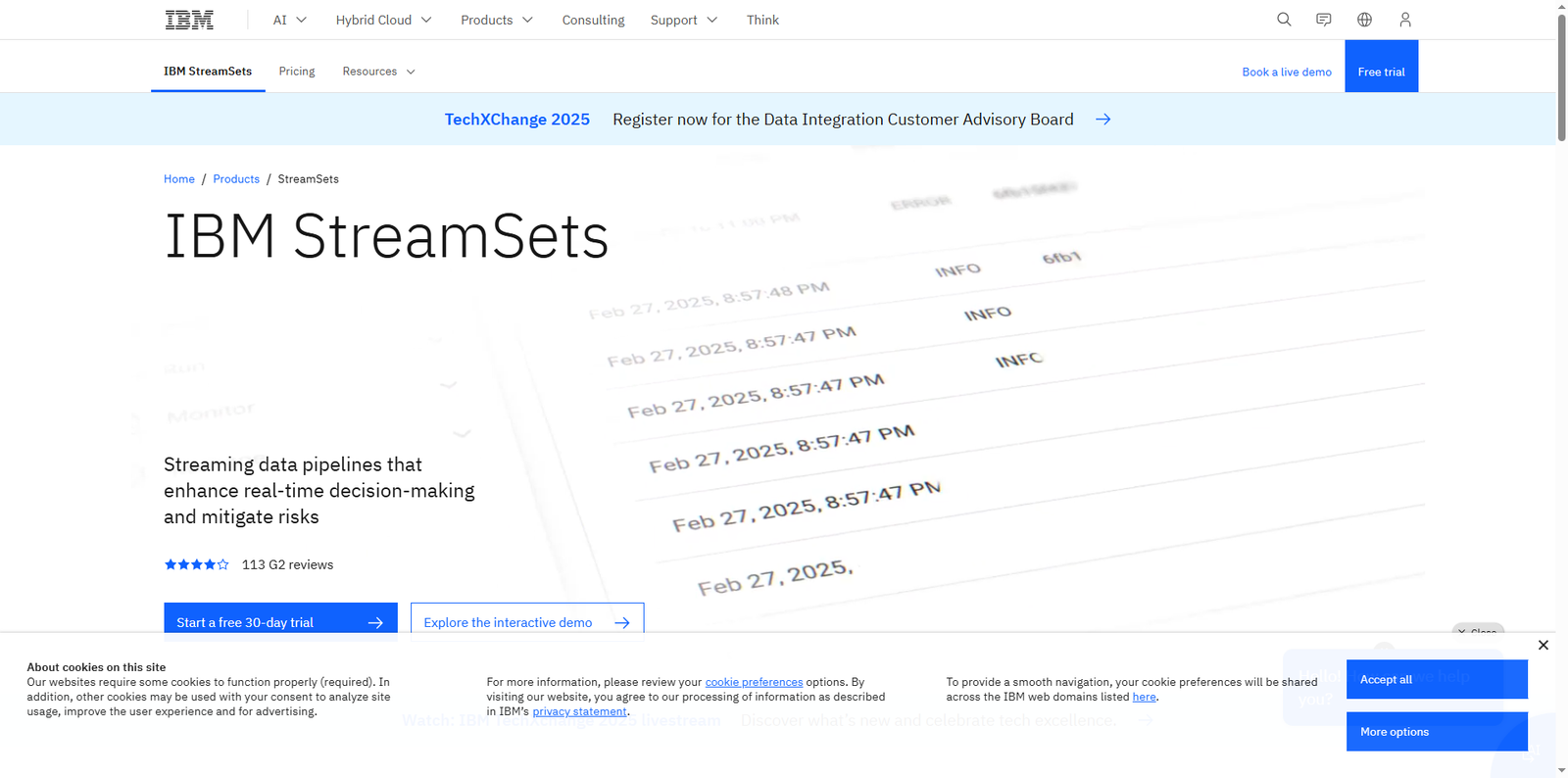
StreamSets is a data integration platform designed to simplify the creation and management of smart data pipelines. It enables continuous data movement between systems, ensuring that data remains accurate, timely, and accessible. Unlike traditional ETL (Extract, Transform, Load) tools, StreamSets focuses on DataOps—a methodology that combines agile development with data management to improve collaboration and automation.
StreamSets was founded in 2014 and later acquired by IBM to strengthen its hybrid cloud and AI data ecosystem. The platform supports both batch and streaming data, making it suitable for enterprises dealing with large-scale, real-time analytics.
How StreamSets Works
StreamSets operates through a visual, drag-and-drop interface that allows users to design complex data pipelines without heavy coding. It connects to various data sources—databases, cloud storage, IoT devices, and APIs—and moves data seamlessly to target destinations such as data warehouses or analytics platforms.
Core Components
- Control Hub: A centralized management console for designing, deploying, and monitoring pipelines.
- Data Collector: The engine that executes data pipelines and handles data ingestion and transformation.
- Transformer: A Spark-based component for large-scale data processing and transformation.
Data Flow Process
The typical StreamSets workflow includes:
- Connecting to data sources and defining input streams.
- Applying transformations such as filtering, aggregation, and enrichment.
- Delivering processed data to destinations like Snowflake, Amazon Redshift, or Google BigQuery.
- Monitoring pipeline performance through real-time dashboards.
Key Benefits of Using StreamSets
StreamSets provides several advantages that make it a preferred choice for enterprises seeking scalable and reliable data integration solutions.
1. Simplified Data Pipeline Design
The intuitive interface allows teams to build pipelines visually, reducing development time and minimizing errors. This democratizes data engineering by enabling both technical and non-technical users to collaborate effectively.
2. Real-Time Monitoring and Error Handling
StreamSets offers built-in monitoring tools that detect anomalies, performance bottlenecks, and data drift. Automated alerts help teams respond quickly to issues, ensuring data integrity and reliability.
3. Scalability Across Hybrid Environments
Whether data resides on-premises or in the cloud, StreamSets supports seamless integration across diverse environments. It is compatible with major cloud providers like AWS, Microsoft Azure, and Google Cloud Platform.
4. DataOps Enablement
StreamSets aligns with the DataOps philosophy by promoting continuous integration and delivery (CI/CD) for data pipelines. This accelerates deployment cycles and enhances collaboration between data engineers and analysts.
StreamSets Architecture Overview
The architecture of StreamSets is designed for flexibility and scalability. It follows a distributed model that separates control and execution layers, allowing organizations to manage multiple pipelines efficiently.
| Component | Description |
|---|---|
| Control Hub | Centralized interface for pipeline orchestration, version control, and monitoring. |
| Data Collector | Executes data pipelines, handles ingestion, and performs transformations. |
| Transformer | Processes large-scale data using Apache Spark for high-performance analytics. |
| Deployment Agents | Enable distributed execution across hybrid or multi-cloud environments. |
Real-World Use Cases
StreamSets is used across industries to solve complex data challenges. Below are some notable applications:
1. Financial Services
Banks and financial institutions use StreamSets to integrate transactional data from multiple systems for fraud detection and compliance reporting. Real-time data pipelines help identify suspicious activities instantly.
2. Healthcare
Hospitals and research organizations leverage StreamSets to unify patient data from electronic health records (EHRs), IoT medical devices, and laboratory systems. This integration supports predictive analytics and personalized care.
3. Retail and E-Commerce
Retailers use StreamSets to analyze customer behavior by combining data from online stores, CRM systems, and marketing platforms. This enables better inventory management and targeted promotions.
4. Manufacturing
Manufacturers deploy StreamSets to collect sensor data from production lines, monitor equipment performance, and predict maintenance needs using real-time analytics.
StreamSets vs. Alternative Tools
While StreamSets is a powerful platform, several other tools offer similar capabilities for data integration and pipeline management. The table below compares StreamSets with some popular alternatives.
| Tool Name | Overview |
|---|---|
| Talend | Open-source data integration platform that supports cloud and on-premises deployments with a strong focus on data quality and governance. |
| Fivetran | Automated data pipeline tool that simplifies data movement from various sources to warehouses with minimal maintenance. |
| Airbyte | Modern open-source ELT platform offering customizable connectors for diverse data sources and destinations. |
| Matillion | Cloud-native data integration tool optimized for platforms like Snowflake, Redshift, and BigQuery, focusing on transformation within the warehouse. |
| Apache NiFi | Open-source data flow tool that provides real-time data ingestion, transformation, and routing capabilities with a visual interface. |
Best Practices for Implementing StreamSets
To maximize the benefits of StreamSets, organizations should follow best practices that ensure efficiency, scalability, and security.
1. Start with a Clear Data Strategy
Define objectives, data sources, and desired outcomes before building pipelines. A well-documented strategy ensures alignment between business and technical teams.
2. Leverage Automation
Use StreamSets’ automation features to schedule pipeline executions, manage dependencies, and reduce manual intervention. This improves consistency and reduces operational overhead.
3. Monitor and Optimize Pipelines
Regularly review pipeline performance metrics to identify bottlenecks. StreamSets’ monitoring dashboards provide insights into throughput, latency, and error rates, enabling proactive optimization.
4. Ensure Data Security and Compliance
Implement encryption, access controls, and compliance checks to protect sensitive data. StreamSets integrates with enterprise security frameworks to maintain regulatory compliance.
5. Integrate with Cloud and AI Ecosystems
Combine StreamSets with AI and analytics tools to unlock deeper insights. Integration with IBM Cloud Pak for Data, for example, enhances data governance and machine learning workflows.
Conclusion
StreamSets has revolutionized how organizations manage and automate their data pipelines. By combining visual design, real-time monitoring, and DataOps principles, it enables enterprises to achieve faster, more reliable data integration across hybrid environments. As data volumes continue to grow, tools like StreamSets will play a crucial role in ensuring that businesses remain agile, data-driven, and competitive. Whether you are a data engineer, analyst, or IT leader, adopting StreamSets can significantly enhance your organization’s ability to harness the full potential of its data ecosystem.