




Outline
- Introduction to Domo
- Understanding the Core Concept of Domo
- How Domo Integrates AI for Smarter Analytics
- Key Benefits of Using Domo
- Real-World Applications of Domo
- Alternatives to Domo
- Future of Data Analytics with Domo
- Conclusion
Introduction to Domo
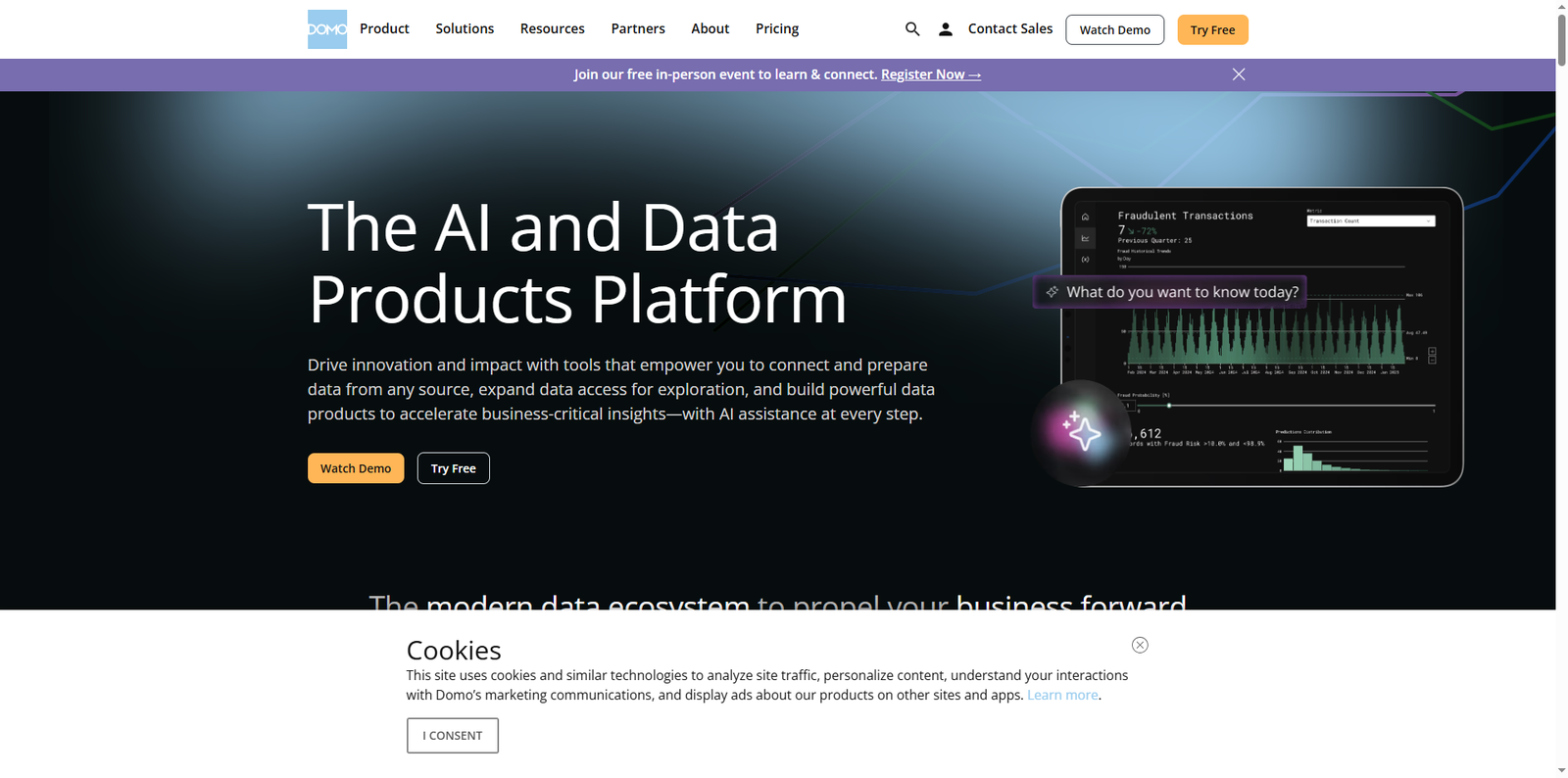
In the modern business landscape, data is the driving force behind strategic decisions. Organizations across industries are investing heavily in tools that can transform raw data into actionable insights. Domo, a cloud-based business intelligence (BI) platform, stands out as one of the most comprehensive solutions available today. Founded in 2010 by Josh James, Domo has evolved into a powerful ecosystem that connects data, people, and systems in one unified environment. According to Domo’s AI Assistants page, the platform leverages integrated AI agents to help users explore data and build data products faster, making analytics more accessible to everyone in an organization.
Understanding the Core Concept of Domo
Domo is designed to simplify data management and visualization. It connects to multiple data sources—ranging from spreadsheets and databases to cloud applications—and consolidates them into a single dashboard. This allows businesses to monitor performance metrics in real time and make informed decisions without relying on complex manual reporting processes.
Unlike traditional BI tools that require extensive technical expertise, Domo emphasizes user-friendliness. Its drag-and-drop interface, coupled with AI-driven recommendations, empowers non-technical users to create dashboards and reports effortlessly. The platform’s scalability also makes it suitable for both small businesses and large enterprises managing vast amounts of data.
How Domo Integrates AI for Smarter Analytics
Artificial intelligence is at the heart of Domo’s innovation. The company’s AI integration enables predictive analytics, automated insights, and intelligent data exploration. Domo’s AI Assistants act as conversational agents that interact with users in natural language, helping them uncover trends, anomalies, and opportunities hidden within datasets.
For example, a marketing manager can ask the AI Assistant questions like “Which campaign had the highest ROI last quarter?” and receive instant visual responses. This conversational approach reduces the need for complex queries and accelerates decision-making. Additionally, Domo’s AI models continuously learn from user interactions, improving the accuracy and relevance of insights over time.
AI-Powered Data Exploration
Domo’s AI capabilities extend beyond simple automation. The platform employs machine learning algorithms to detect patterns and forecast future outcomes. Businesses can use these predictive insights to anticipate customer behavior, optimize inventory levels, or identify potential risks before they escalate. By integrating AI directly into its BI workflows, Domo bridges the gap between data science and everyday business operations.
Key Benefits of Using Domo
Organizations adopting Domo experience several transformative benefits that enhance productivity and strategic agility.
1. Centralized Data Management
Domo consolidates data from multiple sources into one unified platform. This eliminates data silos and ensures that every department operates with consistent, up-to-date information.
2. Real-Time Insights
With Domo’s real-time dashboards, decision-makers can monitor key performance indicators (KPIs) instantly. This immediacy allows for faster responses to market changes or operational challenges.
3. Enhanced Collaboration
Domo fosters collaboration by enabling teams to share dashboards, reports, and insights seamlessly. The platform’s mobile accessibility ensures that users can stay connected and informed from anywhere.
4. AI-Driven Decision Support
The integration of AI Assistants enhances decision-making by providing contextual recommendations and automated summaries. This reduces the cognitive load on analysts and executives alike.
Real-World Applications of Domo
Domo’s versatility allows it to serve a wide range of industries, from retail and finance to healthcare and manufacturing. Below are some practical examples of how organizations leverage Domo to achieve measurable results:
Retail Analytics
Retailers use Domo to track sales performance, inventory levels, and customer engagement metrics in real time. By integrating data from e-commerce platforms, point-of-sale systems, and marketing tools, retailers gain a holistic view of their operations. This enables them to optimize pricing strategies, forecast demand, and enhance customer experiences.
Financial Performance Management
In the financial sector, Domo helps organizations monitor revenue streams, expenses, and profitability across departments. Finance teams can create automated dashboards that highlight variances and trends, allowing executives to make data-driven investment decisions.
Healthcare Data Optimization
Healthcare providers rely on Domo to streamline patient data management and operational efficiency. By integrating electronic health records (EHRs) and administrative data, hospitals can track patient outcomes, resource utilization, and compliance metrics more effectively.
Manufacturing and Supply Chain Analytics
Manufacturers use Domo to monitor production efficiency, supply chain logistics, and quality control metrics. Real-time visibility into operations enables proactive maintenance and minimizes downtime, ultimately improving profitability.
Alternatives to Domo
While Domo offers a robust BI ecosystem, several other tools provide comparable functionalities. Below is a table listing some popular alternatives that businesses can explore:
| Tool Name | Description |
|---|---|
| Tableau | A leading data visualization platform that allows users to create interactive dashboards and share insights across teams. |
| Power BI | Microsoft’s business analytics service that connects to various data sources and provides advanced visualization and reporting capabilities. |
| Looker | A Google Cloud-based BI tool that enables data exploration and embedded analytics for modern enterprises. |
| Qlik Sense | An analytics platform that uses associative data modeling to uncover hidden relationships within datasets. |
| Sisense | A BI solution that simplifies complex data preparation and provides AI-driven insights through customizable dashboards. |
Future of Data Analytics with Domo
The future of Domo lies in its continuous integration of artificial intelligence and automation. As businesses increasingly adopt AI-driven strategies, Domo’s platform is expected to evolve into a more autonomous analytics environment. The company’s focus on AI Assistants and generative analytics reflects a broader industry trend toward conversational BI—where users interact with data through natural language rather than complex queries.
Moreover, Domo’s emphasis on scalability and cloud-native architecture positions it well for the growing demand for real-time analytics. As organizations generate more data from IoT devices, social media, and digital transactions, Domo’s ability to process and visualize this information instantly will become even more critical.
Integration with Emerging Technologies
Domo’s open architecture allows integration with emerging technologies such as machine learning platforms, data lakes, and cloud storage systems. This flexibility ensures that businesses can adapt their analytics infrastructure as new technologies emerge, maintaining a competitive edge in data-driven decision-making.
Conclusion
Domo has redefined how organizations interact with data by combining business intelligence, artificial intelligence, and collaboration into a single platform. Its intuitive interface, real-time analytics, and AI-powered insights empower users at all levels to make smarter, faster decisions. Whether it’s optimizing marketing campaigns, improving operational efficiency, or forecasting financial performance, Domo provides the tools needed to transform data into strategic advantage. As AI continues to shape the future of analytics, Domo’s commitment to innovation ensures that it remains at the forefront of the business intelligence revolution.