




Outline
- Introduction
- What is Domino.ai?
- Why Domino.ai Matters in the AI Landscape
- Core Capabilities of Domino.ai
- How Domino.ai Supports Enterprise AI Governance
- Domino.ai and the Hybrid Multicloud Advantage
- Domino.ai’s Role in ModelOps and MLOps
- Industry Recognition and Awards
- Alternative Tools to Domino.ai
- Conclusion
Introduction
Artificial Intelligence (AI) has rapidly evolved from a research concept into a critical business enabler across industries. Organizations now rely on AI-driven insights to make faster, smarter decisions. However, scaling AI across an enterprise while maintaining governance, compliance, and flexibility remains a challenge. This is where Domino.ai comes in — a unified enterprise AI platform designed to help organizations build, deploy, and manage AI models efficiently and responsibly.
What is Domino.ai?
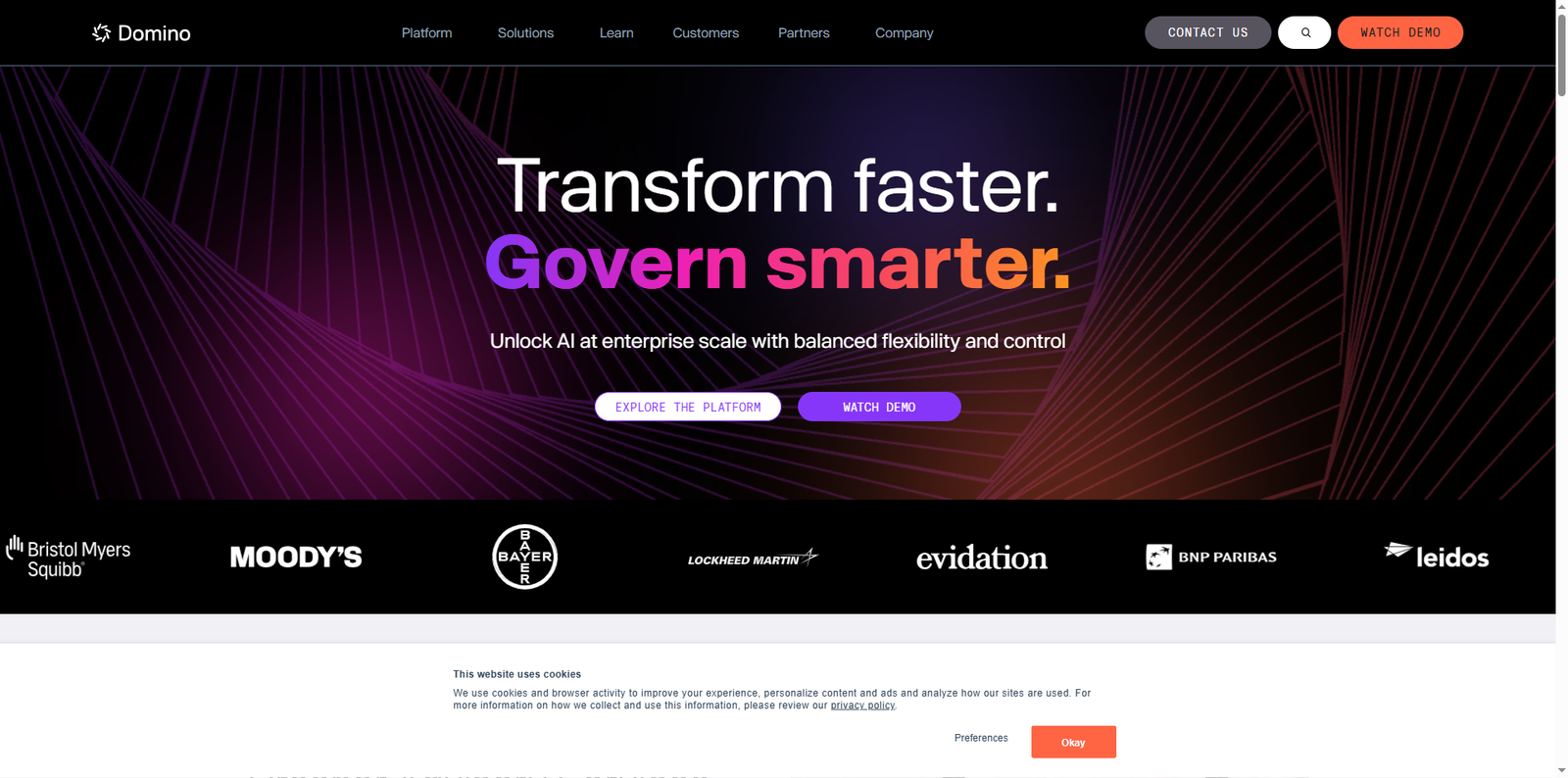
Domino.ai, developed by Domino Data Lab, is an enterprise-grade platform that simplifies the end-to-end lifecycle of AI and machine learning (ML) projects. It acts as a central hub for data science operations, enabling teams to collaborate, automate workflows, and govern AI models at scale. According to Dresner Advisory Services’ 2025 Wisdom of Crowds® Market Study, Domino has been recognized as a leader in Artificial Intelligence, Data Science, and Machine Learning (AI/DS/ML) for three consecutive years. This recognition underscores Domino’s impact in helping enterprises operationalize AI effectively.
Why Domino.ai Matters in the AI Landscape
As AI adoption accelerates, enterprises face increasing complexity in managing data, tools, and compliance requirements. Domino.ai addresses these challenges by providing a unified environment that integrates with existing infrastructure. It ensures that data scientists have the freedom to innovate while IT teams maintain control and governance. This balance of flexibility and oversight makes Domino.ai a strategic platform for organizations aiming to scale AI responsibly.
Core Capabilities of Domino.ai
Domino.ai’s platform is built around four foundational pillars that enable enterprises to unlock the full potential of AI:
1. Unified Collaboration
Domino.ai fosters collaboration among data scientists, engineers, and business stakeholders. It centralizes projects, datasets, and models, allowing teams to share insights and best practices seamlessly. This unified workspace reduces redundancy and accelerates innovation.
2. Open Ecosystem
One of Domino.ai’s strengths is its open ecosystem. It supports a wide range of open-source and commercial tools, ensuring that organizations are not locked into a single vendor. Users can integrate popular frameworks such as TensorFlow, PyTorch, and scikit-learn, as well as commercial platforms like Databricks and Snowflake.
3. Integrated Workflows
Domino.ai automates and integrates workflows across the AI lifecycle — from data preparation and model training to deployment and monitoring. This integration ensures compliance with enterprise processes and regulatory standards, which is crucial for industries like finance, healthcare, and defense.
4. Centralized Governance
Governance is at the heart of Domino.ai’s design. The platform provides visibility into model lineage, versioning, and performance metrics. This transparency helps organizations manage risk, ensure reproducibility, and maintain compliance with evolving AI regulations.
How Domino.ai Supports Enterprise AI Governance
AI governance is becoming a top priority for enterprises as regulatory frameworks evolve globally. Domino.ai provides a system of record for AI operations, enabling organizations to track every model’s lifecycle — from development to deployment. This centralized governance framework ensures accountability and transparency.
Key governance benefits include:
- Model Traceability: Every model’s history, including data sources, parameters, and performance metrics, is recorded.
- Compliance Management: Built-in controls help meet industry-specific compliance requirements.
- Audit Readiness: Domino.ai simplifies the process of auditing AI systems by maintaining detailed logs and documentation.
Domino.ai and the Hybrid Multicloud Advantage
Modern enterprises operate in complex IT environments that span on-premises data centers and multiple cloud providers. Domino.ai’s hybrid multicloud architecture allows organizations to run AI workloads close to their data — whether on-premises, in a private cloud, or across public clouds like AWS, Azure, and Google Cloud. This flexibility reduces latency, optimizes performance, and ensures compliance with data residency requirements.
According to Domino Data Lab, this hybrid approach also helps reduce infrastructure costs by enabling organizations to leverage existing resources efficiently. It empowers teams to scale AI workloads dynamically without compromising security or governance.
Domino.ai’s Role in ModelOps and MLOps
ModelOps and MLOps are essential disciplines for operationalizing AI at scale. Domino.ai provides a robust framework for managing the lifecycle of AI models — from experimentation to production. It integrates with CI/CD pipelines, enabling continuous delivery of models while maintaining governance and reproducibility.
Domino.ai’s ModelOps capabilities include:
- Automated Model Deployment: Streamlines the process of moving models from development to production.
- Performance Monitoring: Continuously tracks model accuracy and drift to ensure reliability.
- Lifecycle Management: Simplifies version control and rollback processes for deployed models.
This comprehensive approach ensures that enterprises can scale AI initiatives confidently, with full visibility into performance and compliance metrics.
Industry Recognition and Awards
Domino.ai’s excellence has been recognized through multiple industry awards and accolades. In 2025, Domino Data Lab received the AI Breakthrough Award for MLOps and was named to Inc.’s Best Workplaces List. Additionally, Domino was acknowledged as a two-time Visionary in AI innovation and secured the APFIT Award for its contributions to advanced AI in the U.S. Department of Defense. These recognitions highlight Domino.ai’s leadership in driving enterprise AI transformation.
Alternative Tools to Domino.ai
While Domino.ai is a leading platform for enterprise AI, several other tools provide similar capabilities for organizations seeking alternatives. Below is a table summarizing some notable options:
| Tool Name | Description |
|---|---|
| Databricks | A unified analytics platform that simplifies data engineering, collaborative data science, and machine learning workflows. |
| Snowflake | A cloud-based data platform that supports secure data sharing and scalable analytics for AI-driven insights. |
| H2O.ai | An open-source AI platform offering automated machine learning and model deployment capabilities for enterprises. |
| DataRobot | An enterprise AI platform that automates the end-to-end process of building, deploying, and managing machine learning models. |
| Amazon SageMaker | A fully managed service that provides tools for building, training, and deploying machine learning models at scale. |
Conclusion
Domino.ai stands out as a comprehensive enterprise AI platform that bridges the gap between innovation and governance. By unifying collaboration, integrating workflows, and supporting hybrid multicloud environments, it empowers organizations to scale AI responsibly and efficiently. Its recognition as a leader in AI/DS/ML and ModelOps underscores its reliability and impact in the enterprise AI ecosystem.
As businesses continue to embrace AI as a strategic enabler, platforms like Domino.ai will play a pivotal role in ensuring that innovation aligns with compliance, transparency, and operational excellence. Whether you are a data scientist seeking flexibility or an IT leader focused on governance, Domino.ai provides the foundation for sustainable AI transformation across the enterprise.