



Outline
- Introduction
- What is Datafold?
- Why Datafold Matters for Modern Data Teams
- Core Capabilities of Datafold
- How Datafold Streamlines Data Platform Migrations
- Automated Data Quality Testing and Monitoring
- Integrations and Ecosystem
- Alternatives to Datafold
- Real-World Use Cases
- Conclusion
Introduction
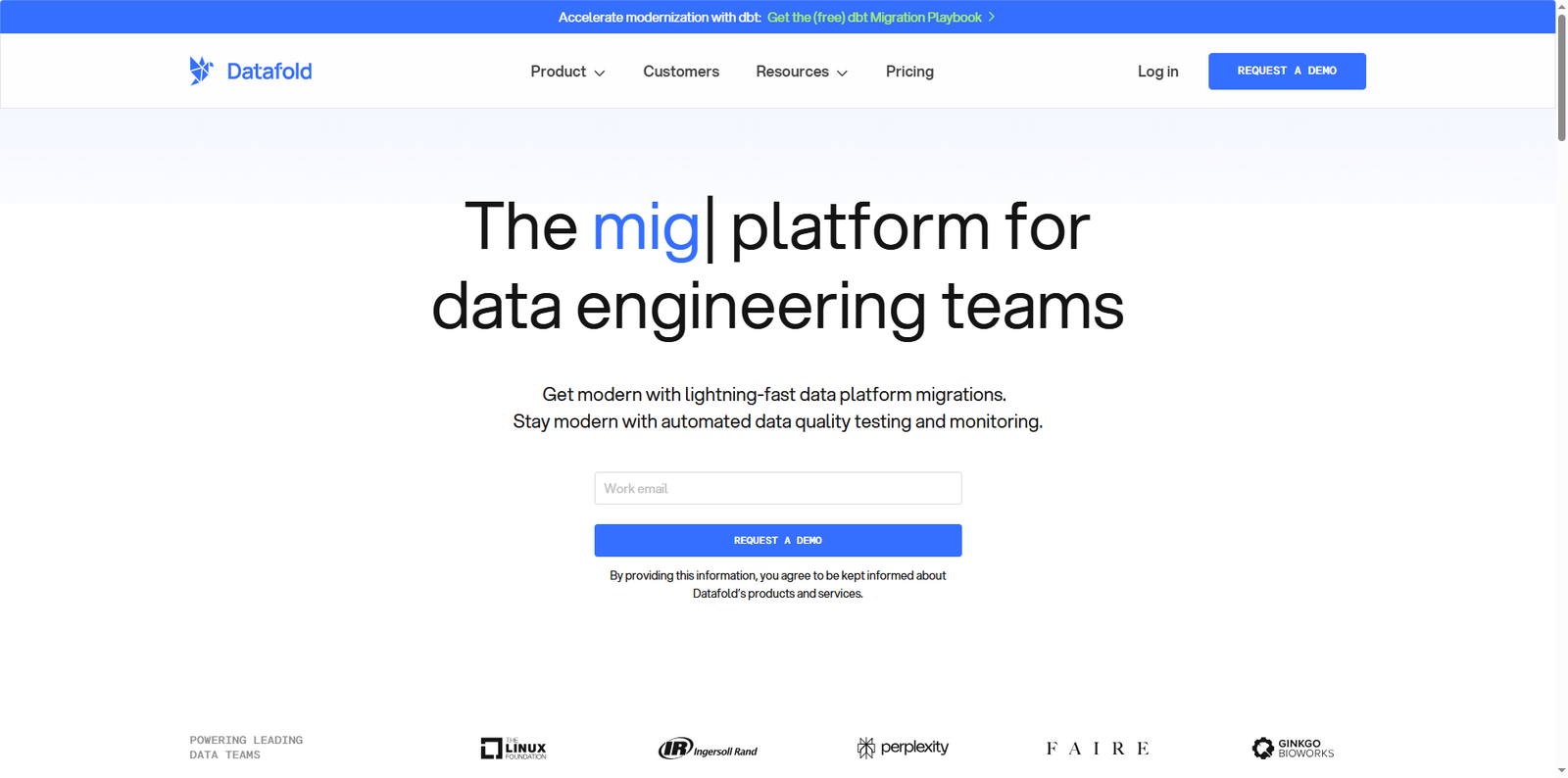
In today’s data-driven world, ensuring data accuracy, reliability, and consistency is critical for every business decision. As organizations scale, managing data pipelines and migrations becomes increasingly complex. This is where Datafold steps in — a platform designed to empower data engineering teams with automated data quality testing, monitoring, and migration tools. By integrating seamlessly into existing workflows, Datafold helps teams detect issues early, validate transformations, and maintain confidence in their data systems.
What is Datafold?
Datafold is a modern data engineering platform that focuses on automating data quality assurance and simplifying data platform migrations. It enables teams to move faster and with greater confidence by providing automated testing, lineage mapping, and anomaly detection. Founded in 2020, Datafold has quickly become a trusted name among leading data teams, supporting integrations with over 50 popular data tools such as Snowflake, dbt, and Airflow.
Why Datafold Matters for Modern Data Teams
Datafold addresses one of the most persistent challenges in data engineering — maintaining trust in data as systems evolve. When organizations migrate to new data warehouses or refactor pipelines, even small discrepancies can lead to costly downstream errors. Datafold’s automated validation ensures that every record matches perfectly between environments, eliminating manual verification and reducing migration timelines from months to weeks.
Key Benefits for Teams
- Faster Migrations: Automate SQL translation and validation to accelerate data platform transitions.
- Improved Data Reliability: Detect anomalies and schema changes before they impact production.
- Enhanced Collaboration: Integrate with CI/CD pipelines and pull requests for continuous data testing.
- Comprehensive Lineage: Visualize upstream and downstream dependencies for better impact analysis.
Core Capabilities of Datafold
Datafold’s platform is built around three main pillars: Migrate, Test, and Monitor. Each component plays a crucial role in maintaining data integrity throughout the lifecycle of data systems.
Migrate
Datafold’s migration tools allow teams to plan, translate, validate, and ship data platform migrations efficiently. By mapping column-level lineage, teams can assess migration complexity and create detailed blueprints for predictable timelines. The platform’s intelligent SQL translation engine converts code between dialects while ensuring perfect parity through iterative feedback loops.
Test
Automated testing in Datafold prevents bad code deploys by identifying value-level differences between development and production datasets. Integrated directly into CI/CD workflows, Datafold surfaces insights within each pull request, highlighting important changes and their downstream effects. This proactive testing approach ensures that issues are caught early, reducing the risk of data inconsistencies.
Monitor
Datafold’s monitoring capabilities provide real-time anomaly detection and schema change alerts. Machine learning models track metrics like row counts, freshness, and business-specific indicators, alerting teams when data behaves unexpectedly. This continuous monitoring helps maintain data health and ensures compliance with business rules.
How Datafold Streamlines Data Platform Migrations
Traditional data migrations can take months or even years, often involving manual validation and extensive testing. Datafold transforms this process by automating critical steps:
- Planning: Column-level lineage mapping provides visibility into dependencies and complexity.
- Translation: Automated SQL conversion ensures compatibility across systems.
- Validation: Record-level comparisons verify data accuracy between old and new environments.
- Shipping: Comprehensive validation reports enable quick stakeholder sign-off.
By automating these stages, Datafold allows teams to migrate data platforms up to six times faster, reducing operational risk and freeing up engineering resources for innovation.
Automated Data Quality Testing and Monitoring
Datafold’s automated testing framework integrates seamlessly into modern data workflows. It supports continuous testing within CI/CD pipelines, enabling teams to detect data issues before they reach production. The platform’s Data Diff feature compares datasets at the value level, ensuring that transformations produce expected results.
Real-Time Anomaly Detection
Using machine learning, Datafold monitors key metrics and identifies deviations from normal patterns. This proactive approach allows teams to address potential issues before they escalate, maintaining trust in analytics and reporting systems.
Schema Change Detection
Datafold instantly alerts teams when table structures are modified, preventing downstream failures in pipelines. This feature is particularly valuable in dynamic environments where schema evolution is frequent.
Data Test Monitoring
Teams can define business rules using SQL queries to validate data quality. When a rule fails, Datafold surfaces the specific records responsible, making it easier to diagnose and resolve issues quickly.
Integrations and Ecosystem
Datafold integrates with over 50 tools commonly used in data engineering workflows, including:
- Data warehouses like Snowflake, BigQuery, and Redshift
- Transformation tools such as dbt and Apache Spark
- Orchestration platforms like Airflow and Prefect
- Version control systems including GitHub and GitLab
This extensive ecosystem ensures that Datafold fits naturally into existing data stacks, enhancing rather than replacing current workflows.
Alternatives to Datafold
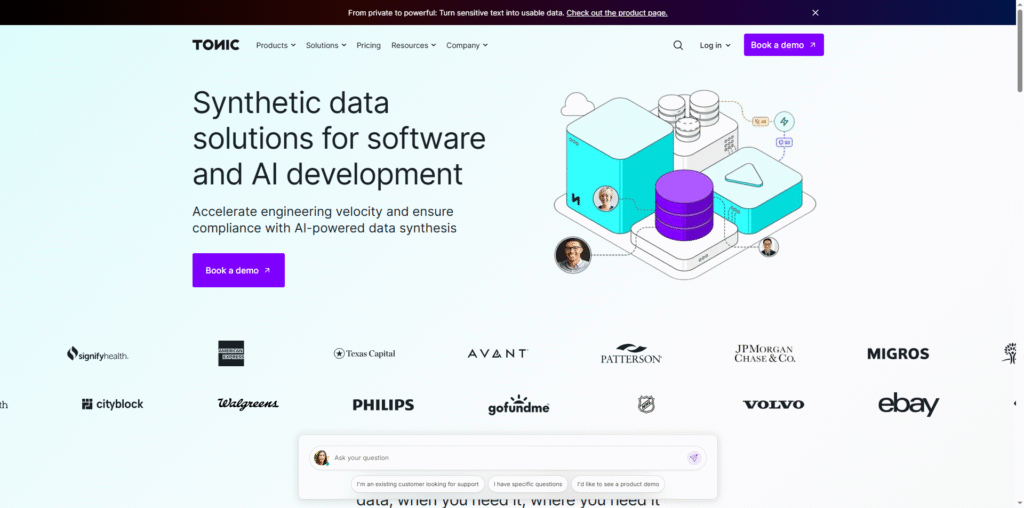
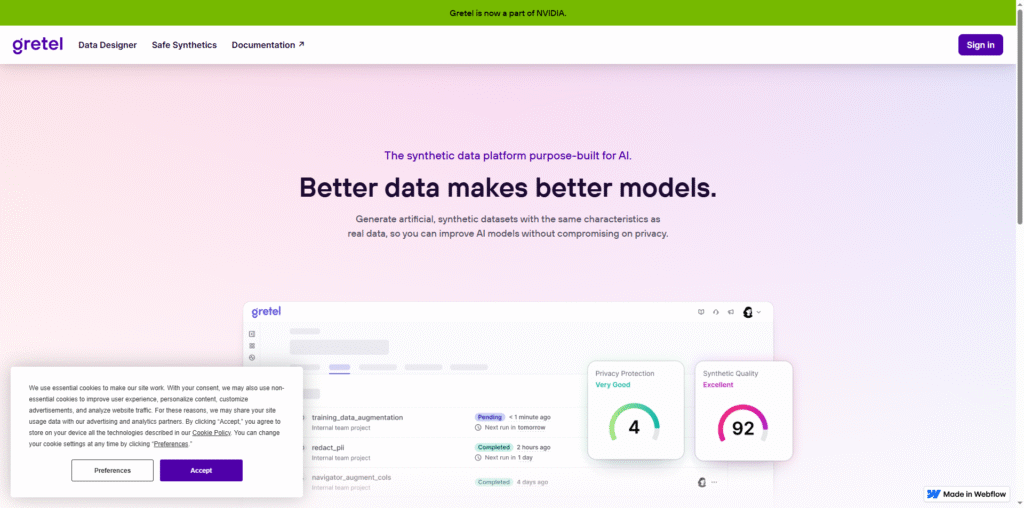
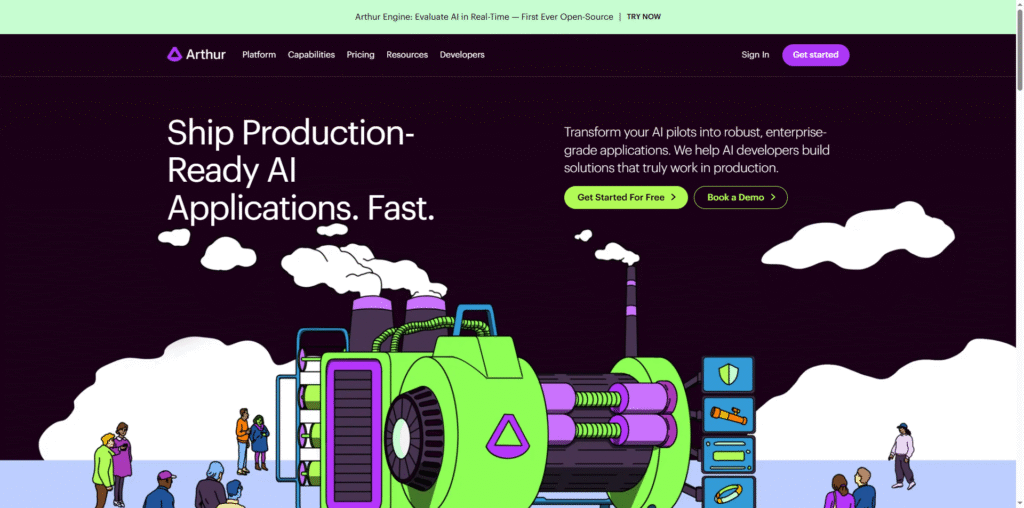
While Datafold offers a comprehensive solution for automated data quality and migration, several other tools provide complementary or alternative capabilities. Below is a comparison of some notable alternatives:
| Tool Name | Description |
|---|---|
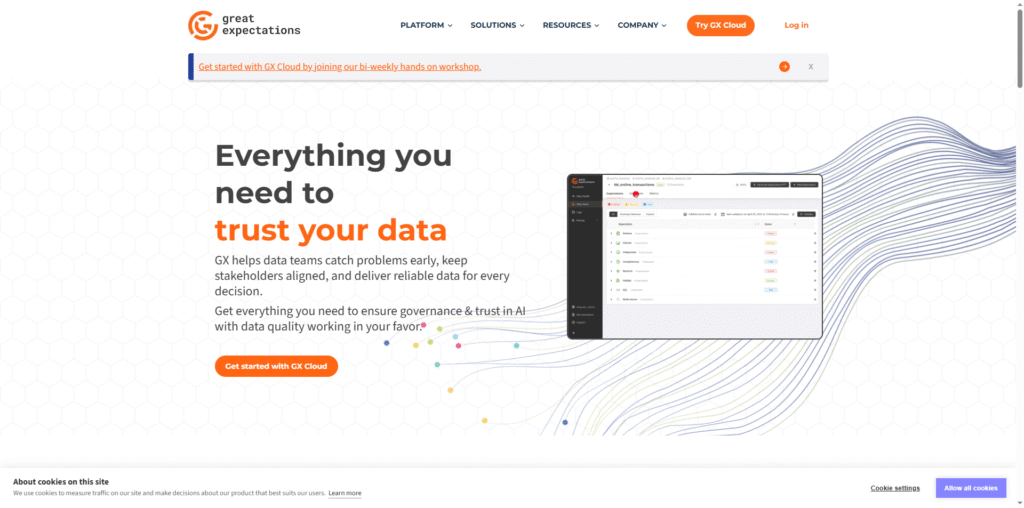
| Great Expectations | An open-source framework for data validation and documentation that helps teams define and test data expectations. |
| Monte Carlo | A data observability platform that monitors data pipelines and detects anomalies across modern data stacks. |
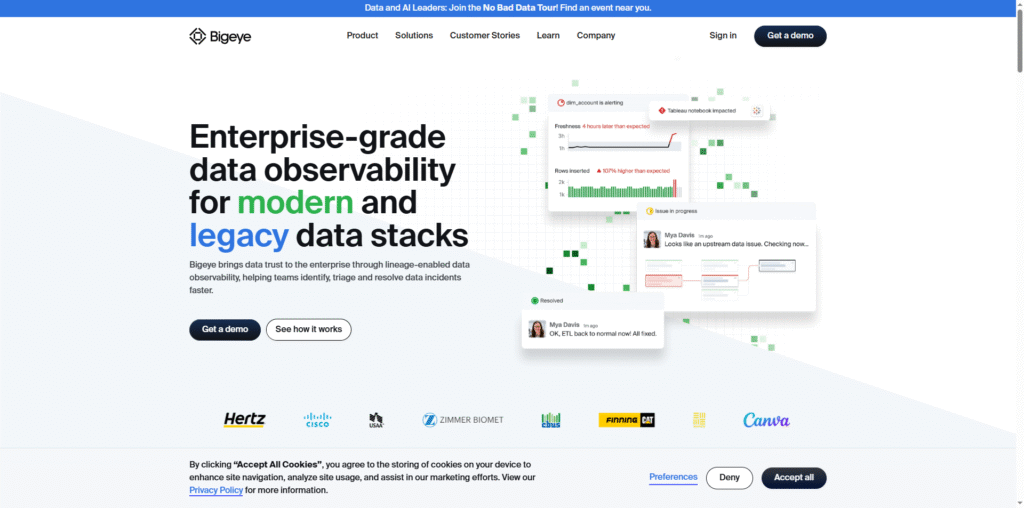
| Bigeye | Provides automated data quality monitoring and anomaly detection for data warehouses and analytics platforms. |
| Databand | Offers data pipeline observability and error detection to ensure reliable data delivery across systems. |
| Soda | Focuses on data quality monitoring and testing with a user-friendly interface for data teams and analysts. |
Real-World Use Cases
Datafold’s impact is evident across industries where data reliability is mission-critical. For example, e-commerce companies use Datafold to validate product and transaction data during warehouse migrations, ensuring uninterrupted analytics. Financial institutions leverage its automated testing to maintain compliance and detect anomalies in transaction datasets. In the healthcare sector, Datafold helps ensure data accuracy across patient management systems, supporting regulatory requirements and operational efficiency.
Example: Accelerating Migration for a Retail Data Platform
A large retail company migrating from an on-premises system to Snowflake used Datafold to automate validation across billions of records. By mapping lineage and comparing datasets automatically, the team reduced migration time by 70% and eliminated manual verification steps. This allowed them to focus on optimizing their new analytics environment rather than troubleshooting discrepancies.
Conclusion
Datafold stands out as a transformative platform for data engineering teams seeking to modernize their workflows. By automating data quality testing, monitoring, and platform migrations, it empowers organizations to move faster while maintaining complete confidence in their data. With integrations across the modern data stack and intelligent automation at its core, Datafold enables teams to focus on innovation rather than manual validation. Whether you’re migrating to a new data warehouse or ensuring continuous data reliability, Datafold provides the tools and insights needed to keep your data ecosystem robust and trustworthy.