





Outline
- Introduction to Confluent.io
- What is Confluent.io?
- How Confluent Works
- Core Components of Confluent
- Key Use Cases and Industry Applications
- Benefits of Using Confluent for Data Streaming
- Popular Alternatives to Confluent
- Real-World Examples and Adoption
- Conclusion
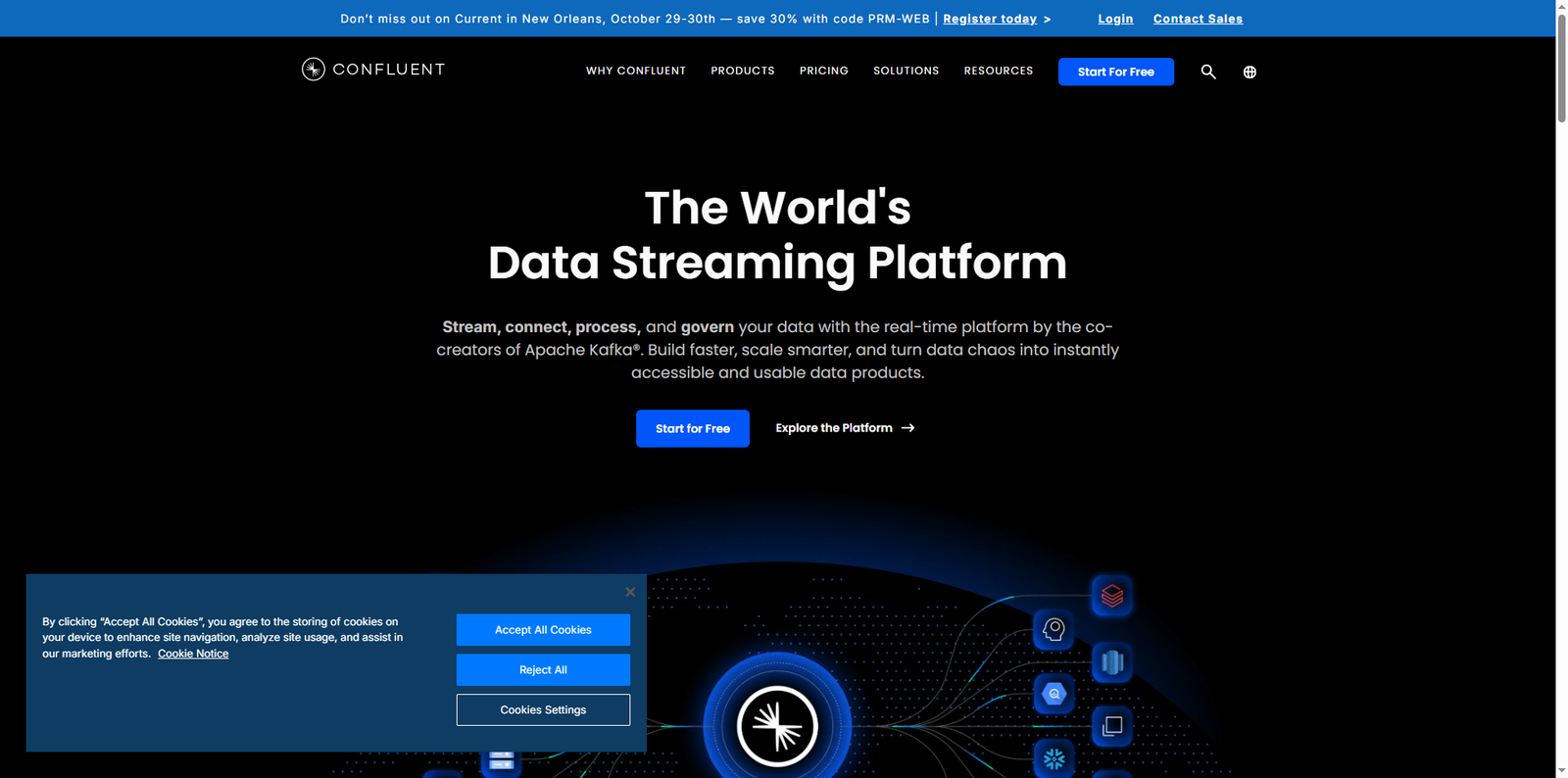
In today’s digital economy, data is generated at an unprecedented rate. From financial transactions and IoT devices to social media interactions and e-commerce analytics, organizations need systems that can process and react to data in real time. Confluent.io has emerged as a leading platform for building real-time data pipelines and event-driven architectures. Founded by the original creators of Apache Kafka, Confluent provides a cloud-native solution that simplifies data streaming and integration across modern enterprises.
What is Confluent.io?
Confluent.io is a fully managed data streaming platform built around Apache Kafka. It enables organizations to connect, process, and react to data as it flows through their systems. Unlike traditional batch processing systems, Confluent allows continuous data movement, ensuring that insights and actions happen in real time. According to Confluent’s 2023 Data Streaming Report, over 80% of Fortune 100 companies use Kafka or Confluent to power their data infrastructure.
How Confluent Works
At its core, Confluent operates as a distributed event streaming platform. It captures data from multiple sources, processes it in motion, and makes it available to various downstream systems. The architecture is designed for scalability, fault tolerance, and low latency. Confluent integrates seamlessly with cloud services, databases, and analytics tools, making it a central nervous system for enterprise data.
Data Flow in Confluent
The typical data flow in Confluent involves three main stages:
- Producers: Applications or systems that publish data events to Kafka topics.
- Brokers: Kafka servers that store and replicate data streams.
- Consumers: Applications that subscribe to topics and process data in real time.
Confluent enhances this flow by adding schema management, connectors, and stream processing capabilities, allowing organizations to build robust event-driven systems.
Core Components of Confluent
Confluent extends Kafka with several enterprise-grade components that simplify management and integration:
- Confluent Cloud: A fully managed service that handles scaling, security, and maintenance.
- Schema Registry: Ensures consistent data formats across producers and consumers.
- Kafka Connect: Provides pre-built connectors for integrating with databases, SaaS platforms, and cloud storage.
- ksqlDB: Enables SQL-based stream processing for real-time analytics.
- Control Center: Offers monitoring, metrics, and management tools for Kafka clusters.
Key Use Cases and Industry Applications
Confluent is widely adopted across industries for various real-time data use cases. Here are some prominent examples:
1. Financial Services
Banks and fintech companies use Confluent to detect fraud, process transactions, and manage risk in real time. For instance, JPMorgan Chase leverages Kafka-based systems to analyze billions of transactions daily, reducing fraud detection time from hours to seconds.
2. Retail and E-commerce
Retailers use Confluent to track inventory, personalize customer experiences, and optimize supply chains. Real-time data streaming allows them to adjust pricing dynamically and respond instantly to customer behavior.
3. Telecommunications
Telecom providers rely on Confluent for network monitoring, call data analysis, and predictive maintenance. Continuous data processing ensures better service uptime and customer satisfaction.
4. Healthcare
Hospitals and research institutions use Confluent to integrate patient data from multiple systems, enabling real-time diagnostics and predictive analytics for better healthcare outcomes.
Benefits of Using Confluent for Data Streaming
Organizations choose Confluent for its ability to handle large-scale, mission-critical data streaming workloads. Some of the key benefits include:
- Scalability: Confluent’s distributed architecture allows seamless scaling as data volumes grow.
- Reliability: Built-in replication and fault tolerance ensure data durability and high availability.
- Flexibility: Supports hybrid and multi-cloud environments, allowing deployment across AWS, Azure, and Google Cloud.
- Ease of Integration: Offers hundreds of connectors to integrate with existing enterprise systems.
- Developer Productivity: Tools like ksqlDB and REST APIs simplify stream processing and application development.
Popular Alternatives to Confluent
While Confluent is a leader in the data streaming space, several other platforms offer similar capabilities. Below is a comparison of popular alternatives:
| Alternative Tool | Description |
|---|---|
| Apache Flink | An open-source framework for stateful stream processing, ideal for complex event processing and analytics. |
| Apache Pulsar | A distributed messaging and streaming platform known for multi-tenancy and geo-replication support. |
| Amazon Kinesis | A managed service by AWS for real-time data ingestion and analytics, integrated with the AWS ecosystem. |
| Google Cloud Pub/Sub | A global messaging system for event-driven architectures, offering high scalability and low latency. |
| Redpanda | A Kafka-compatible streaming platform optimized for performance and simplicity, without requiring ZooKeeper. |
Real-World Examples and Adoption
Confluent’s adoption spans across industries and geographies. According to Gartner’s 2023 Magic Quadrant for Data Streaming Platforms, Confluent is recognized as a leader due to its innovation and enterprise readiness. Major companies such as Netflix, LinkedIn, and Expedia use Confluent to power mission-critical data pipelines.
Netflix
Netflix uses Confluent to manage billions of events per day, enabling real-time recommendations and operational monitoring. The platform ensures that data from user interactions, playback metrics, and device logs are processed instantly.
As the birthplace of Kafka, LinkedIn continues to rely on Confluent’s ecosystem for delivering personalized content feeds, job recommendations, and analytics dashboards in real time.
Expedia Group
Expedia leverages Confluent to unify data from multiple travel brands, providing customers with consistent and timely information on bookings, pricing, and availability.
Conclusion
Confluent.io has transformed how organizations handle data by enabling real-time streaming and event-driven architectures. Its foundation on Apache Kafka, combined with enterprise-grade enhancements, makes it a powerful choice for businesses seeking agility and responsiveness. Whether used for financial analytics, IoT data processing, or customer personalization, Confluent provides the infrastructure to turn continuous data streams into actionable insights. As data continues to grow exponentially, adopting a platform like Confluent ensures that enterprises remain competitive, data-driven, and ready for the future of real-time computing.