




Outline
- Introduction
- Understanding Comet.com and Its Purpose
- How Comet.com Enhances LLM Observability
- Core Functionalities and Capabilities
- Benefits of Using Comet.com for AI and ML Teams
- Integration with Popular Machine Learning Frameworks
- Alternatives to Comet.com
- Real-World Use Cases and Industry Adoption
- Conclusion
Introduction
In the rapidly evolving world of artificial intelligence and machine learning, managing experiments, tracking model performance, and ensuring transparency across large language model (LLM) systems are critical challenges. Comet.com has emerged as a leading solution for data scientists and AI engineers seeking to streamline their workflows and gain deeper insights into their models. This article explores how Comet.com supports LLM observability, experiment tracking, and collaborative AI development, while also comparing it with other tools in the ecosystem.
Understanding Comet.com and Its Purpose
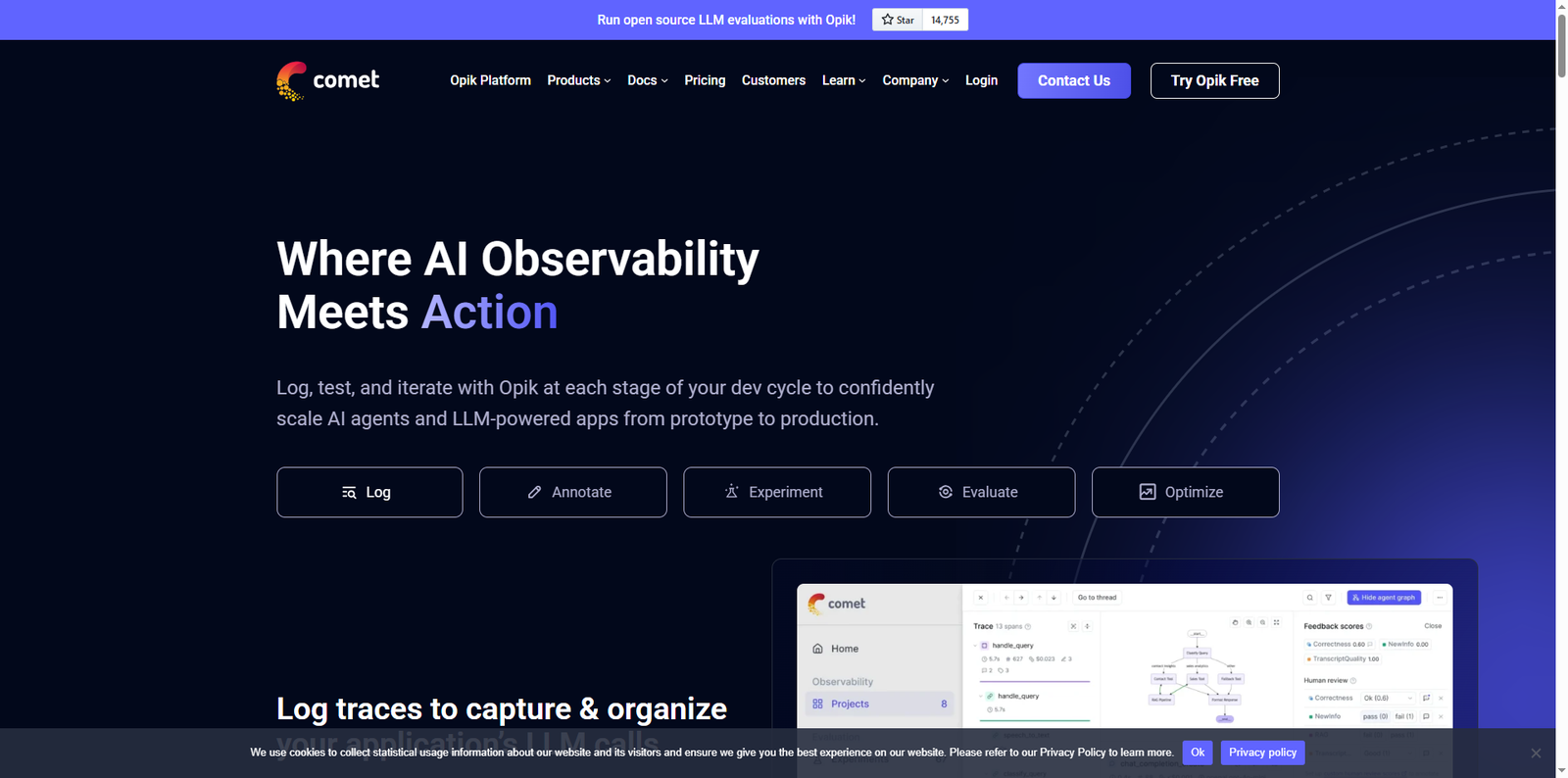
Comet.com is an advanced platform designed to help teams monitor, visualize, and optimize their machine learning and generative AI workflows. The platform provides a centralized environment where developers can log experiments, track metrics, and analyze performance across different model versions. According to the official documentation, Comet enables users to capture and organize their application’s LLM calls through Traces—a feature that provides complete observability into complex AI systems. This capability allows teams to understand how context retrieval, tool selection, and user feedback influence model behavior.
How Comet.com Enhances LLM Observability
LLM observability refers to the ability to monitor and understand the internal processes of large language models during execution. Comet.com’s observability tools help developers visualize the flow of data and decisions within their models. By logging traces, users can identify bottlenecks, optimize prompt engineering, and improve the reliability of AI applications.
For instance, when a generative AI system retrieves context from multiple sources, Comet’s trace visualization shows how each retrieval contributes to the final output. This transparency is crucial for debugging and refining model performance. Additionally, Comet supports integration with modern LLM frameworks, enabling seamless tracking of inference and evaluation metrics.
Core Functionalities and Capabilities
Comet.com offers a comprehensive suite of functionalities that empower AI teams to manage their workflows efficiently. These include:
- Experiment Tracking: Automatically logs experiments, hyperparameters, and metrics for easy comparison and reproducibility.
- Model Registry: Stores and manages model versions, ensuring traceability from training to deployment.
- LLM Traces: Provides detailed visualization of LLM interactions, including context retrieval, prompt structure, and user feedback loops.
- Collaboration Tools: Enables teams to share experiments, annotations, and results in real time.
- Integration APIs: Connects seamlessly with frameworks like TensorFlow, PyTorch, and Hugging Face Transformers.
These capabilities make Comet.com an essential component of modern AI development pipelines, particularly for organizations working with complex generative AI systems.
Benefits of Using Comet.com for AI and ML Teams
Adopting Comet.com provides several strategic advantages for AI and ML teams seeking to enhance productivity and transparency. Some of the key benefits include:
- Improved Experiment Reproducibility: Every experiment is automatically logged, making it easier to reproduce results and validate findings.
- Enhanced Collaboration: Teams can share dashboards, visualize metrics, and comment on experiments, fostering cross-functional collaboration.
- Comprehensive Observability: The trace feature allows users to see how LLMs make decisions, improving interpretability and trust in AI outputs.
- Streamlined Workflow Management: Integration with CI/CD pipelines ensures smooth model deployment and monitoring.
- Data-Driven Decision Making: Visual analytics and performance dashboards enable teams to make informed optimization decisions.
Integration with Popular Machine Learning Frameworks
Comet.com integrates with a wide range of machine learning and data science frameworks, making it a versatile choice for developers. Some of the most common integrations include:
- TensorFlow: Enables automatic logging of training metrics and model parameters.
- PyTorch: Supports experiment tracking and visualization for deep learning models.
- Hugging Face Transformers: Facilitates LLM observability by capturing prompt and response data.
- Scikit-learn: Tracks traditional machine learning experiments and performance metrics.
- Keras: Logs model architectures, training progress, and evaluation results.
These integrations allow teams to maintain a unified tracking environment across diverse AI projects, reducing fragmentation and improving efficiency.
Alternatives to Comet.com
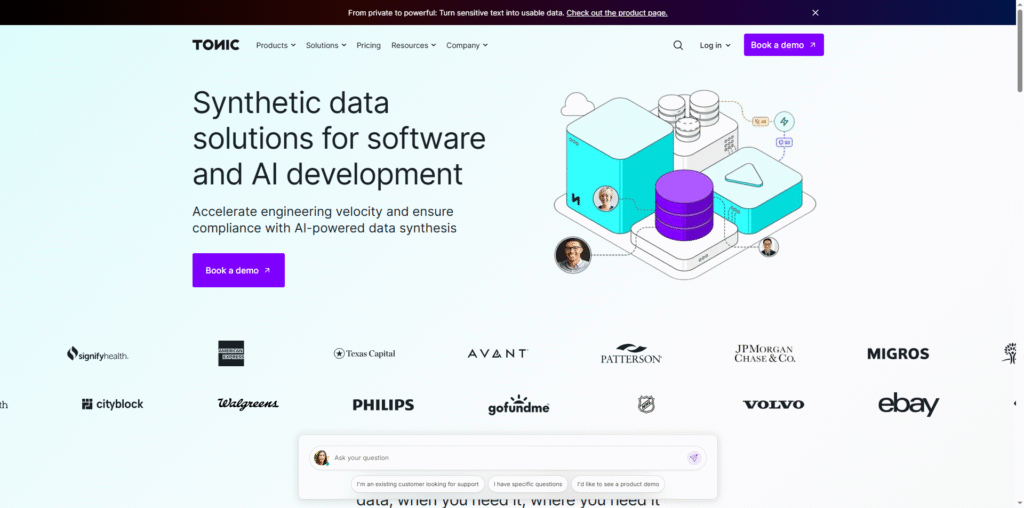
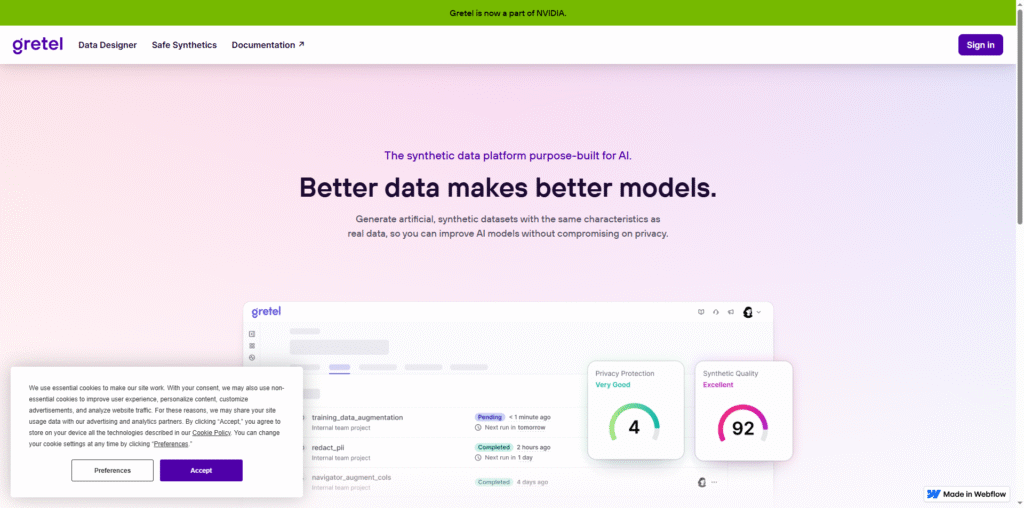
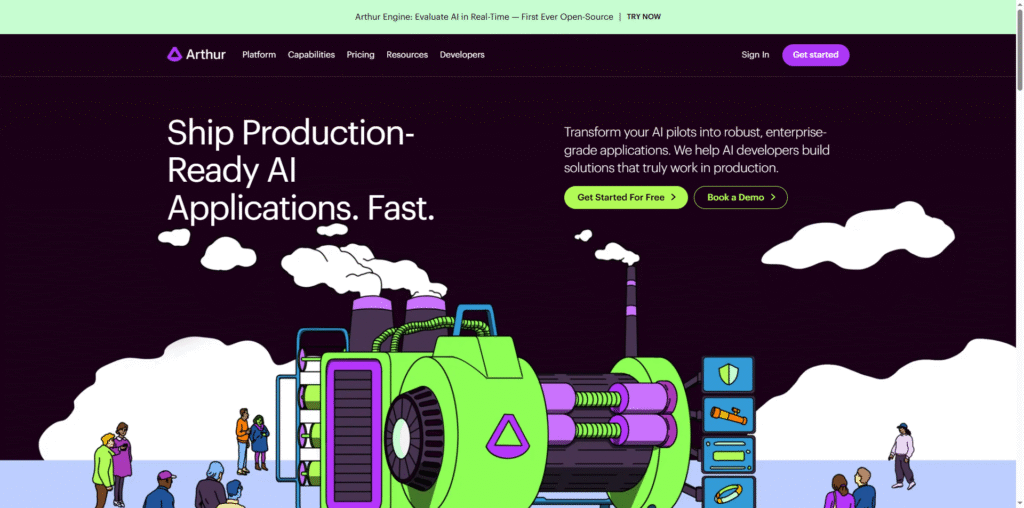
While Comet.com is a powerful platform, several alternative tools also offer experiment tracking and observability features. Below is a comparison table of some notable alternatives:
| Tool Name | Description |
|---|---|
| Weights & Biases | A popular experiment tracking platform that provides dashboards for visualizing model performance and collaboration tools for ML teams. |
| MLflow | An open-source platform for managing the ML lifecycle, including experiment tracking, model packaging, and deployment. |
| Neptune.ai | A metadata store for MLOps that helps teams organize, compare, and share experiments efficiently. |
| ClearML | An open-source suite for experiment management, orchestration, and data versioning designed for scalable AI workflows. |
| DagsHub | A collaborative platform for data science projects that integrates version control, experiment tracking, and dataset management. |
Real-World Use Cases and Industry Adoption
Comet.com has been adopted by a wide range of organizations across industries, from startups to Fortune 500 companies. Its flexibility and scalability make it suitable for diverse applications, including:
- Generative AI Development: Teams building chatbots, content generation tools, and LLM-based assistants use Comet to monitor prompt performance and user feedback.
- Computer Vision: Researchers leverage Comet to track image classification and object detection experiments, ensuring reproducibility and transparency.
- Healthcare AI: Data scientists in healthcare use Comet to manage sensitive model experiments while maintaining compliance and traceability.
- Financial Services: AI teams in finance rely on Comet for model governance, ensuring that predictive models meet regulatory standards.
- Academic Research: Universities and research labs use Comet to document experiments and share results across collaborative projects.
According to industry reports, platforms like Comet have become integral to the MLOps ecosystem, helping organizations accelerate AI innovation while maintaining accountability and reproducibility.
Conclusion
Comet.com stands out as a comprehensive solution for AI and ML teams seeking to enhance experiment tracking, observability, and collaboration. Its ability to capture LLM traces, visualize model behavior, and integrate seamlessly with popular frameworks makes it an indispensable tool for modern AI workflows. By providing transparency into complex generative AI systems, Comet empowers developers to build more reliable, interpretable, and efficient models. Whether you are an individual researcher or part of a large enterprise, adopting Comet.com can significantly improve your machine learning lifecycle management and accelerate innovation in the era of intelligent systems.