



Outline
- Introduction
- Understanding Collibra and Its Market Position
- The Importance of Data Intelligence and Governance
- Core Capabilities of Collibra’s Data Intelligence Platform
- Collibra’s Role in AI Governance and Responsible AI
- Integration Ecosystem and Partnerships
- Industries Benefiting from Collibra
- Alternative Tools for Data Governance
- Conclusion
Introduction
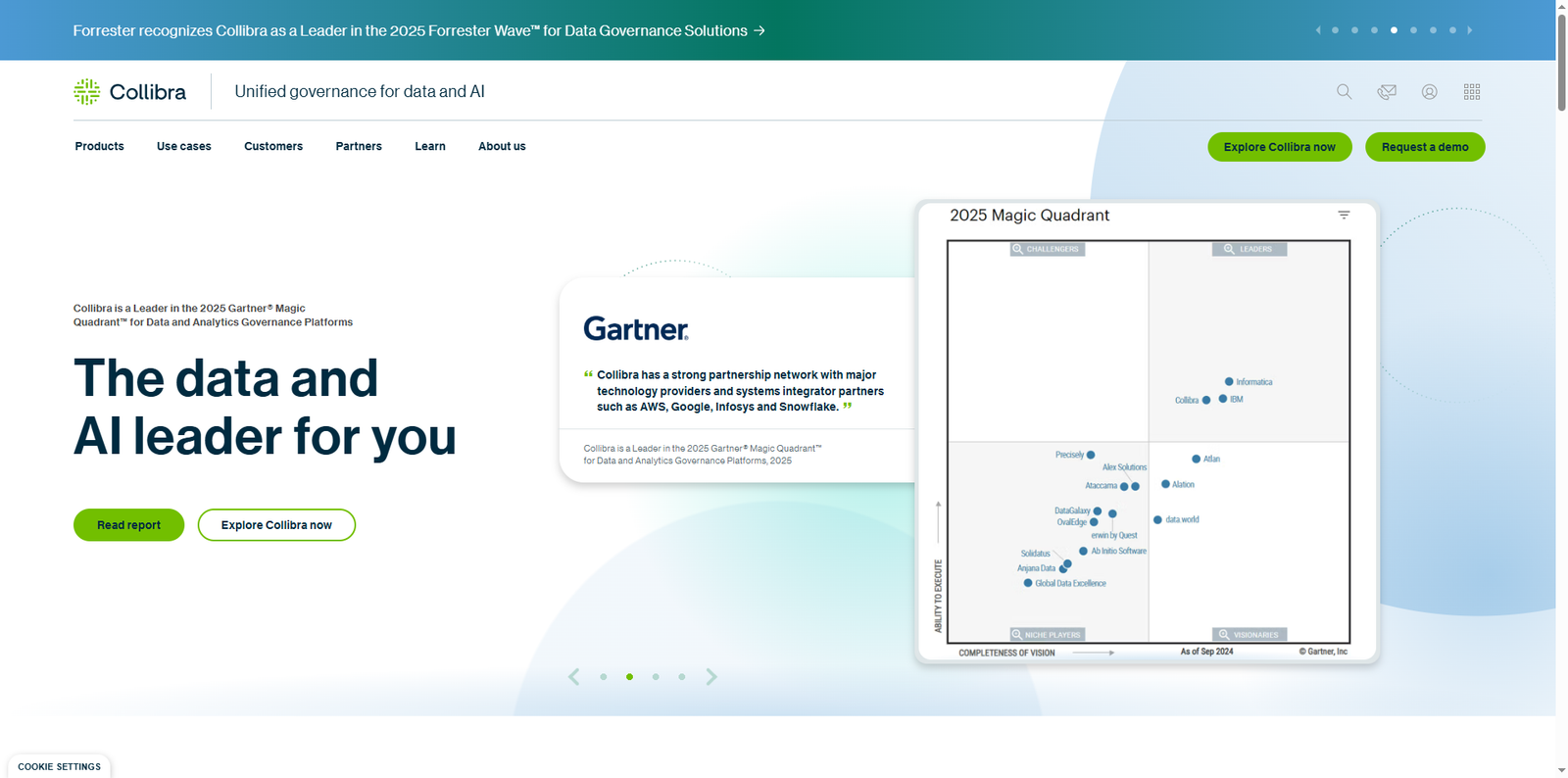
In today’s data-driven economy, organizations are increasingly challenged to manage vast volumes of data while ensuring compliance, transparency, and trust. Collibra has emerged as a global leader in data intelligence and governance, helping enterprises harness the full potential of their data assets. Recognized as a Leader in the 2025 Gartner® Magic Quadrant™ for Data and Analytics Governance Platforms, Collibra continues to redefine how businesses organize, observe, and govern data and AI initiatives.
Understanding Collibra and Its Market Position
Founded in 2008, Collibra has grown into one of the most influential players in the data governance space. The company’s Data Intelligence Platform enables both business and technical users to collaborate seamlessly, ensuring that data is discoverable, trusted, and ready for use. According to the 2025 IDC MarketScape: Worldwide Data Intelligence Platform Software Vendor Assessment, Collibra stands out for its comprehensive approach to data governance and its ability to integrate with diverse enterprise ecosystems.
Collibra’s recognition in multiple industry reports, including the BARC Score 2025: Data Intelligence Platforms, highlights its leadership in enabling organizations to manage data quality, lineage, and compliance across complex digital landscapes.
The Importance of Data Intelligence and Governance
Data intelligence is the foundation of modern digital transformation. Without proper governance, organizations risk data silos, compliance violations, and poor decision-making. Collibra addresses these challenges by providing a unified platform that promotes transparency and accountability in data management.
Effective data governance ensures that:
- Data is accurate, consistent, and reliable across departments.
- Organizations comply with regulations such as GDPR, CCPA, and HIPAA.
- Business users can easily discover and understand data assets.
- AI and analytics initiatives are built on trusted and ethical data foundations.
Core Capabilities of Collibra’s Data Intelligence Platform
The Collibra Data Intelligence Platform is designed to support a wide range of use cases, including data cataloging, quality management, and collaboration. It provides a multi-persona experience that bridges the gap between business and IT teams.
1. Data Catalog and Discovery
Collibra’s catalog enables users to find, understand, and access data efficiently. Through business-led collaboration, organizations can create a shared understanding of data assets, reducing duplication and improving decision-making.
2. Data Quality and Observability
Maintaining high data quality is essential for analytics and AI. Collibra helps organizations observe data quality, detect anomalies, and support remediation processes. This proactive approach ensures that data remains trustworthy throughout its lifecycle.
3. Data Governance and Compliance
Collibra’s governance framework provides an integrated view of data across the enterprise. It helps organizations build transparency, reduce compliance risks, and establish accountability for data stewardship. This is particularly critical for industries like finance, healthcare, and manufacturing, where regulatory compliance is non-negotiable.
4. Collaboration and Data Marketplace
Collibra fosters collaboration by enabling teams to share data insights through a centralized marketplace. This encourages innovation and accelerates data-driven decision-making across departments.
Collibra’s Role in AI Governance and Responsible AI
As artificial intelligence becomes integral to business operations, ensuring responsible AI governance is paramount. Collibra’s platform extends its governance capabilities to AI use cases, allowing organizations to catalog, assess, and monitor AI models for performance and compliance.
By providing visibility into data lineage and model metadata, Collibra helps enterprises mitigate risks associated with bias, data drift, and regulatory scrutiny. This aligns with global trends emphasizing ethical AI and transparency in automated decision-making systems.
Integration Ecosystem and Partnerships
Collibra’s success is amplified by its robust ecosystem of technology partners. The platform integrates seamlessly with leading cloud and data providers, enabling organizations to leverage their existing infrastructure effectively.
Some of Collibra’s notable partnerships include:
- AWS – Integration with Amazon Web Services for scalable data storage and analytics.
- Google Cloud – Collaboration for AI-driven data intelligence and governance solutions.
- Snowflake – Unified data governance across cloud data warehouses.
- Infosys – Strategic partnership for enterprise data transformation initiatives.
These integrations allow organizations to unify their data ecosystems, ensuring consistent governance across hybrid and multi-cloud environments.
Industries Benefiting from Collibra
Collibra’s platform is industry-agnostic, serving diverse sectors that rely heavily on data-driven insights.
1. Financial Services
Banks and financial institutions use Collibra to ensure data accuracy and compliance with stringent regulations. The platform supports risk management, fraud detection, and customer analytics initiatives.
2. Healthcare
In healthcare, Collibra helps organizations maintain patient data integrity and comply with privacy laws. It enables secure data sharing for research and clinical decision-making.
3. Manufacturing
Manufacturers leverage Collibra to optimize supply chain data, improve operational efficiency, and ensure product traceability across global networks.
4. Retail and Consumer Goods
Retailers use Collibra to unify customer data, enhance personalization, and drive data-driven marketing strategies while maintaining compliance with consumer privacy regulations.
Alternative Tools for Data Governance
While Collibra is a market leader, several other platforms offer robust data governance and intelligence capabilities. Below is a comparison of alternative tools that organizations may consider:
| Tool Name | Description |
|---|---|
| Alation | A data catalog platform that emphasizes collaboration and data stewardship, enabling organizations to find and understand data assets efficiently. |
| Informatica | Provides comprehensive data management and governance solutions, integrating data quality, lineage, and privacy management capabilities. |
| Talend | Offers open-source and enterprise-grade data integration and governance tools designed to ensure data reliability and compliance. |
| IBM Watson Knowledge Catalog | Delivers AI-powered data cataloging and governance, helping enterprises manage data assets across hybrid cloud environments. |
| Ataccama | Combines data quality, governance, and master data management into a unified platform for enterprise-scale data intelligence. |
Conclusion
Collibra has established itself as a cornerstone of modern data intelligence and governance. By bridging the gap between business and technology, it empowers organizations to unlock the full potential of their data while maintaining trust, compliance, and transparency. Its recognition in leading industry reports such as the Gartner Magic Quadrant and IDC MarketScape underscores its continued innovation and leadership.
As data and AI continue to shape the future of business, platforms like Collibra will play an essential role in ensuring that organizations not only manage their data effectively but also use it responsibly. Whether for improving data quality, enabling collaboration, or governing AI models, Collibra provides the foundation for a truly data-driven enterprise.
For organizations seeking to enhance their data governance strategy, exploring Collibra’s capabilities is a step toward building a more intelligent, compliant, and future-ready data ecosystem.