


Outline
- Introduction
- Understanding Alation and Its Mission
- The Agentic Data Intelligence Platform
- Core Components of Alation’s Ecosystem
- How Alation Enhances Data Governance
- AI and Metadata: The Foundation of Smart Data Management
- Benefits of Using Alation
- Top Alternatives to Alation
- Real-World Use Cases and Industry Impact
- Conclusion
Introduction
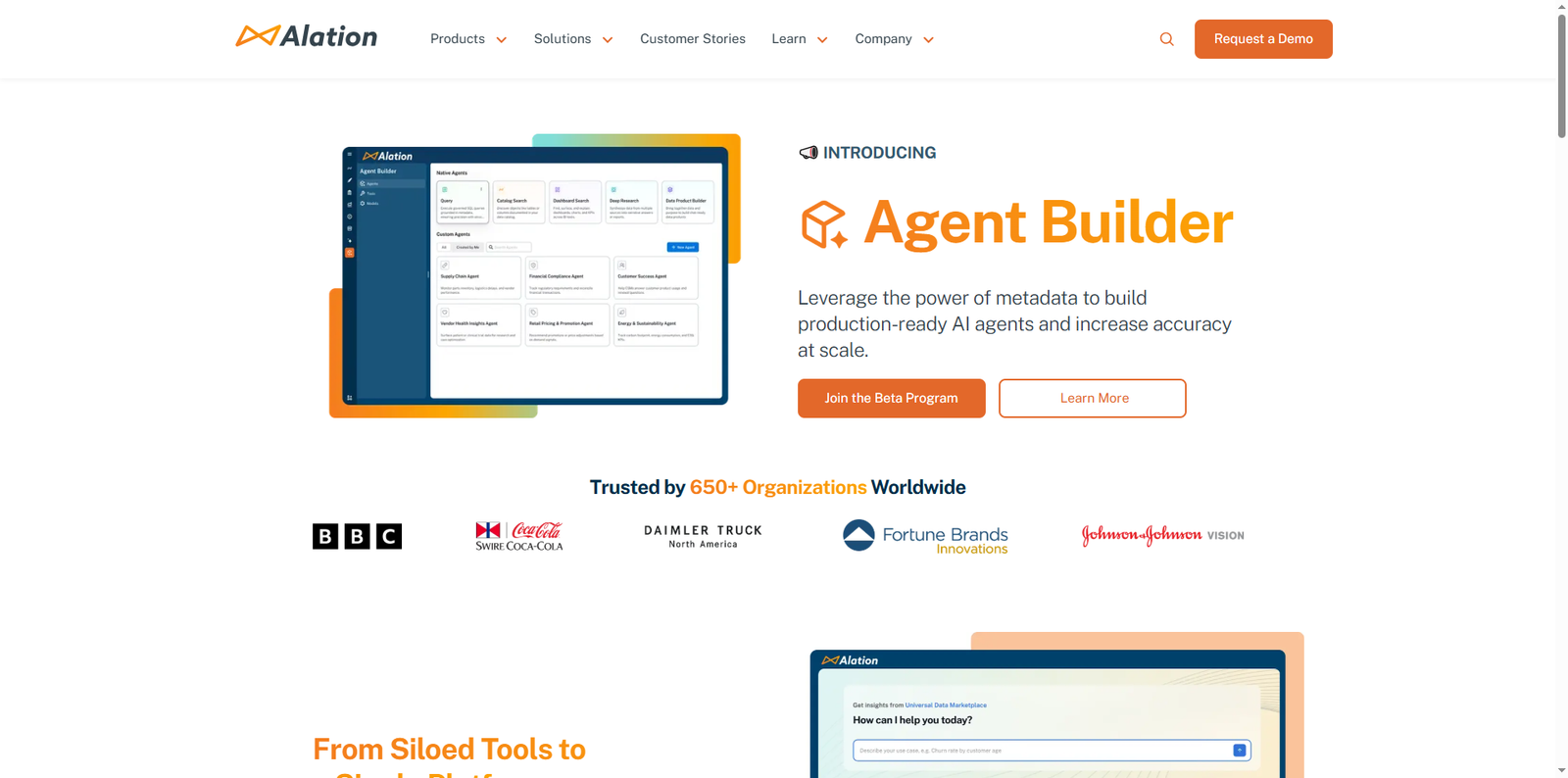
In the modern data-driven world, organizations face the challenge of managing vast amounts of information spread across multiple systems. Alation has emerged as a leader in data intelligence, offering a unified platform that empowers businesses to discover, govern, and utilize data efficiently. Trusted by over 650 organizations worldwide, Alation’s innovative approach to metadata management and governance has made it a cornerstone for enterprises seeking to harness the full potential of their data assets.
Understanding Alation and Its Mission
Founded in 2012, Alation was created to address a growing problem: data chaos. As companies adopted multiple data warehouses, BI tools, and analytics systems, finding and trusting data became increasingly complex. Alation’s mission is to simplify this process by providing a single, intelligent platform that connects people, processes, and data. The company’s focus on metadata-driven intelligence ensures that users can access accurate, contextual, and compliant data whenever they need it.
The Agentic Data Intelligence Platform
At the heart of Alation’s offering is the Agentic Data Intelligence Platform. This platform combines cataloging, governance, lineage, and quality management into one cohesive system. By leveraging active metadata, Alation automates documentation, enforces policies, and streamlines data product delivery. This approach eliminates silos and accelerates innovation by allowing teams to focus on building AI and analytics solutions rather than managing fragmented tools.
Agent Builder and Metadata Automation
One of Alation’s most notable innovations is the Agent Builder, a feature that enables organizations to create production-ready AI agents powered by metadata. These agents enhance accuracy and scalability, ensuring that AI models operate on trusted, well-governed data. This capability is particularly valuable for enterprises pursuing generative AI initiatives, as it bridges the gap between data management and AI deployment.
Core Components of Alation’s Ecosystem
Alation’s ecosystem is built around several key components that work together to deliver a seamless data experience:
- Data Catalog: A centralized repository that unifies data discovery through natural-language search, enabling users to find definitions, lineage, and usage insights.
- Data Governance: A policy-driven framework that automates stewardship, access controls, and compliance enforcement.
- Data Lineage: Visual mapping of data flow across systems, helping users understand dependencies and ensure accuracy.
- Data Quality: Continuous monitoring and validation of data to maintain trust and reliability.
How Alation Enhances Data Governance
Effective data governance is critical for maintaining compliance and ensuring data integrity. Alation simplifies governance by centralizing policy management and automating enforcement across the data estate. Instead of relying on static documentation, Alation ties policies directly to data lineage and quality metrics. This integration allows organizations to prove compliance effortlessly while enabling faster, data-driven decision-making.
Policy Automation and Stewardship
Through its governance module, Alation automates stewardship tasks such as access approvals, data masking, and policy enforcement. This reduces manual effort and minimizes the risk of human error. Moreover, by linking governance policies to metadata, Alation ensures that compliance is dynamic and always up to date.
AI and Metadata: The Foundation of Smart Data Management
Metadata serves as the connective tissue of modern data ecosystems. Alation’s metadata-driven approach enables organizations to build AI-ready data products that are explainable, traceable, and compliant. By allowing users to query data in natural language, Alation democratizes access to insights while maintaining governance controls behind the scenes.
Natural-Language Data Discovery
Alation’s search capabilities empower users to ask questions in plain English and receive accurate, contextual answers. Behind the scenes, metadata-aware agents handle SQL generation, source citation, and lineage visualization. This not only enhances productivity but also fosters trust in the data being used for decision-making.
Benefits of Using Alation
Organizations adopting Alation experience a range of benefits that extend beyond traditional data cataloging. These include:
- Improved Data Discovery: Users can quickly locate relevant data assets across multiple systems.
- Enhanced Collaboration: Teams can share insights and maintain consistent definitions across departments.
- Stronger Compliance: Automated governance ensures adherence to regulatory standards.
- Accelerated AI Development: Metadata-driven automation supports faster, more accurate AI model training.
- Operational Efficiency: Reduced manual effort in documentation and policy enforcement.
Top Alternatives to Alation
While Alation stands out as a leader in data intelligence, several other tools offer complementary or alternative capabilities. The following table highlights some popular alternatives:
| Tool Name | Description |
|---|---|
| Collibra | A comprehensive data governance and cataloging platform that helps organizations manage data assets and ensure compliance. |
| Informatica | Offers enterprise-grade data integration and governance solutions with strong automation and AI capabilities. |
| Talend | Focuses on data integration and quality management, enabling organizations to unify and cleanse data across systems. |
| data.world | Provides a cloud-native data catalog platform designed for agile data governance and collaboration. |
| Atlan | Combines data cataloging and collaboration features to create a modern data workspace for teams. |
Real-World Use Cases and Industry Impact
Alation’s platform is used across industries such as finance, healthcare, retail, and technology. For example, financial institutions use Alation to ensure compliance with regulations like GDPR and CCPA by maintaining transparent data lineage and access controls. Healthcare organizations leverage Alation to unify patient data across systems, improving care coordination and research outcomes. In retail, Alation helps teams analyze customer behavior and optimize supply chains through trusted, governed data.
Enterprise Adoption and Growth
According to industry reports, Alation’s customer base has grown rapidly, with over 650 enterprises adopting its platform. Notable clients include global leaders in banking, telecommunications, and manufacturing. This widespread adoption underscores the platform’s scalability and effectiveness in addressing complex data challenges.
Conclusion
Alation has redefined how organizations approach data intelligence by merging cataloging, governance, and AI-driven automation into a single, cohesive platform. Its metadata-first philosophy ensures that data is not only discoverable but also trustworthy and compliant. As enterprises continue to embrace AI and analytics, Alation’s Agentic Data Intelligence Platform provides the foundation for scalable, explainable, and secure data operations. Whether you are a data steward, analyst, or business leader, adopting Alation can empower your organization to make confident, data-driven decisions that drive innovation and growth.