




Outline
- Introduction: The growing importance of data observability
- Understanding Acceldata.io and its mission
- How Acceldata.io enhances enterprise data reliability
- Core components of Acceldata’s data observability platform
- Real-world applications and industry adoption
- Comparison with alternative tools
- Challenges in data observability and how Acceldata addresses them
- Future of data observability and Acceldata’s role
- Conclusion
Introduction: The Growing Importance of Data Observability
In today’s data-driven world, organizations rely on massive data pipelines to power analytics, artificial intelligence, and decision-making. However, as data ecosystems grow in complexity, ensuring data quality, reliability, and performance has become increasingly challenging. According to Gartner, poor data quality costs organizations an average of $12.9 million annually. This alarming statistic highlights the need for robust data observability solutions that can monitor, diagnose, and optimize data systems in real time.
Enter Acceldata.io — a leading data observability platform designed to help enterprises manage and optimize their data infrastructure. Founded in 2018, Acceldata has quickly become a trusted partner for global enterprises seeking to ensure the reliability and efficiency of their data operations.
Understanding Acceldata.io and Its Mission
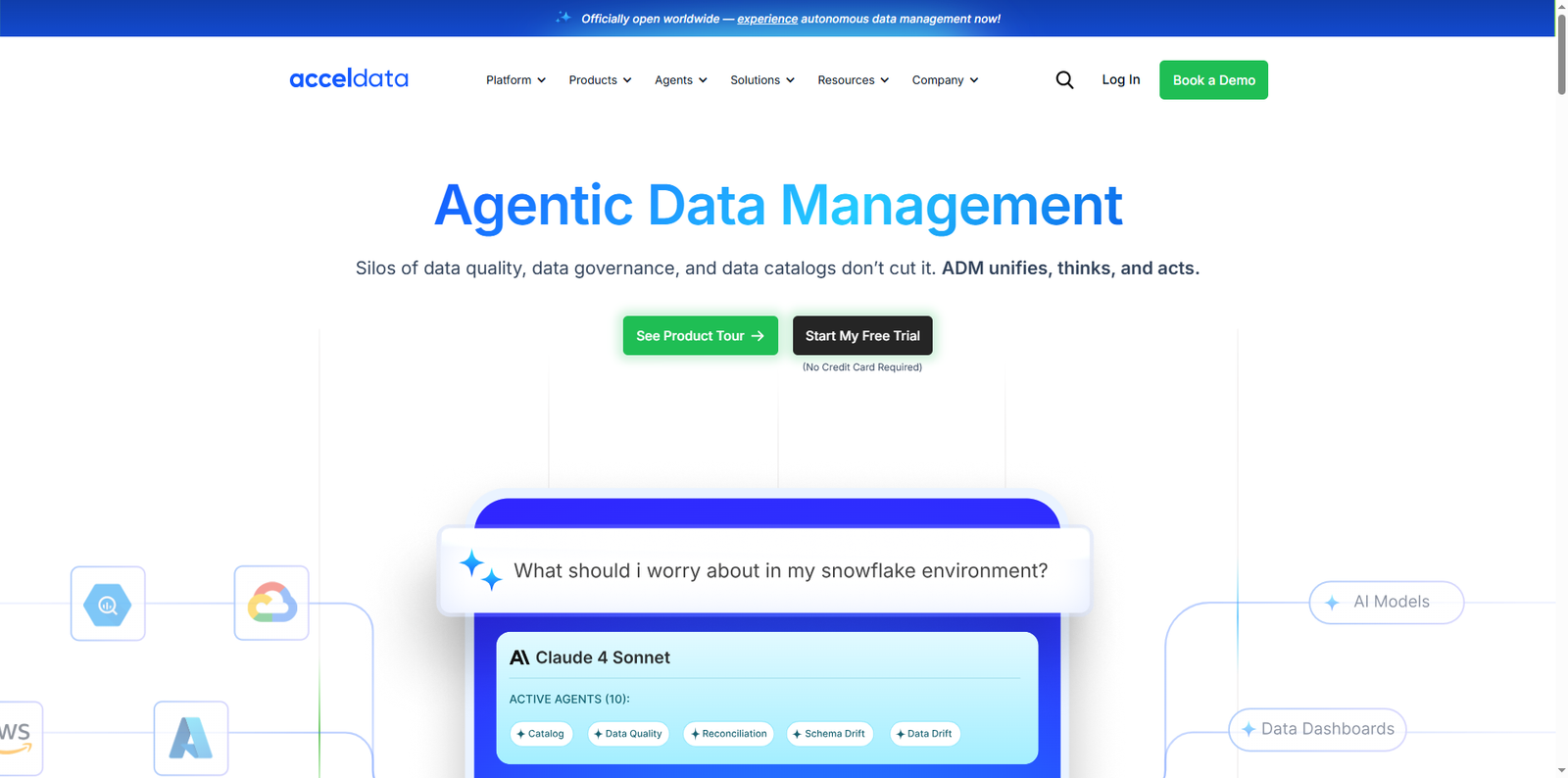
Acceldata.io was created to address a critical gap in modern data management: the lack of visibility across complex data pipelines. Traditional monitoring tools focus on infrastructure or application performance, but they often overlook the data itself — the lifeblood of digital transformation. Acceldata’s mission is to provide a unified observability layer that enables organizations to monitor data quality, performance, and cost across the entire data stack.
Acceldata’s platform integrates seamlessly with popular data technologies such as Apache Spark, Snowflake, Databricks, and Amazon Redshift. By combining machine learning-driven insights with deep observability, it empowers data teams to proactively identify issues before they impact business outcomes.
How Acceldata.io Enhances Enterprise Data Reliability
Data reliability is essential for maintaining trust in analytics and AI-driven decision-making. Acceldata.io enhances reliability through continuous monitoring and automated anomaly detection. The platform collects telemetry data from various layers — including ingestion, processing, and consumption — to provide a holistic view of data health.
For example, when a data pipeline experiences latency or data drift, Acceldata’s intelligent alerts notify engineers in real time. This proactive approach reduces downtime, minimizes revenue loss, and ensures that business-critical insights remain accurate and timely.
Core Components of Acceldata’s Data Observability Platform
Acceldata.io’s platform is built around three key pillars that collectively deliver end-to-end data observability:
- Data Reliability: Ensures that data is accurate, complete, and consistent across systems. It detects schema changes, missing records, and anomalies in data flow.
- Data Performance: Monitors the efficiency of data pipelines and workloads, optimizing resource utilization and reducing operational costs.
- Data Cost Management: Provides visibility into data infrastructure spending, helping organizations optimize cloud and compute expenses.
These components work together to create a unified observability framework that aligns data operations with business objectives.
Real-World Applications and Industry Adoption
Acceldata.io has been adopted by leading enterprises across industries such as finance, telecommunications, and e-commerce. Companies like Oracle, PubMatic, and Dun & Bradstreet have leveraged Acceldata to improve data reliability and operational efficiency. For instance, PubMatic, a global digital advertising technology company, used Acceldata to enhance its data pipeline performance and reduce system downtime, resulting in improved ad delivery and customer satisfaction.
In the financial sector, where data accuracy is paramount, Acceldata helps institutions maintain compliance and prevent costly data errors. By providing real-time visibility into data operations, it enables teams to make faster, data-driven decisions with confidence.
Comparison with Alternative Tools
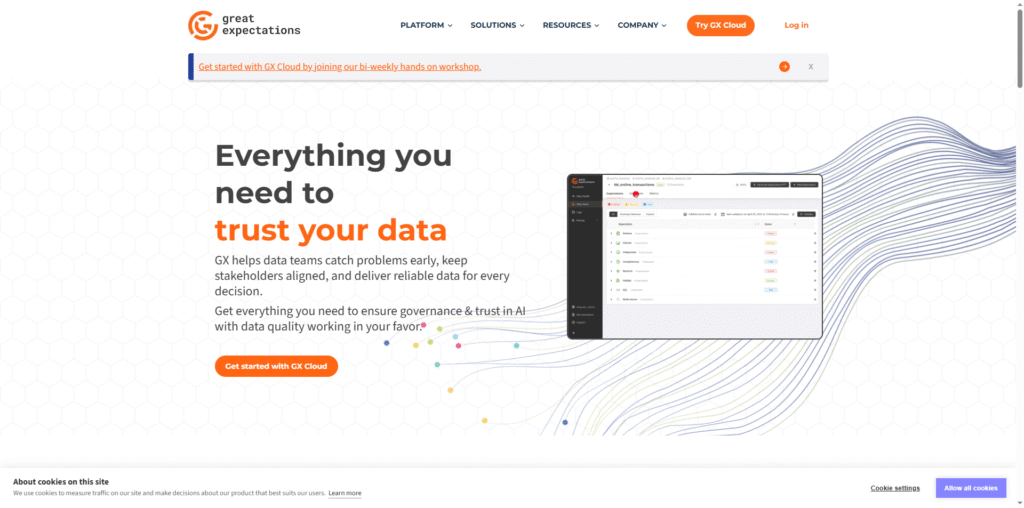
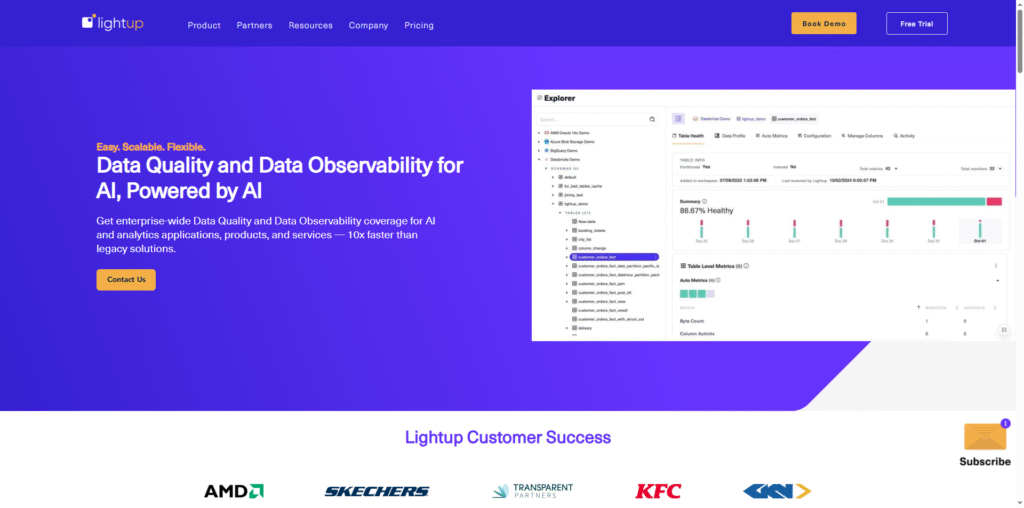
While Acceldata.io stands out for its comprehensive observability capabilities, several other tools also contribute to the data observability ecosystem. Below is a comparison of Acceldata with alternative platforms that offer complementary or similar functionalities.
| Tool Name | Description |
|---|---|
| Monte Carlo | Focuses on end-to-end data observability, emphasizing data quality and lineage tracking for modern data stacks. |
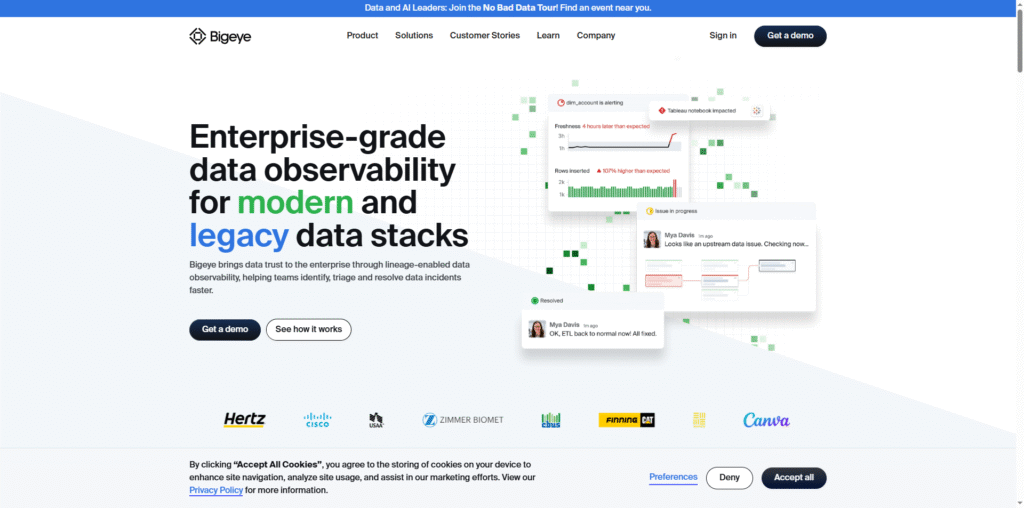
| Bigeye | Provides automated monitoring and anomaly detection for data pipelines, helping teams maintain data accuracy. |
| Datadog | Offers infrastructure and application monitoring with integrations for data observability and performance analytics. |
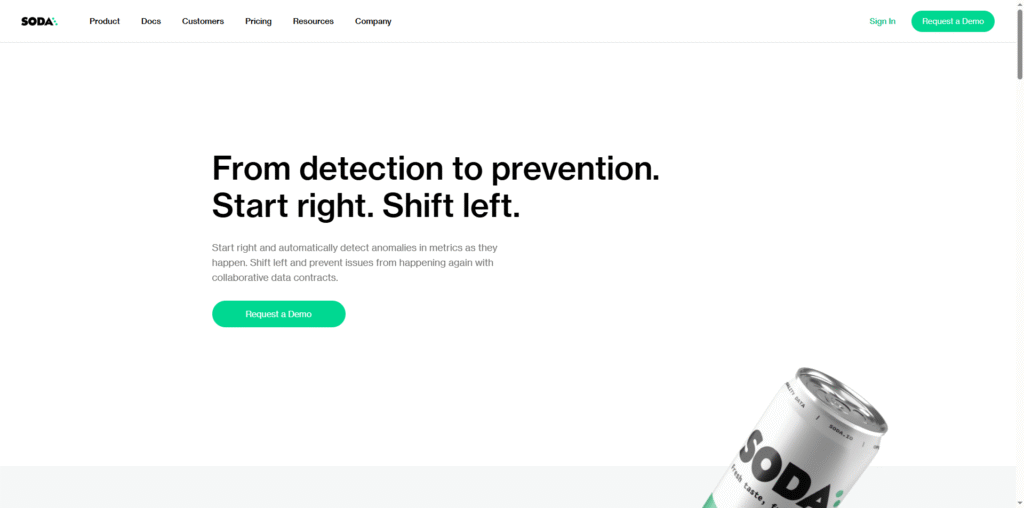
| Soda | Specializes in data quality monitoring and testing, enabling data teams to detect and resolve issues proactively. |
Challenges in Data Observability and How Acceldata Addresses Them
Despite the growing adoption of observability tools, organizations still face several challenges when implementing data observability frameworks:
- Data Silos: Many enterprises operate across multiple data platforms, making it difficult to gain unified visibility. Acceldata integrates with diverse systems to provide a single-pane-of-glass view.
- Scalability: As data volumes grow, maintaining performance becomes complex. Acceldata’s architecture scales dynamically to handle large data workloads without compromising speed.
- Alert Fatigue: Excessive alerts can overwhelm data teams. Acceldata uses intelligent alerting mechanisms that prioritize critical issues and reduce noise.
- Cost Optimization: Cloud data operations can become expensive without proper monitoring. Acceldata’s cost observability module helps organizations optimize resource usage and control spending.
By addressing these challenges, Acceldata.io enables organizations to build resilient, efficient, and cost-effective data ecosystems.
Future of Data Observability and Acceldata’s Role
The future of data observability lies in automation, AI-driven insights, and seamless integration across hybrid and multi-cloud environments. As enterprises continue to adopt advanced analytics and machine learning, the need for reliable data infrastructure will only increase.
Acceldata.io is at the forefront of this evolution. Its continued investment in AI and machine learning allows it to predict potential data issues before they occur. Furthermore, as data governance and compliance become more stringent, Acceldata’s observability framework will play a crucial role in ensuring transparency and accountability across data operations.
According to IDC, global spending on data management and analytics is expected to surpass $300 billion by 2026. With its robust observability capabilities, Acceldata is well-positioned to capture a significant share of this growing market.
Conclusion
Acceldata.io has emerged as a transformative force in the world of data observability. By providing comprehensive visibility into data reliability, performance, and cost, it empowers enterprises to make data-driven decisions with confidence. Its ability to integrate across diverse data environments and proactively detect issues sets it apart from traditional monitoring tools.
As organizations continue to scale their data operations, the importance of observability will only grow. Acceldata.io not only addresses today’s challenges but also paves the way for a future where data systems are self-healing, intelligent, and fully transparent. For enterprises seeking to enhance data reliability and operational efficiency, Acceldata.io represents a forward-looking solution that bridges the gap between data complexity and business clarity.