



Outline
- Introduction
- Understanding Bigeye and Data Observability
- How Bigeye Works
- Benefits of Using Bigeye for Enterprises
- Key Components of Bigeye’s Data Observability Platform
- Use Cases and Real-World Applications
- Alternatives to Bigeye
- Conclusion
Introduction
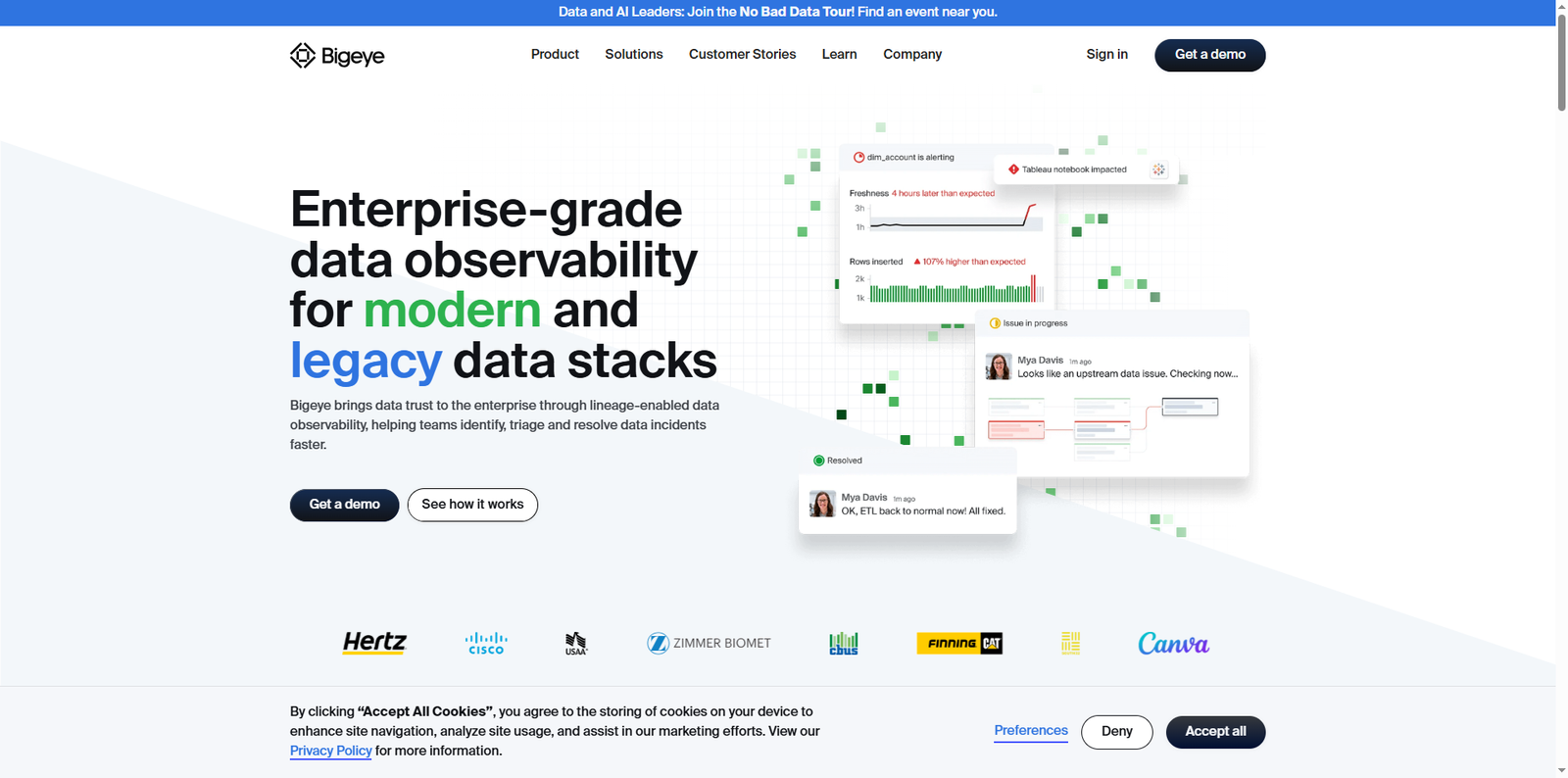
In today’s data-driven world, organizations rely heavily on accurate, timely, and reliable data to make strategic decisions. However, as data pipelines grow more complex, ensuring data quality and trust becomes increasingly challenging. This is where Bigeye steps in. Bigeye is an enterprise-grade data observability platform designed to help businesses monitor, understand, and improve the health of their data ecosystems. By providing lineage-enabled insights and automated workflows, Bigeye empowers teams to identify and resolve data issues before they impact business operations.
Understanding Bigeye and Data Observability
Data observability refers to the ability to fully understand the health, reliability, and performance of data systems. It extends beyond traditional monitoring by providing visibility into data pipelines, transformations, and dependencies. Bigeye’s approach to data observability combines automation, machine learning, and metadata analysis to deliver a comprehensive view of data quality across the enterprise.
According to Gartner, poor data quality costs organizations an average of $12.9 million annually in lost revenue and operational inefficiencies. Bigeye addresses this challenge by enabling proactive data monitoring and early detection of anomalies, ensuring that data teams can maintain trust in their analytics and machine learning models.
How Bigeye Works
Bigeye integrates seamlessly with both modern and legacy data stacks, offering support for on-premises, hybrid, and cloud environments. The platform connects to over 50 data sources, including popular data warehouses, lakes, and BI tools. Once connected, Bigeye automatically profiles datasets, establishes baselines for normal behavior, and continuously monitors for deviations.
Its lineage-enabled workflows allow users to trace data issues back to their root cause and assess downstream impacts. This capability is particularly valuable for large enterprises managing complex data ecosystems where a single broken pipeline can affect multiple dashboards, reports, or machine learning models.
Automated Monitoring and Alerting
Bigeye’s automated monitoring system uses statistical models to detect anomalies in data freshness, volume, and distribution. When an issue arises, the platform sends real-time alerts to relevant stakeholders, ensuring that teams can respond quickly. This proactive approach minimizes downtime and prevents inaccurate insights from reaching decision-makers.
Data Lineage and Impact Analysis
Data lineage is a critical component of Bigeye’s observability framework. It visually maps how data flows across systems, helping teams understand dependencies and potential points of failure. When an anomaly is detected, Bigeye’s impact analysis tools identify which downstream assets—such as dashboards or ML models—are affected, allowing teams to prioritize fixes effectively.
Benefits of Using Bigeye for Enterprises
Enterprises adopting Bigeye experience several advantages that contribute to improved data reliability and operational efficiency:
- Faster Issue Resolution: Automated root cause analysis reduces the time spent diagnosing data problems.
- Improved Data Trust: Consistent monitoring ensures that stakeholders can rely on accurate and timely data.
- Enhanced Collaboration: Lineage-driven insights foster better communication between data engineers, analysts, and business users.
- Scalability: Bigeye supports both legacy and modern data infrastructures, making it suitable for enterprises undergoing digital transformation.
Key Components of Bigeye’s Data Observability Platform
Bigeye’s platform is built around several core components that work together to deliver comprehensive observability:
1. Data Health Summaries
Bigeye provides intuitive dashboards that summarize the health of datasets across the enterprise. These summaries include metrics such as data freshness, completeness, and distribution anomalies, helping business stakeholders stay informed without needing deep technical expertise.
2. Real-Time Alerting
Through customizable alerting mechanisms, Bigeye ensures that the right people are notified at the right time. Alerts can be integrated with collaboration tools like Slack or Microsoft Teams, streamlining incident response workflows.
3. Integration Ecosystem
Bigeye’s extensive connector library allows integration with major data platforms such as Snowflake, Databricks, and Google BigQuery. This flexibility ensures that enterprises can deploy Bigeye without disrupting existing data operations.
4. Automated Root Cause Analysis
When data anomalies occur, Bigeye’s automated root cause analysis identifies the source of the problem and its potential impact. This feature significantly reduces the time required to diagnose and fix issues, improving overall data reliability.
Use Cases and Real-World Applications
Bigeye’s data observability capabilities are applicable across a wide range of industries and use cases. Below are some examples of how organizations leverage Bigeye to enhance their data operations:
1. Business Intelligence Reliability
Companies rely on BI dashboards to make critical decisions. Bigeye ensures that these dashboards are always powered by accurate and up-to-date data, preventing costly misinterpretations.
2. Machine Learning Model Accuracy
Machine learning models depend on high-quality training data. Bigeye monitors data pipelines feeding these models, ensuring that they are trained on fresh and consistent datasets, thereby improving model performance and reliability.
3. ETL Pipeline Monitoring
Extract, Transform, Load (ETL) processes are the backbone of data integration. Bigeye’s monitoring capabilities detect failures or delays in ETL jobs, allowing teams to address issues before they cascade into larger problems.
4. Compliance and Governance
For organizations operating in regulated industries, maintaining data integrity is essential for compliance. Bigeye’s lineage tracking and audit capabilities help ensure that data governance policies are consistently enforced.
Alternatives to Bigeye
While Bigeye offers a robust solution for enterprise data observability, several other tools provide similar capabilities. The table below lists some popular alternatives that organizations may consider:
| Alternative Tool | Description |
|---|---|
| Monte Carlo | A leading data observability platform focusing on automated data monitoring and incident resolution. |
| Databand | Provides data pipeline observability and monitoring for data engineers and data scientists. |
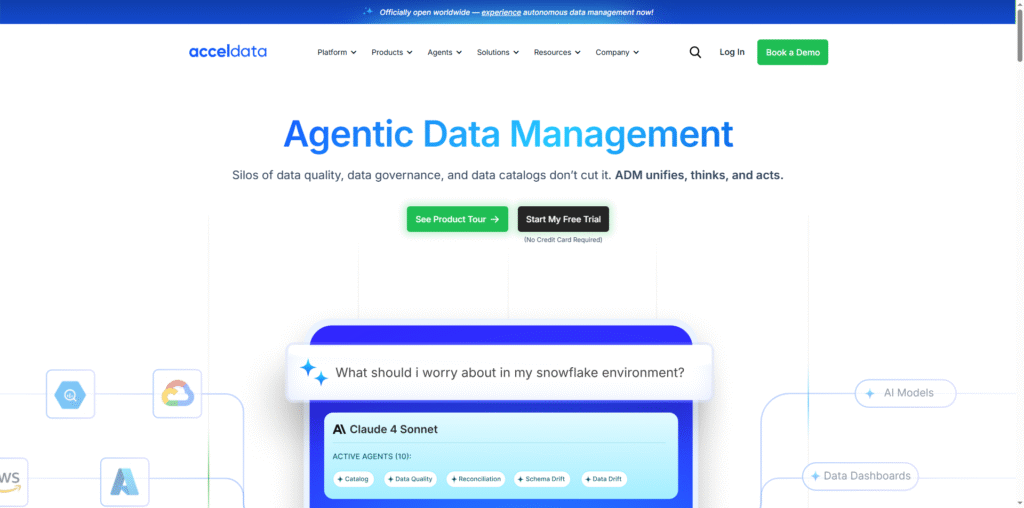
| Acceldata | Offers a comprehensive data observability platform for hybrid and multi-cloud environments. |
| WhyLabs | Focuses on data logging and observability for machine learning and AI systems. |
Conclusion
Bigeye stands out as a powerful solution for enterprises seeking to build trust in their data. By combining automated monitoring, lineage-enabled workflows, and real-time alerting, it provides a holistic approach to data observability. In an era where data quality directly impacts business outcomes, tools like Bigeye are essential for maintaining operational excellence and ensuring that decision-makers have access to reliable insights. Whether you are managing complex data pipelines, supporting machine learning initiatives, or ensuring compliance, Bigeye offers the visibility and control needed to keep your data ecosystem healthy and trustworthy.