





Outline
- Introduction
- What is Metaplane.dev?
- Why Data Observability Matters
- How Metaplane.dev Works
- Core Benefits of Using Metaplane.dev
- Integration Capabilities
- Alternatives to Metaplane.dev
- Real-World Use Cases
- Conclusion
Introduction
In today’s data-driven world, organizations rely heavily on accurate and timely data to make informed decisions. However, as data pipelines grow in complexity, maintaining data quality becomes increasingly challenging. That’s where Metaplane.dev comes in — a powerful data observability platform designed to help teams detect, diagnose, and prevent data quality issues before they impact business operations. This article explores what Metaplane.dev is, how it works, and why it’s becoming an essential tool for modern data teams.
What is Metaplane.dev?
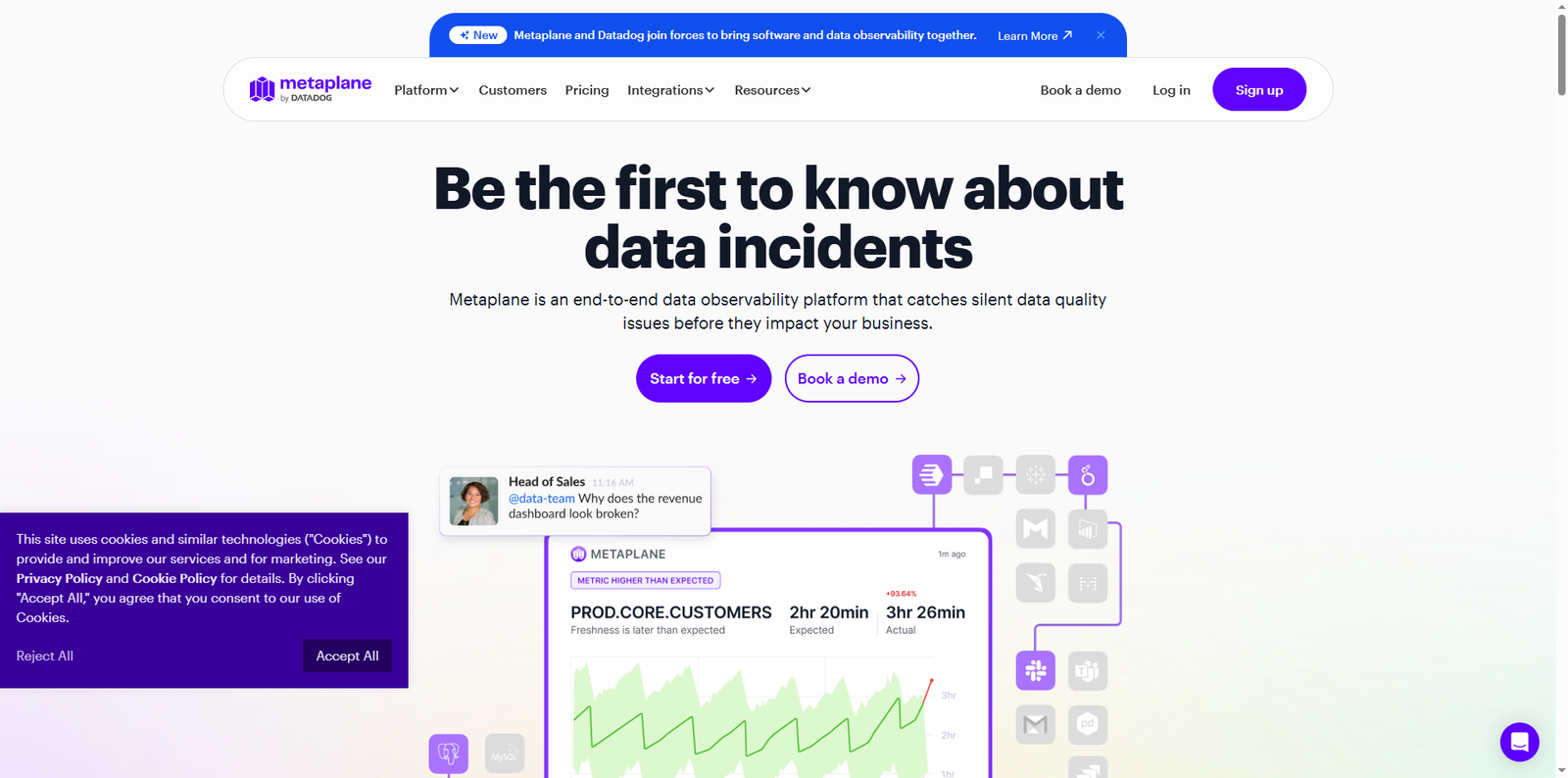
Metaplane.dev is a data observability platform that monitors the health of data pipelines and warehouses. Founded in 2021, the company has quickly gained traction among data engineers and analytics teams for its ability to automatically detect anomalies in datasets. It integrates seamlessly with popular data tools such as Snowflake, dbt, and Looker, providing real-time insights into the reliability of data assets.
According to public data from Crunchbase, Metaplane has raised funding from investors like Y Combinator and Stage 2 Capital, signaling strong confidence in its mission to make data observability accessible to every organization.
Why Data Observability Matters
Data observability refers to the ability to understand the health and reliability of data across an organization’s systems. As data pipelines scale, issues such as schema changes, missing values, or delayed transformations can lead to inaccurate reports and flawed decision-making. Gartner predicts that poor data quality costs organizations an average of $12.9 million annually, emphasizing the need for proactive monitoring solutions.
By implementing a data observability platform like Metaplane.dev, teams can:
- Detect anomalies in real-time before they affect dashboards or reports.
- Reduce time spent troubleshooting broken data pipelines.
- Build trust in analytics and business intelligence outputs.
- Enhance collaboration between data engineers, analysts, and business teams.
How Metaplane.dev Works
Metaplane.dev operates by continuously monitoring data pipelines and comparing current data metrics against historical baselines. When anomalies are detected — such as unexpected drops in row counts or changes in schema — it alerts the relevant stakeholders through integrations with communication tools like Slack or email.
Key Components of Metaplane.dev’s Workflow
- Data Monitoring: Automatically tracks metrics like freshness, volume, and distribution across data tables.
- Anomaly Detection: Uses statistical models to identify unusual patterns in data behavior.
- Alerting System: Sends real-time notifications when data quality issues arise.
- Root Cause Analysis: Helps teams trace issues back to their source, reducing resolution time.
By integrating with modern data stacks, Metaplane.dev ensures that teams can maintain confidence in their analytics without manually inspecting every dataset.
Core Benefits of Using Metaplane.dev
Organizations adopting Metaplane.dev experience several tangible benefits that streamline their data operations. These include:
- Proactive Issue Detection: Instead of reacting to broken dashboards, teams can prevent issues before they escalate.
- Improved Data Trust: Consistent monitoring builds confidence in data accuracy across departments.
- Faster Troubleshooting: Automated root cause analysis reduces downtime and manual investigation.
- Seamless Integration: Works with existing data tools, minimizing setup complexity.
- Scalability: Designed to handle growing data volumes without compromising performance.
Integration Capabilities
Metaplane.dev integrates with a wide range of data tools and platforms, making it suitable for organizations with diverse data ecosystems. Some of its most common integrations include:
- Data Warehouses: Snowflake, BigQuery, Redshift
- Transformation Tools: dbt, Airflow
- Business Intelligence: Looker, Mode, Tableau
- Communication Platforms: Slack, Microsoft Teams
These integrations allow Metaplane.dev to monitor data at every stage of the pipeline, ensuring end-to-end visibility and reliability.
Alternatives to Metaplane.dev
While Metaplane.dev is a leading solution in the data observability space, several other platforms offer similar capabilities. Below is a comparison table highlighting some notable alternatives.
| Tool Name | Description |
|---|---|
| Monte Carlo | A data observability platform that provides automated monitoring and lineage tracking for data pipelines. |
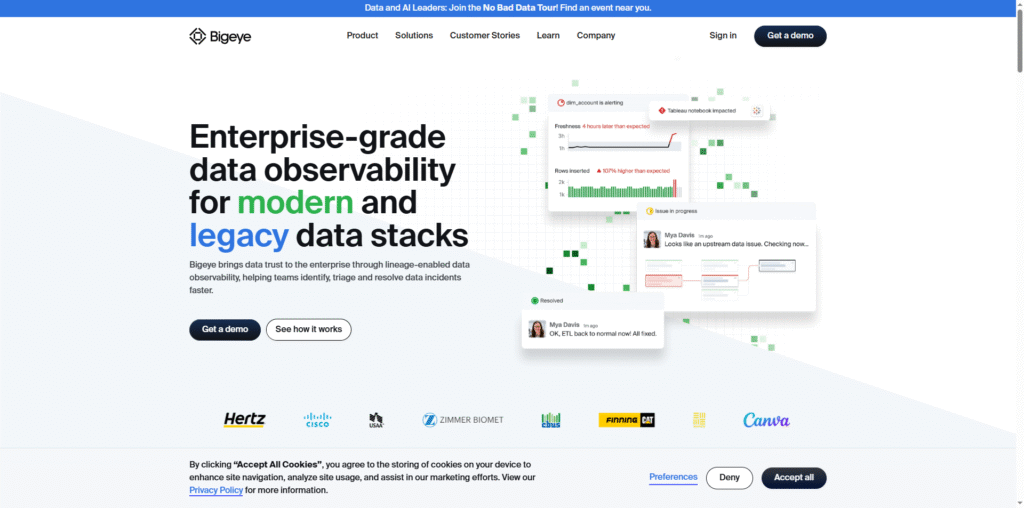
| Bigeye | Offers data quality monitoring and anomaly detection for enterprise data teams. |
| Soda | Focuses on data reliability and testing, enabling teams to define and monitor data quality metrics. |
| Databand | Provides observability for data pipelines, helping teams detect and resolve issues in ETL workflows. |
Real-World Use Cases
Metaplane.dev is used by organizations across industries to ensure data reliability and operational efficiency. Below are some common scenarios where the platform delivers significant value:
1. Monitoring Data Pipelines in Analytics Teams
Analytics teams often rely on complex data transformations to generate insights. Metaplane.dev helps them detect when transformations fail or when data freshness issues occur, ensuring that dashboards remain accurate and up-to-date.
2. Ensuring Data Quality in E-commerce
For e-commerce companies, data accuracy directly impacts revenue forecasting and inventory management. By using Metaplane.dev, these businesses can identify anomalies in sales or customer data, preventing costly reporting errors.
3. Supporting Data Governance Initiatives
Data governance teams use Metaplane.dev to maintain compliance and consistency across datasets. The platform’s automated monitoring ensures that data adheres to organizational standards and regulatory requirements.
4. Enhancing Collaboration Between Teams
Metaplane.dev bridges the gap between data engineers and business users by providing transparent insights into data health. When an issue arises, all stakeholders can view the same alerts and collaborate on resolution, reducing communication friction.
How Metaplane.dev Stands Out
What sets Metaplane.dev apart is its focus on simplicity and automation. Unlike traditional monitoring tools that require extensive configuration, Metaplane.dev offers a plug-and-play experience. Its machine learning models automatically learn from historical data, improving anomaly detection accuracy over time.
Additionally, the platform’s user interface is designed for accessibility, allowing both technical and non-technical users to understand data health metrics easily. This democratization of data observability empowers organizations to make faster, data-driven decisions.
Future of Data Observability
As data ecosystems continue to expand, the demand for observability tools like Metaplane.dev will only grow. According to IDC, global data creation is expected to reach 175 zettabytes by 2025, underscoring the need for scalable monitoring solutions. Future innovations in this space will likely focus on predictive analytics, automated remediation, and deeper integration with AI-driven data platforms.
Metaplane.dev is well-positioned to lead this transformation by continuously enhancing its capabilities and expanding its integration ecosystem. As organizations prioritize data reliability, tools like Metaplane.dev will become indispensable components of the modern data stack.
Conclusion
Metaplane.dev represents a new era in data observability, enabling organizations to proactively manage data quality and reliability. By providing real-time monitoring, anomaly detection, and seamless integrations, it empowers teams to trust their data and make informed decisions. While alternatives like Monte Carlo, Bigeye, Soda, and Databand also offer strong capabilities, Metaplane.dev’s simplicity and automation make it a standout choice for modern data teams. As data continues to drive business innovation, adopting a robust observability platform like Metaplane.dev is no longer optional — it’s essential for maintaining data integrity and operational excellence.