





Outline
- Introduction
- What is Firebolt.io?
- How Firebolt.io Differs from Traditional Data Warehouses
- Architecture and Core Components
- Performance and Scalability
- Use Cases and Industry Adoption
- Alternatives to Firebolt.io
- Conclusion
Introduction
In today’s data-driven world, organizations demand lightning-fast analytics and real-time insights to stay competitive. With the exponential growth of data, traditional data warehouses often struggle to deliver the performance and flexibility required for modern analytics workloads. This is where Firebolt.io steps in. Built for speed, scalability, and efficiency, Firebolt.io is redefining how businesses query and analyze massive datasets in the cloud.
According to a 2023 report by Gartner, over 75% of organizations are migrating their analytics workloads to cloud-native platforms. Firebolt.io has emerged as one of the most innovative players in this space, offering a unique approach to query execution and data storage that enables sub-second performance even on terabytes of data.
What is Firebolt.io?
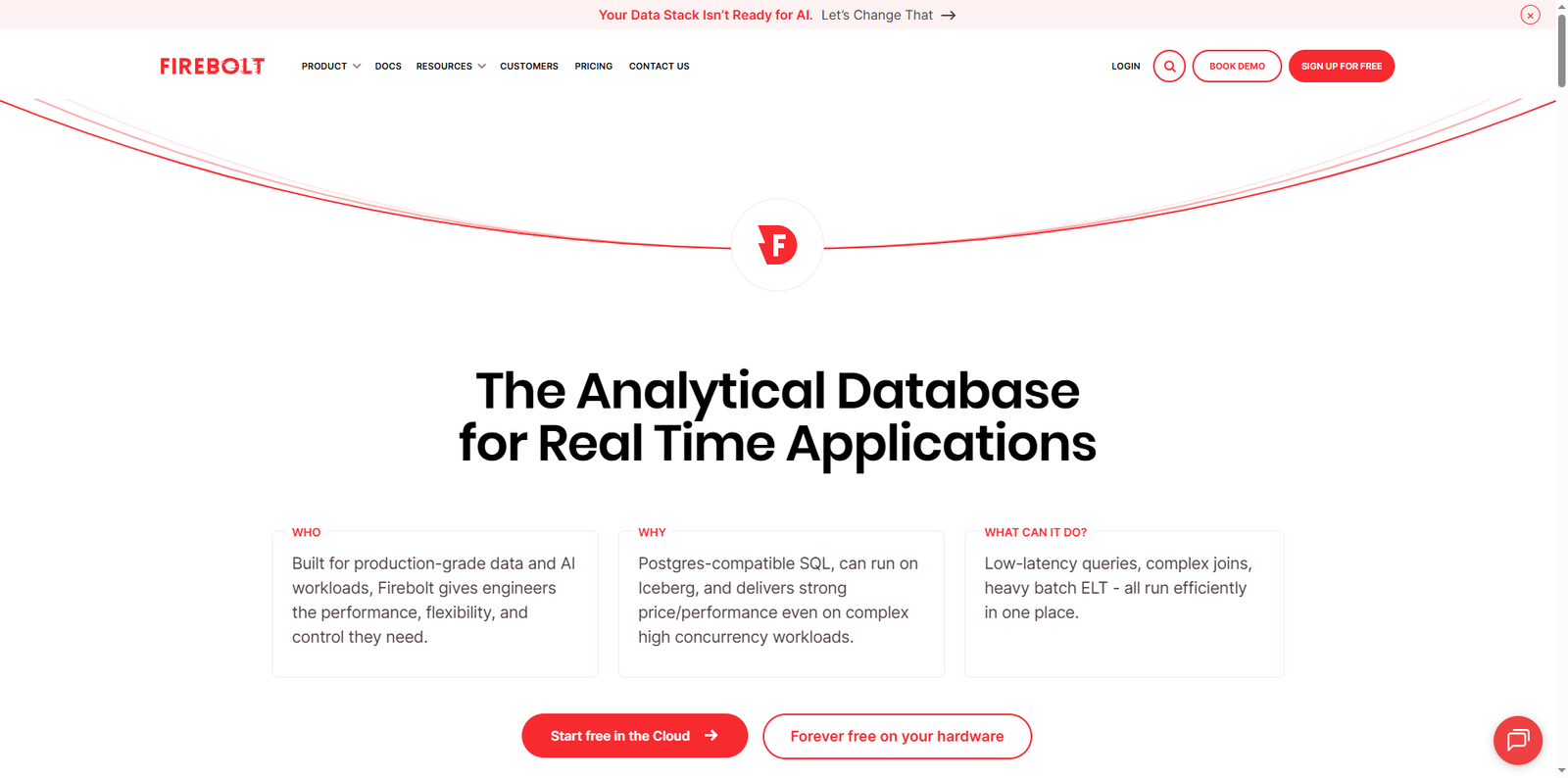
Firebolt.io is a cloud-native analytical database designed to power real-time analytics at scale. Unlike traditional data warehouses that rely on monolithic architectures, Firebolt.io leverages a decoupled storage and compute model, allowing teams to scale resources independently based on workload requirements. This architecture enables businesses to achieve faster query performance while optimizing costs.
Founded in 2019, Firebolt.io has quickly gained traction among data engineers and analytics teams for its ability to handle complex queries with minimal latency. The platform integrates seamlessly with modern data ecosystems, supporting popular tools like Tableau, Looker, and Metabase.
How Firebolt.io Differs from Traditional Data Warehouses
Traditional data warehouses were built for batch processing and static reporting. Firebolt.io, on the other hand, is designed for real-time, interactive analytics. Here are some key differences that set it apart:
- Performance-first architecture: Firebolt.io uses a unique indexing and query optimization engine that reduces data scanning and accelerates query execution.
- Elastic scalability: Its decoupled compute and storage layers allow users to scale up or down instantly without affecting performance.
- Developer-centric design: Firebolt.io provides SQL-based interfaces and APIs, enabling developers to build analytical applications directly on top of the database.
- Cost efficiency: By using smaller compute clusters and optimized queries, Firebolt.io minimizes resource consumption while maintaining high performance.
Architecture and Core Components
Firebolt.io’s architecture is built around three main components: storage, compute, and query optimization. Each component plays a critical role in delivering high-speed analytics.
1. Storage Layer
The storage layer in Firebolt.io is fully decoupled from compute, leveraging cloud object storage such as Amazon S3. Data is stored in a compressed, columnar format, which significantly reduces storage costs and improves I/O efficiency. This design ensures that data remains persistent and accessible even when compute clusters are inactive.
2. Compute Layer
The compute layer consists of virtual clusters known as “engines.” Each engine can be configured independently, allowing teams to run multiple workloads simultaneously without interference. For example, one engine can handle ad-hoc queries while another manages scheduled ETL processes.
3. Query Optimization Engine
At the heart of Firebolt.io lies its advanced query optimization engine. It uses techniques such as sparse indexing, vectorized execution, and just-in-time compilation to minimize data scanning and maximize throughput. This results in query speeds that are often 10–20 times faster than traditional cloud data warehouses.
Performance and Scalability
Performance is Firebolt.io’s defining feature. Benchmarks conducted by independent analysts have shown that Firebolt.io can execute complex analytical queries in milliseconds, even on datasets exceeding 100TB. This is achieved through a combination of efficient data indexing, distributed query execution, and intelligent caching mechanisms.
Scalability is equally impressive. Firebolt.io allows users to spin up multiple compute engines for different workloads, ensuring optimal resource utilization. This elasticity is particularly beneficial for organizations with fluctuating query demands, such as e-commerce platforms during peak shopping seasons or financial institutions running real-time risk assessments.
Real-World Example
Consider a global retail company analyzing customer behavior across millions of transactions. Using Firebolt.io, the company can query sales data in real time to identify emerging trends, optimize inventory, and personalize marketing campaigns. The ability to perform such analysis instantly empowers decision-makers with actionable insights that drive business growth.
Use Cases and Industry Adoption
Firebolt.io is used across various industries where speed and scalability are paramount. Below are some of the most common use cases:
- Ad Tech: Real-time bidding and campaign performance analytics require sub-second query responses. Firebolt.io enables ad tech companies to process billions of events per day efficiently.
- FinTech: Financial institutions leverage Firebolt.io for fraud detection, transaction monitoring, and portfolio analysis, where real-time insights are critical.
- E-commerce: Retailers use Firebolt.io to analyze customer journeys, optimize pricing, and forecast demand in real time.
- Gaming: Game developers utilize Firebolt.io to track player engagement, in-game purchases, and performance metrics instantly.
Integration with Modern Data Stacks
Firebolt.io integrates seamlessly with popular data orchestration and visualization tools, making it a versatile choice for modern data teams. It supports connectors for platforms such as Airbyte, Fivetran, and dbt, enabling smooth data ingestion and transformation workflows.
Alternatives to Firebolt.io
While Firebolt.io offers exceptional performance, several other cloud data warehouse solutions are available in the market. Below is a comparison of some popular alternatives:
| Tool Name | Overview |
|---|---|
| Snowflake | A cloud-based data platform known for its scalability and support for multi-cloud environments, ideal for enterprises with diverse data workloads. |
| BigQuery | Google’s serverless data warehouse that provides seamless integration with Google Cloud services and supports real-time analytics at scale. |
| Amazon Redshift | A fully managed data warehouse service by AWS that offers deep integration with the AWS ecosystem and robust performance for large-scale analytics. |
| Databricks | A unified analytics platform that combines data engineering, machine learning, and collaborative analytics using Apache Spark. |
| ClickHouse | An open-source columnar database management system optimized for real-time analytical queries and high-performance data processing. |
Conclusion
Firebolt.io represents a new generation of analytical databases built for the demands of modern data-driven organizations. Its combination of speed, scalability, and developer-friendly design makes it a compelling choice for teams seeking real-time insights from massive datasets. By decoupling storage and compute, leveraging advanced indexing, and offering seamless integration with popular data tools, Firebolt.io empowers businesses to unlock the full potential of their data.
As data volumes continue to grow, the need for efficient, high-performance analytics solutions will only intensify. Firebolt.io is well-positioned to lead this transformation, enabling organizations to move beyond traditional batch analytics and embrace a future of instant, actionable intelligence.
Whether you’re a data engineer building pipelines, an analyst exploring trends, or a business leader seeking faster insights, Firebolt.io provides the foundation for a truly modern analytics experience.