


Outline
- Introduction
- Understanding Oracle.com and Its Global Impact
- Core Offerings of Oracle
- Oracle’s Role in Digital Transformation
- Real-World Use Cases and Industry Applications
- Oracle’s Ecosystem and Integration Capabilities
- Alternatives to Oracle Solutions
- Conclusion
- Cloud Infrastructure
- Database Management
- Business Analytics
- Enterprise Applications
Introduction
In today’s data-driven world, enterprises rely on robust, scalable, and intelligent technology platforms to manage operations and drive innovation. Oracle.com stands as one of the leading providers of enterprise-grade software, cloud infrastructure, and analytics solutions. Founded in 1977, Oracle has evolved from a database company into a global technology powerhouse serving millions of users across industries. According to Statista, Oracle generated over $50 billion in revenue in 2023, underscoring its influence in the enterprise technology landscape.
Understanding Oracle.com and Its Global Impact
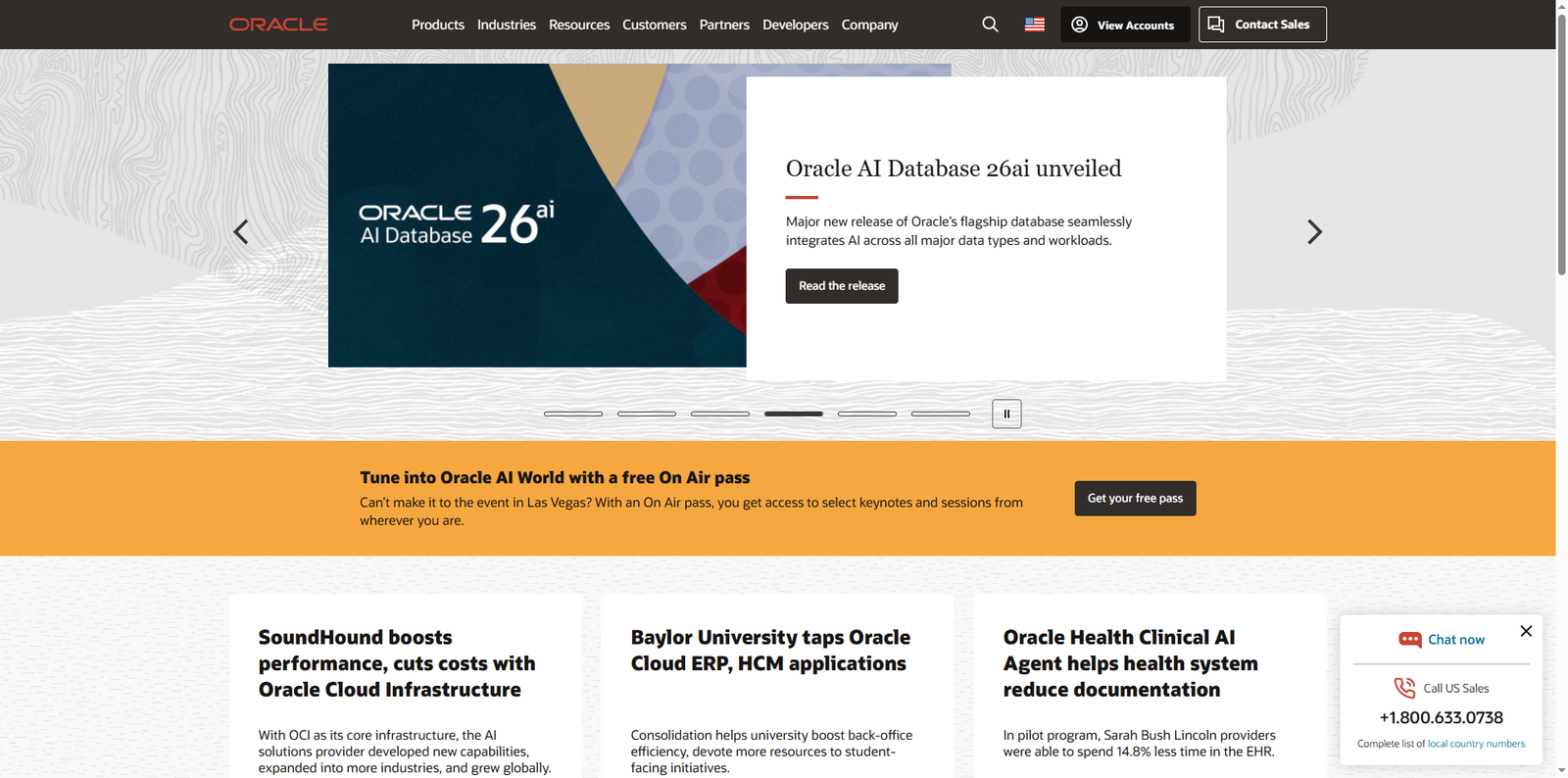
Oracle.com serves as the digital hub for Oracle Corporation’s extensive portfolio of products and services. The platform provides resources for businesses to explore cloud computing, artificial intelligence (AI), data management, and analytics solutions. With operations in more than 175 countries, Oracle’s technologies power mission-critical systems for governments, financial institutions, healthcare providers, and Fortune 500 companies.
Oracle’s commitment to innovation is evident through its continuous investment in research and development, which exceeded $7 billion in 2023. This investment fuels advancements in autonomous databases, AI-driven analytics, and secure cloud infrastructure, enabling organizations to modernize their IT environments efficiently.
Core Offerings of Oracle
Cloud Infrastructure
Oracle Cloud Infrastructure (OCI) offers a comprehensive suite of cloud services designed for performance, security, and cost efficiency. It supports hybrid and multi-cloud environments, allowing businesses to deploy workloads seamlessly across private and public clouds. OCI’s global data centers ensure high availability and compliance with international data protection standards.
Database Management
Oracle’s database technology remains one of its flagship offerings. The Oracle Autonomous Database automates routine tasks such as patching, tuning, and backups, reducing administrative overhead and minimizing human error. This self-managing capability allows organizations to focus on innovation rather than maintenance. Oracle databases are widely used across industries for their reliability, scalability, and advanced security features.
Business Analytics
Through Oracle Analytics Cloud, organizations gain access to AI-powered insights that transform raw data into actionable intelligence. The platform integrates data visualization, predictive analytics, and machine learning to support data-driven decision-making. Businesses can connect multiple data sources, create interactive dashboards, and uncover trends that drive strategic growth.
Enterprise Applications
Oracle offers a robust suite of enterprise applications covering areas such as enterprise resource planning (ERP), human capital management (HCM), customer experience (CX), and supply chain management (SCM). These applications are built to streamline business processes, enhance collaboration, and improve operational efficiency. Many organizations leverage Oracle’s integrated ecosystem to unify data across departments and gain a holistic view of their operations.
Oracle’s Role in Digital Transformation
Digital transformation is a top priority for modern enterprises, and Oracle plays a pivotal role in enabling this shift. By combining cloud computing, AI, and analytics, Oracle helps organizations modernize legacy systems and adopt agile business models. For instance, Oracle’s cloud solutions empower companies to scale resources dynamically, ensuring optimal performance during peak demand periods.
Moreover, Oracle’s focus on security and compliance ensures that businesses can innovate confidently. The company’s cloud infrastructure adheres to global standards such as ISO 27001 and SOC 2, providing a secure foundation for sensitive workloads. Oracle’s AI-driven analytics tools also help organizations identify inefficiencies, optimize supply chains, and enhance customer engagement strategies.
Real-World Use Cases and Industry Applications
Oracle’s technologies are utilized across diverse industries, from finance to healthcare and manufacturing. Below are some notable examples of how Oracle solutions drive real-world impact:
- Financial Services: Banks and financial institutions use Oracle databases to manage transactions securely and comply with regulatory requirements.
- Healthcare: Hospitals leverage Oracle Cloud to store and analyze patient data, improving diagnostics and treatment outcomes.
- Retail: Retailers utilize Oracle Analytics to forecast demand, personalize marketing campaigns, and optimize inventory management.
- Manufacturing: Manufacturers implement Oracle ERP systems to streamline production planning and supply chain operations.
These use cases demonstrate Oracle’s versatility and its ability to adapt to the unique needs of different sectors.
Oracle’s Ecosystem and Integration Capabilities
One of Oracle’s strengths lies in its ability to integrate seamlessly with other technologies. The platform supports interoperability with popular tools and frameworks, enabling businesses to build connected ecosystems. Oracle’s APIs and integration services allow developers to connect third-party applications, automate workflows, and enhance productivity.
Additionally, Oracle’s partnerships with major cloud providers and technology vendors expand its ecosystem further. For example, Oracle’s collaboration with Microsoft Azure enables customers to run workloads across both clouds, combining the strengths of each platform. This multi-cloud strategy provides flexibility and resilience, ensuring business continuity even in complex IT environments.
Alternatives to Oracle Solutions
While Oracle remains a leader in enterprise technology, several alternatives offer competitive solutions in specific domains. The following table highlights some notable alternatives businesses may consider:
| Category | Alternative Tool |
|---|---|
| Cloud Infrastructure | Amazon Web Services |
| Database Management | Google Cloud SQL |
| Business Analytics | Microsoft Power BI |
| Enterprise Applications | SAP |
| Data Integration | IBM Cloud Pak for Data |
Each of these alternatives offers unique strengths, and the choice depends on an organization’s specific requirements, existing infrastructure, and strategic goals. However, Oracle’s integrated approach and extensive ecosystem often make it a preferred choice for enterprises seeking end-to-end solutions.
Conclusion
Oracle.com represents more than just a technology platform—it is a catalyst for business transformation. Through its comprehensive suite of cloud, database, and analytics solutions, Oracle empowers organizations to harness the power of data, enhance operational efficiency, and drive innovation. Its global presence, commitment to security, and continuous investment in emerging technologies position it as a trusted partner for enterprises navigating the complexities of the digital era.
As businesses continue to embrace digital transformation, Oracle’s role in shaping the future of enterprise technology remains undeniable. Whether through its autonomous databases, AI-driven analytics, or scalable cloud infrastructure, Oracle continues to redefine how organizations operate and compete in an increasingly connected world. For enterprises seeking a reliable, intelligent, and future-ready technology partner, Oracle.com stands as a cornerstone of innovation and excellence.