


Outline
- Introduction
- What is Voicetapp?
- How Voicetapp Works
- Benefits of Using Voicetapp
- Practical Use Cases
- Alternative Tools
- Conclusion
Introduction
In today’s fast-paced digital world, professionals, content creators, and businesses are constantly searching for ways to streamline their workflows. One of the most time-consuming tasks is converting spoken words into written text. This is where Voicetapp comes in — an AI-powered platform designed to revolutionize speech-to-text transcription and content creation. With the rise of artificial intelligence and natural language processing, tools like Voicetapp are transforming how we capture, process, and repurpose audio and video content.
According to a 2023 report by Grand View Research, the global speech and voice recognition market size was valued at over USD 14 billion and is expected to grow at a compound annual growth rate (CAGR) of 14.9% from 2024 to 2030. This surge is driven by the increasing demand for automation and accessibility tools, making platforms like Voicetapp more relevant than ever.
What is Voicetapp?
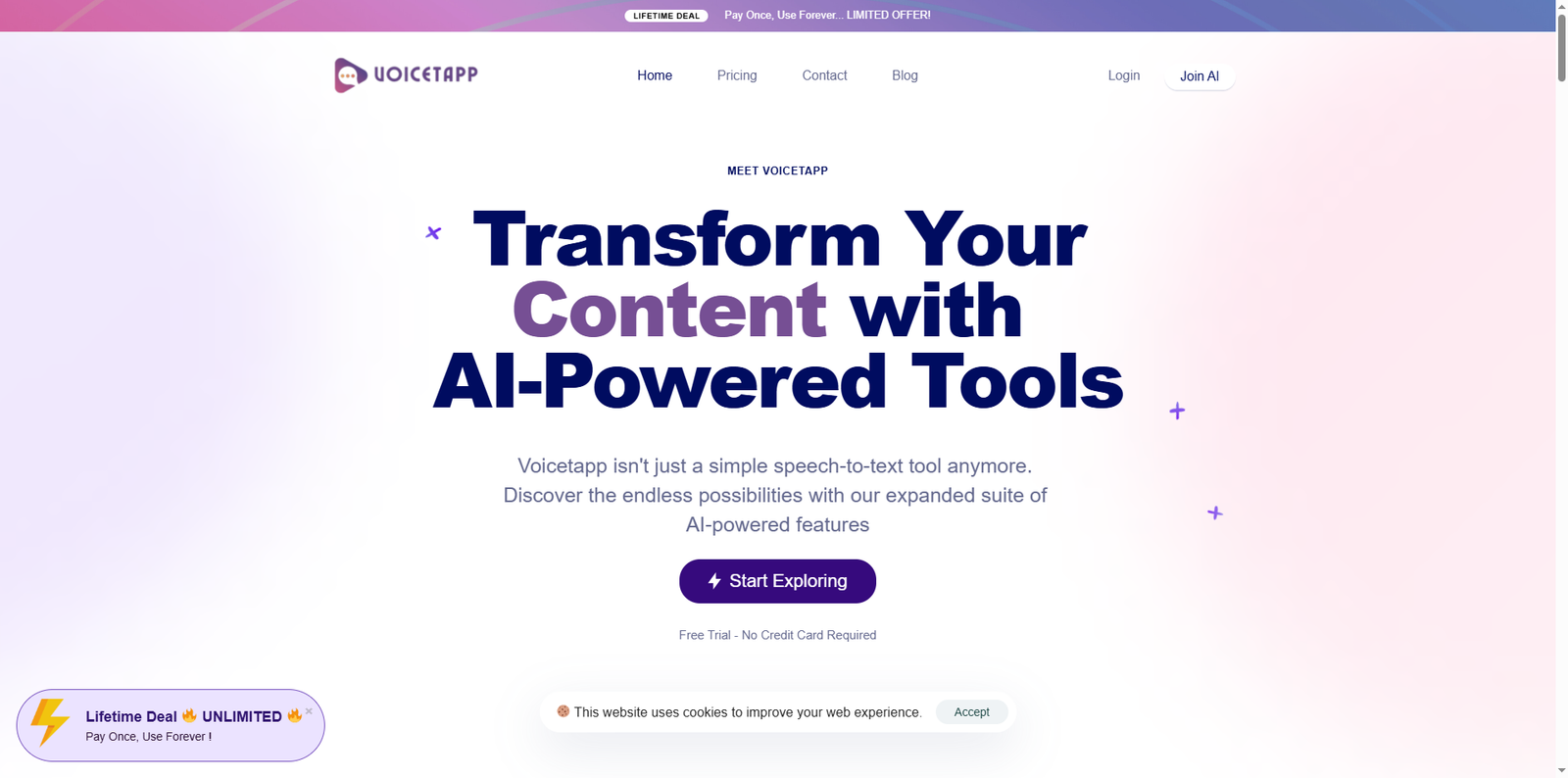
Voicetapp is an advanced AI-driven tool that offers speech-to-text transcription, AI content writing, and realistic voiceover generation. Unlike traditional transcription software, Voicetapp integrates multiple AI technologies to deliver high-accuracy results across different languages and audio qualities. It’s designed for professionals who need reliable transcription and content automation without the steep learning curve associated with complex software.
Voicetapp’s versatility makes it suitable for entrepreneurs, marketers, podcasters, educators, and corporate teams. It supports multilingual transcription, caption generation, and even AI-powered content transformation — turning YouTube videos into structured blog posts. This adaptability positions Voicetapp as an all-in-one solution for modern digital communication.
How Voicetapp Works
Voicetapp uses advanced AI algorithms and speech recognition models to analyze audio input and convert it into accurate text. The process involves several key stages:
- Audio Processing: The system cleans and enhances the audio file, reducing background noise and improving clarity.
- Speech Recognition: AI models trained on vast datasets identify words, accents, and tones to ensure high transcription accuracy.
- Language Detection: Voicetapp automatically detects the spoken language, enabling seamless multilingual transcription.
- Content Structuring: The transcribed text can be formatted, summarized, or repurposed into articles, captions, or scripts.
Its integration capabilities allow users to connect Voicetapp with other productivity tools, making it a valuable addition to any digital workflow. Whether you’re recording a podcast, conducting interviews, or creating educational content, Voicetapp simplifies the process from start to finish.
Benefits of Using Voicetapp
1. Accuracy and Speed
Voicetapp’s AI models boast up to 99% accuracy in transcription, even in challenging audio environments. This precision ensures that users spend less time editing and more time focusing on content creation. The platform’s speed also allows for near real-time transcription, which is invaluable for live events and meetings.
2. Multilingual Capabilities
With support for multiple languages, Voicetapp breaks down communication barriers. Businesses operating in global markets can transcribe and translate content effortlessly, expanding their reach and improving accessibility.
3. Seamless Workflow Integration
Voicetapp integrates smoothly into existing workflows, supporting various file formats and export options. This makes it easy to transfer transcriptions into content management systems, video editing software, or document platforms.
4. AI-Powered Content Creation
Beyond transcription, Voicetapp includes AI writing tools that help users generate blog posts, summaries, and captions. This feature is particularly useful for content marketers and social media managers who need to repurpose content efficiently.
5. Accessibility and Engagement
By generating accurate captions and transcripts, Voicetapp enhances accessibility for audiences with hearing impairments. It also improves SEO performance, as search engines can index text-based content more effectively than audio or video files.
Practical Use Cases
Voicetapp’s applications span across multiple industries, offering tailored solutions for different professional needs:
- Podcasters: Automatically transcribe episodes to create show notes, captions, or blog posts.
- Educators: Convert lectures and webinars into study materials or transcripts for accessibility.
- Journalists: Save time by transcribing interviews and press conferences accurately.
- Corporate Teams: Record and transcribe meetings for documentation and compliance purposes.
- Content Creators: Transform YouTube videos into structured articles or social media posts.
For instance, a marketing team can use Voicetapp to transcribe brainstorming sessions, extract key insights, and generate blog drafts automatically. Similarly, a YouTuber can use the AI YouTube-to-Blog feature to repurpose video content into SEO-optimized written material, saving hours of manual effort.
Alternative Tools
While Voicetapp stands out for its comprehensive AI-powered suite, several other tools also offer speech-to-text and content automation capabilities. Below is a comparison table of popular alternatives:
| Tool Name | Description |
|---|---|
| Otter.ai | Known for real-time transcription and collaboration features, Otter.ai is widely used by professionals for meetings and lectures. |
| Rev | Offers human and AI-based transcription services with a focus on accuracy and turnaround speed. |
| Descript | Combines transcription, video editing, and podcast production in one platform, ideal for multimedia creators. |
| Sonix | Provides automated transcription and translation with advanced editing and collaboration tools. |
| Trint | Integrates AI transcription with video editing and publishing tools, making it suitable for journalists and media teams. |
Each of these tools has its strengths, but Voicetapp’s combination of transcription, AI content generation, and voiceover capabilities gives it a unique edge in the market.
Conclusion
Voicetapp represents the next generation of AI-powered productivity tools, merging speech recognition, content creation, and voice synthesis into one cohesive platform. Its ability to deliver accurate, multilingual transcriptions and generate engaging written content makes it a valuable asset for professionals across industries. As the demand for automation and accessibility continues to grow, tools like Voicetapp will play a pivotal role in shaping how we create and consume digital content.
Whether you’re a content creator looking to repurpose videos, a business professional aiming to document meetings efficiently, or an educator striving to make learning materials more accessible, Voicetapp offers a seamless solution. By integrating cutting-edge AI technologies into everyday workflows, it empowers users to work smarter, faster, and more creatively — redefining what’s possible in the world of digital communication.