





Outline
- Introduction
- What Is Typecast.ai?
- How Typecast.ai Works
- Applications of Typecast.ai
- Benefits of Using Typecast.ai
- Alternatives to Typecast.ai
- Real-World Use Cases
- Future of AI Voice Generation
- Conclusion
Introduction
Artificial intelligence has significantly transformed the way we create and consume digital content. Among the most exciting innovations is AI-driven voice generation, which allows creators to produce lifelike voices without human actors. One of the leading platforms in this space is Typecast.ai, an AI voice generator that specializes in emotional text-to-speech (TTS). This technology enables users to generate expressive, natural-sounding voices that can convey a wide range of emotions, making it ideal for video creators, educators, marketers, and developers.
What Is Typecast.ai?
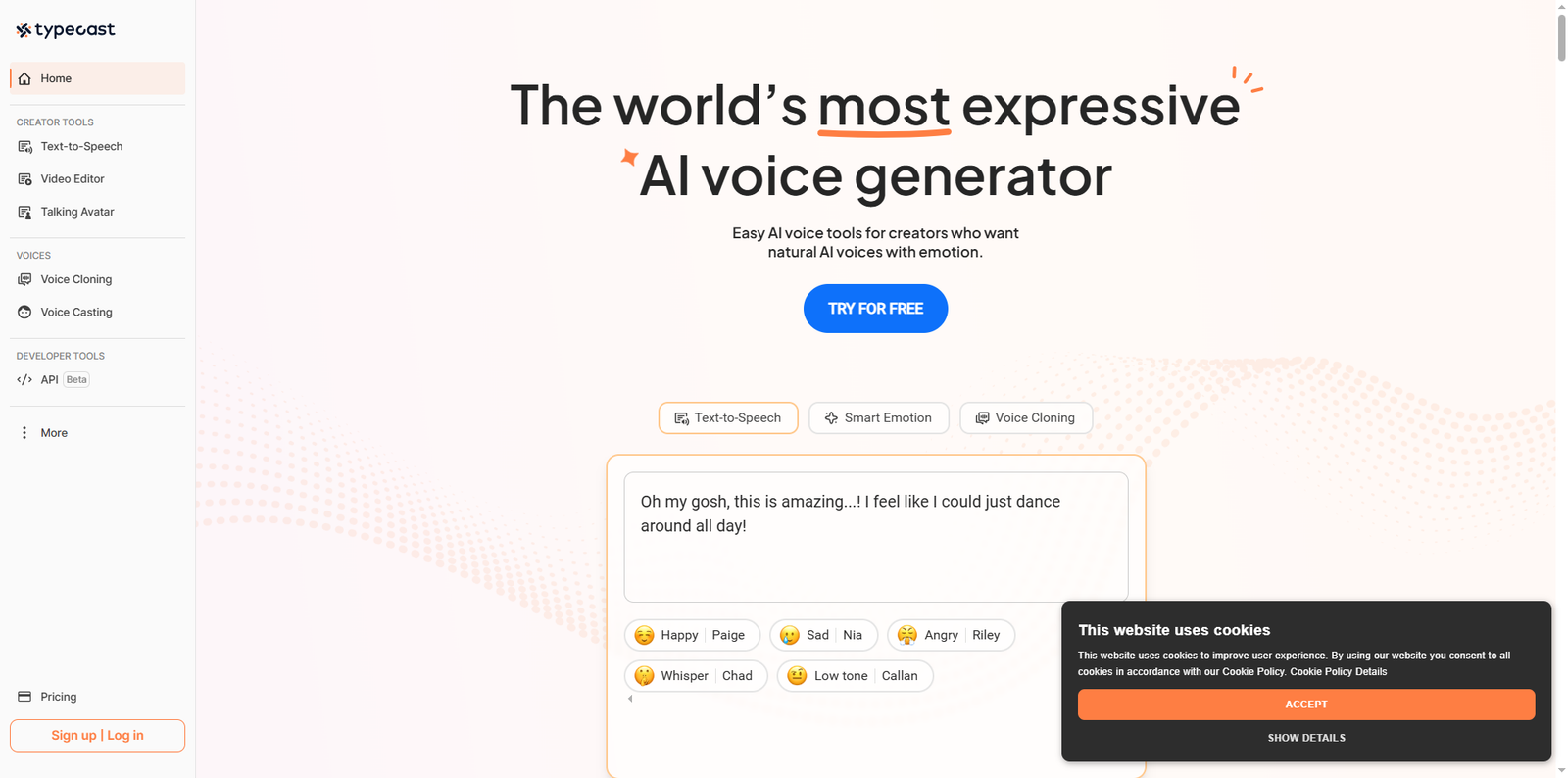
Typecast.ai is a cloud-based AI voice generation platform developed by Typecast Inc., a company focused on advancing human-like voice synthesis. The platform allows users to convert written text into realistic spoken dialogue using artificial intelligence and deep learning models. Unlike traditional TTS systems, Typecast.ai emphasizes emotional nuance, enabling users to choose tones such as happiness, sadness, anger, or excitement to match the context of their content.
According to the official website, Typecast.ai offers over 400 AI voices in multiple languages, each capable of expressing subtle emotional variations. The platform is widely used by content creators on YouTube, e-learning professionals, and game developers who need authentic voiceovers without hiring voice actors.
How Typecast.ai Works
Typecast.ai leverages advanced neural networks and natural language processing (NLP) to analyze text input and generate corresponding speech output. The process involves several key steps:
- Text Analysis: The system interprets the text, identifying punctuation, sentence structure, and emotional cues.
- Emotion Mapping: Users can select emotional tones or let the AI infer them automatically based on context.
- Voice Rendering: The AI synthesizes speech using pre-trained voice models that mimic human intonation and rhythm.
- Post-Processing: The generated audio is refined for clarity, pacing, and natural resonance.
Typecast.ai’s architecture is built on deep learning frameworks similar to those used in large-scale language models. It continuously improves as more data is processed, allowing for increasingly realistic voice reproduction.
Applications of Typecast.ai
The versatility of Typecast.ai makes it valuable across multiple industries. Below are some of its most common applications:
1. Content Creation
Video creators and podcasters use Typecast.ai to produce professional-quality voiceovers quickly. It eliminates the need for expensive recording equipment or hiring voice talent, making it accessible for independent creators.
2. E-Learning and Education
Educators and e-learning platforms utilize Typecast.ai to generate engaging narration for online courses. The emotional tone helps maintain learner attention and enhances comprehension.
3. Marketing and Advertising
Brands use AI-generated voices to create personalized advertisements and product demos. Emotional voiceovers can significantly improve audience engagement and brand recall.
4. Gaming and Interactive Media
Game developers integrate Typecast.ai voices into characters, enabling dynamic dialogue generation that adapts to player actions. This brings a new level of realism to interactive storytelling.
5. Accessibility Solutions
Typecast.ai also supports accessibility by providing natural-sounding voices for visually impaired users, making digital content more inclusive.
Benefits of Using Typecast.ai
Typecast.ai offers numerous advantages for creators and businesses seeking efficient voice production solutions:
- Time Efficiency: Generate high-quality voiceovers in minutes instead of hours.
- Emotional Realism: Convey authentic emotions that resonate with audiences.
- Scalability: Produce multiple voices and languages for global reach.
- Consistency: Maintain uniform tone and quality across projects.
- Accessibility: Simplify content creation for users without technical expertise.
Alternatives to Typecast.ai
While Typecast.ai is a powerful platform, several other tools offer similar capabilities. Here are some notable alternatives:
| Tool Name | Official Website | Key Focus |
|---|---|---|
| Play.ht | play.ht | AI voice generation with realistic speech synthesis for podcasts and audiobooks. |
| Lovo.ai | lovo.ai | Voice cloning and text-to-speech for media production and marketing. |
| Murf.ai | murf.ai | AI voiceovers for presentations, videos, and e-learning content. |
| Resemble.ai | resemble.ai | Custom voice cloning and speech synthesis for enterprise applications. |
Real-World Use Cases
Typecast.ai has been adopted by a variety of industries and creators worldwide. Below are a few examples of how it’s being used effectively:
- YouTube Creators: Many YouTubers use Typecast.ai to narrate explainer videos, tutorials, and storytelling content, saving both time and production costs.
- Corporate Training: Businesses employ AI-generated voices for internal training videos, ensuring consistent delivery across departments and languages.
- Podcast Production: Podcasters use Typecast.ai to create multiple character voices, adding depth and variety to their episodes.
- Film and Animation: Independent filmmakers integrate AI voices during pre-production or for minor characters, streamlining the creative process.
Future of AI Voice Generation
The future of AI voice generation looks promising, with continuous advancements in machine learning and speech synthesis. According to a 2023 report by Grand View Research, the global text-to-speech market is projected to reach over USD 7 billion by 2030, driven by the demand for personalized and accessible digital experiences.
Emerging trends include real-time voice modulation, multilingual synthesis, and integration with virtual reality environments. Typecast.ai is well-positioned to capitalize on these developments by refining its emotional AI models and expanding its voice library. As AI voices become more indistinguishable from human speech, ethical considerations such as consent, authenticity, and transparency will play a crucial role in shaping industry standards.
Conclusion
Typecast.ai stands at the forefront of AI voice generation, offering creators an innovative way to bring text to life with emotional depth and realism. Its intuitive interface, extensive voice library, and expressive capabilities make it a valuable tool for content creators, educators, and businesses alike. While alternatives like Play.ht and Murf.ai provide competitive options, Typecast.ai’s focus on emotional nuance sets it apart in the evolving landscape of text-to-speech technology.
As AI continues to advance, tools like Typecast.ai will redefine how we create and experience digital content. Whether you’re producing a video, developing a game, or crafting an online course, AI-generated voices can help you communicate more effectively and emotionally connect with your audience. The future of storytelling is here—and it speaks with the voice of artificial intelligence.