





Outline
- Introduction
- What is Higgsfield.ai?
- The Technology Behind Higgsfield.ai
- How Higgsfield.ai is Transforming AI Video Creation
- Applications of Higgsfield.ai
- Comparing Higgsfield.ai with Alternative Tools
- Benefits of Using Higgsfield.ai
- Challenges and Limitations
- Future of AI-Generated Video Content
- Conclusion
Introduction
Artificial intelligence continues to redefine how creators produce and share digital content. Among the most exciting innovations in this space is Higgsfield.ai, a platform that merges advanced AI models with creative control to generate high-quality, synchronized video and audio content. As AI video generation becomes more accessible, tools like Higgsfield.ai are empowering creators, marketers, and filmmakers to produce cinematic results without traditional production constraints.
What is Higgsfield.ai?
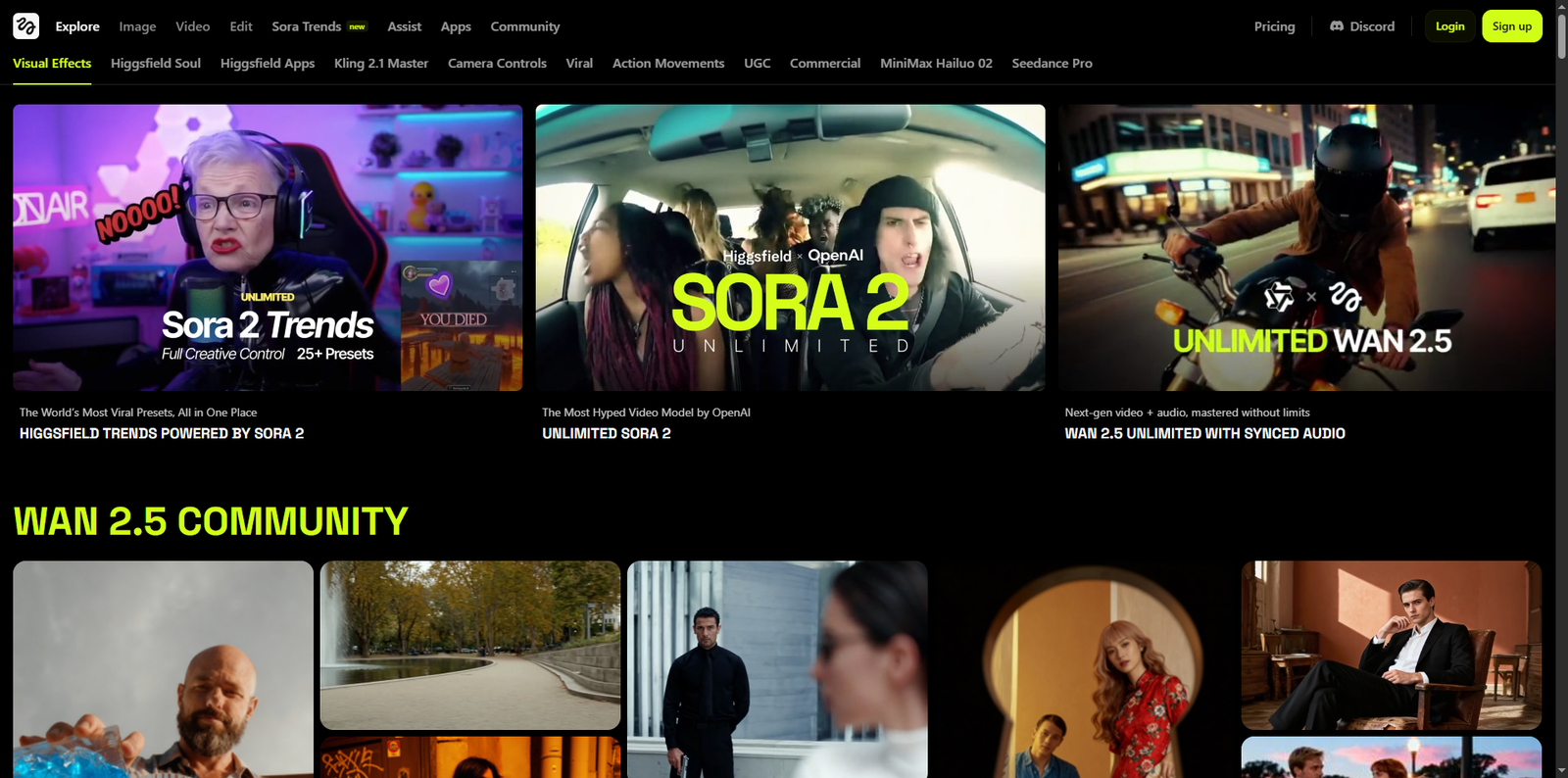
Higgsfield.ai is an AI-powered video generation platform that integrates multiple advanced models, including Sora 2 and Wan 2.5. It allows users to create dynamic, synchronized video and audio outputs with minimal manual effort. The platform’s mission is to make high-quality video creation scalable and accessible to everyone, from independent creators to large media studios.
According to the company, Higgsfield.ai hosts exclusive AI models such as Kling 2.1 and Minimax, offering users a wide range of creative possibilities. Its integration with OpenAI’s Sora 2 model provides cutting-edge video generation capabilities that can replicate cinematic visuals and realistic motion sequences.
The Technology Behind Higgsfield.ai
At its core, Higgsfield.ai leverages deep learning and generative AI to produce videos that combine visual and auditory elements seamlessly. The platform’s architecture is built around several key models:
- Sora 2: A video model developed by OpenAI, known for its ability to generate realistic motion and scene transitions.
- Wan 2.5: A next-generation model that synchronizes video and audio generation, ensuring that lip-syncing, sound effects, and background music align perfectly.
- Kling 2.1 and Minimax: Proprietary models that enhance creative control, allowing users to fine-tune visual styles, lighting, and camera movements.
These models work together to create cohesive, high-fidelity video experiences that rival professional production outputs. The system uses transformer-based architectures and diffusion models, similar to those used in image generation tools like Stable Diffusion, but optimized for temporal consistency in video.
How Higgsfield.ai is Transforming AI Video Creation
Traditional video production involves multiple steps—scripting, filming, editing, and post-production—all of which require time, skill, and resources. Higgsfield.ai simplifies this process by allowing users to input text prompts or reference visuals, which the AI then transforms into complete video sequences.
This transformation is particularly impactful for industries such as advertising, entertainment, and education. For example, marketers can generate product videos in minutes, while educators can create engaging visual content without expensive equipment or editing software.
Real-World Example
In early 2024, AI-generated videos began trending on social media platforms like TikTok and Instagram. Many of these viral clips were powered by tools similar to Higgsfield.ai, showcasing how AI can produce visually stunning, shareable content that resonates with audiences worldwide.
Applications of Higgsfield.ai
The versatility of Higgsfield.ai makes it suitable for a wide range of applications. Some of the most common use cases include:
- Marketing and Advertising: Brands can create promotional videos and product demos quickly.
- Film and Animation: Independent filmmakers can generate scenes or storyboards using AI-generated visuals.
- Education and Training: Instructors can produce explainer videos or simulations to enhance learning experiences.
- Social Media Content: Influencers and creators can generate short-form videos optimized for engagement.
Comparing Higgsfield.ai with Alternative Tools
While Higgsfield.ai stands out for its integration of multiple AI models, several other platforms also offer innovative video generation capabilities. Below is a comparison of some notable alternatives:
| Tool Name | Description |
|---|---|
| Runway | An AI video editing and generation platform that allows creators to produce and edit videos using text prompts and machine learning models. |
| Pika Labs | Focuses on AI-driven video creation with real-time editing and animation tools for short-form content. |
| Synthesia | Specializes in AI avatar-based video generation for corporate training, marketing, and communication. |
| DeepBrain AI | Offers AI-powered human avatars and video synthesis for broadcasting and customer service applications. |
Benefits of Using Higgsfield.ai
Higgsfield.ai offers several advantages that make it appealing to creators and businesses alike:
- Efficiency: Reduces production time by automating video generation.
- Creative Flexibility: Users can experiment with different visual styles and audio effects.
- Accessibility: Removes the need for expensive equipment or advanced editing skills.
- Scalability: Enables mass production of high-quality videos for marketing campaigns or content libraries.
- Innovation: Combines multiple AI models to deliver synchronized, cinematic-quality results.
Challenges and Limitations
Despite its impressive capabilities, Higgsfield.ai faces certain challenges common to AI-generated media:
- Ethical Concerns: The potential misuse of AI-generated videos for misinformation or deepfakes remains a pressing issue.
- Creative Authenticity: Some creators worry that AI may dilute the human touch in artistic expression.
- Technical Constraints: While models like Sora 2 and Wan 2.5 are advanced, they still struggle with complex motion or fine details in certain contexts.
- Data and Privacy: As with any AI system, data security and responsible use of training datasets are critical considerations.
Future of AI-Generated Video Content
The future of AI-generated video is bright and rapidly evolving. As models become more sophisticated, we can expect even greater realism, interactivity, and creative control. Platforms like Higgsfield.ai are paving the way for a new era of digital storytelling, where anyone can produce professional-quality videos using only imagination and a few lines of text.
Experts predict that by 2026, over 30% of online video content could be AI-generated, according to a report by Gartner. This shift will redefine how we consume media, blending human creativity with machine intelligence to produce immersive, personalized experiences.
Conclusion
Higgsfield.ai represents a major leap forward in the world of AI-driven video creation. By combining advanced models such as Sora 2, Wan 2.5, and Kling 2.1, it enables seamless integration of video and audio, empowering creators to push the boundaries of digital storytelling. While challenges related to ethics and authenticity remain, the potential for innovation is undeniable.
As AI continues to evolve, platforms like Higgsfield.ai will play a crucial role in shaping the future of media production. Whether you’re a filmmaker, marketer, educator, or content creator, embracing these tools can unlock new creative possibilities and transform how stories are told in the digital age.