
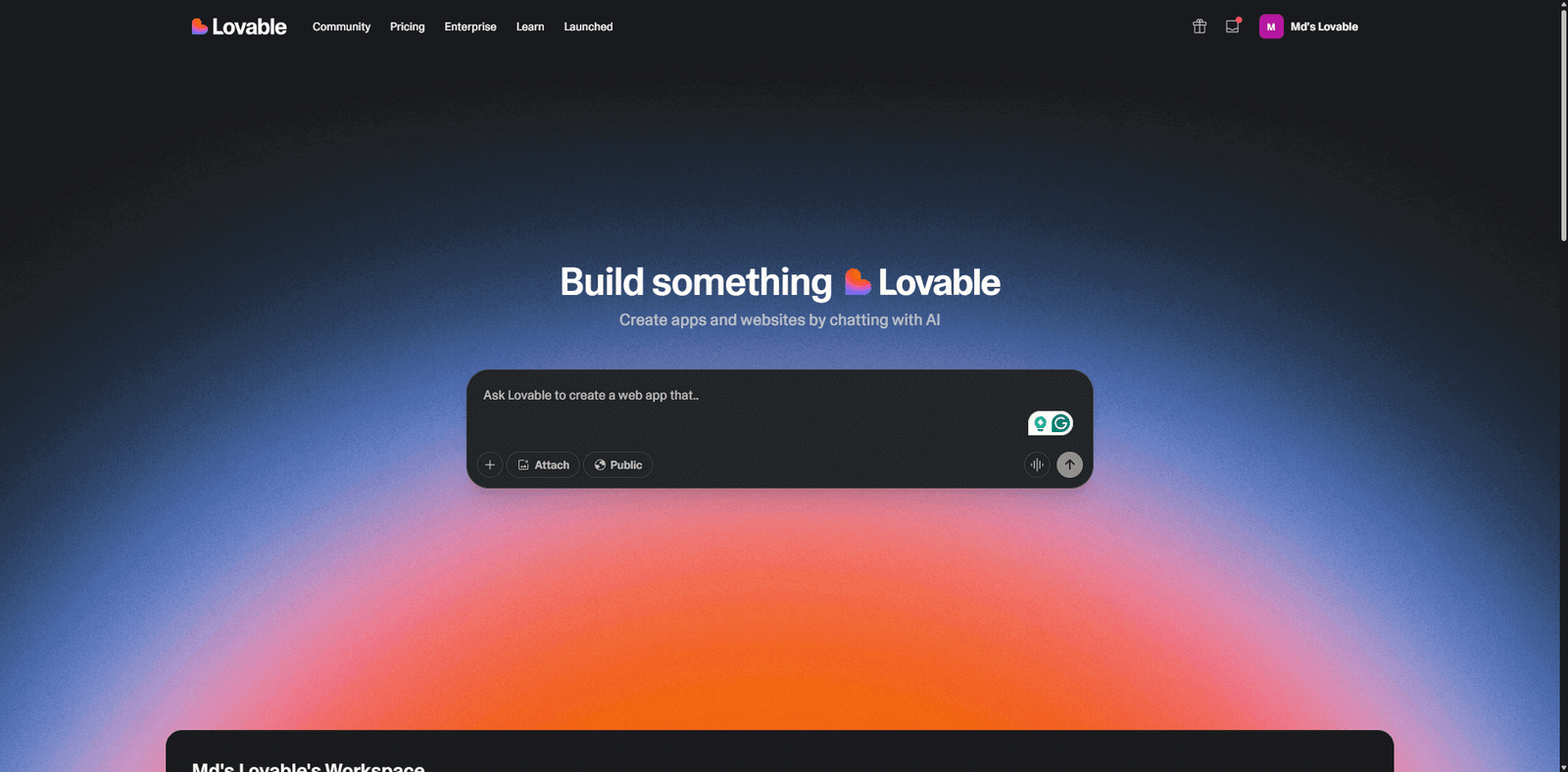


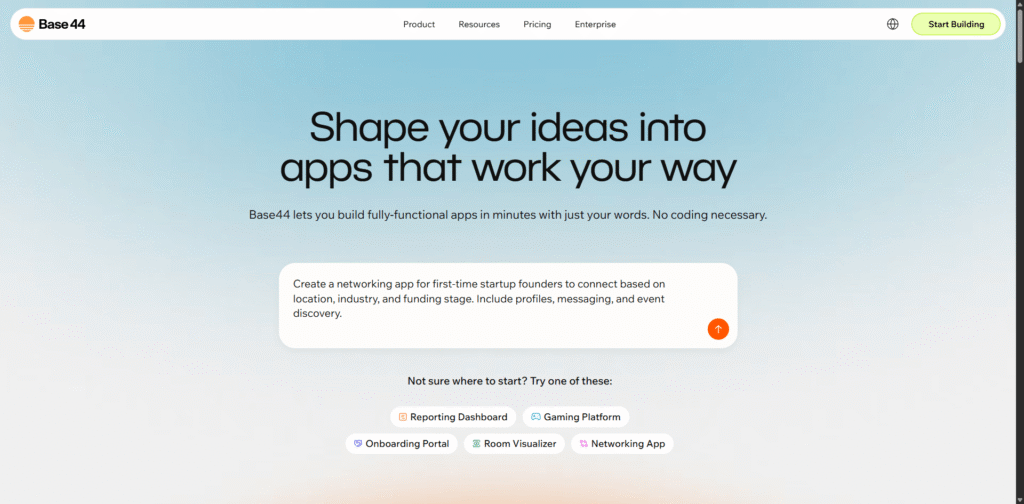
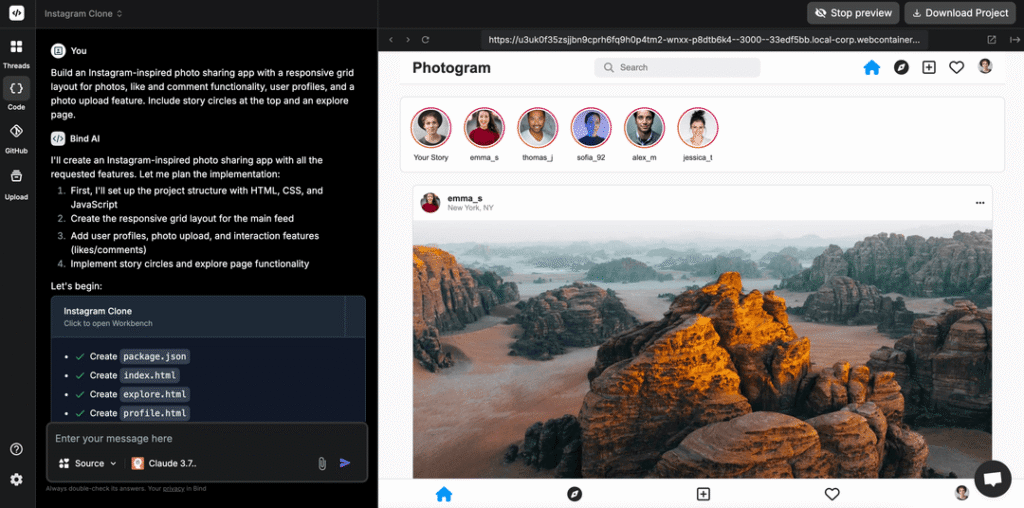
Lovable.dev is an AI-powered platform that enables users—especially non-technical creators, startups, product teams, and designers—to build full-stack web applications using natural language prompts. Often described as a “vibe coding” tool, it bridges the gap between idea and execution by handling much of the boilerplate setup (front-end, back-end database, authentication) so users can focus on core logic and features. The tool emphasizes speed, user experience, and collaborative workflows, with support for deploying apps, custom domains, and editing code when needed.
Core Features & How It Works
At its core, Lovable lets you describe your application in plain English. From your description, the tool generates responsive UI components (typically using React, Typescript, Tailwind CSS or similar stacks), integrates backend infrastructure (commonly Supabase for database/auth needs), and gives you a working prototype or production-ready app depending on your needs. You can further customize the generated code via a built-in editor (Code Mode), connect your project to GitHub for version control, and deploy your app with a custom domain.
It also supports role-based teams, permissions, private vs public projects, custom domains, and design templates, which make it scalable for teams beyond individual use. To avoid overuse and manage resources, it uses a message (or credit)-based system: each interaction (prompt / build / generation) consumes credits (“messages” or “daily/ monthly credits”). Paid tiers increase credit allotments, allow for more private work, removal of badges, custom domains, etc.
Use Cases & Suitability
Lovable.dev is especially good for:
- Rapid prototyping: for founders or designers who want to test ideas quickly without waiting for engineering resources.
- MVPs (Minimum Viable Products): getting a usable working version of a product so you can validate with users.
- Internal tools / dashboards: teams needing internal apps or dashboards fast.
- Learning & experimentation: seeing how code is generated, observing front-end/back-end structure, getting exposure to code.
- Designers who want to generate working UI and tweak visuals before handing off to devs.
However, there are limitations. For very complex logic, deeply custom backends, or non-standard UI/UX patterns, manual tweaks or engineering intervention may still be necessary. Also, free / lower-tier plans are limited in daily or monthly credits, message limits, or project visibility (public vs private).
Pricing & Plans
Lovable.dev operates on a freemium model with different plans:
- Free Plan: Includes limited credits (5 messages per day, up to ~30 per month), unlimited public projects, basic features.
- Pro Plan (~US$25/month): Offers more credits, private projects, custom domains, removes Lovable branding (“Edit with Lovable” badge), access to code mode and editing, etc.
- Business / Teams Plan (~US$50/month or more): Adds team/organization features, SSO, roles & permissions, more seats, reusable templates, opt-out data-training etc.
- Enterprise: Custom pricing, includes dedicated support, onboarding, special integrations, higher limits.
Recent Growth & Positioning
Lovable has grown quite fast. Awards, reviews, and articles note that it has amassed a large user base, is used to create many projects daily, and is seen as one of the faster-evolving tools in the AI-app generation / vibe coding space. It is positioning itself more than just a code generator—it’s a system to let people launch apps, iterate visually, deploy, and maintain, in many cases without in-depth engineering. Its integration with Supabase for backend services is highlighted as a key enabler for database and auth features.
Advantages & Drawbacks
Advantages:
- Low barrier to entry: non-coders can build functional apps.
- Speeds up development, removes boilerplate.
- Supports real code editing (not just templates)—you can tweak after generation.
- Collaborative/team tools, custom domains, and scale.
- Useful for prototyping, internal tools, dashboards, MVPs.
Drawbacks:
- Credit/message limits on free / lower plans can restrict iteration.
- For highly complex apps, you may hit custom component / backend limits.
- UI / design customization may still be less flexible than fully designer-led systems.
- Reliance on specific tech stack (Supabase etc) may limit portability.
Final Thoughts
Lovable.dev offers a compelling path for founders, designers, product leads, and small development teams to turn ideas into real apps fast. If you want to reduce time to prototype or production without hiring a full engineering team initially, this is a strong candidate. It doesn’t remove the need for engineering altogether for complex use cases—but it lowers many of the early roadblocks. For anyone looking to build MVPs, test ideas, internal tools, or even launch public apps with the essentials already in place, Lovable.dev delivers a lot of value.