
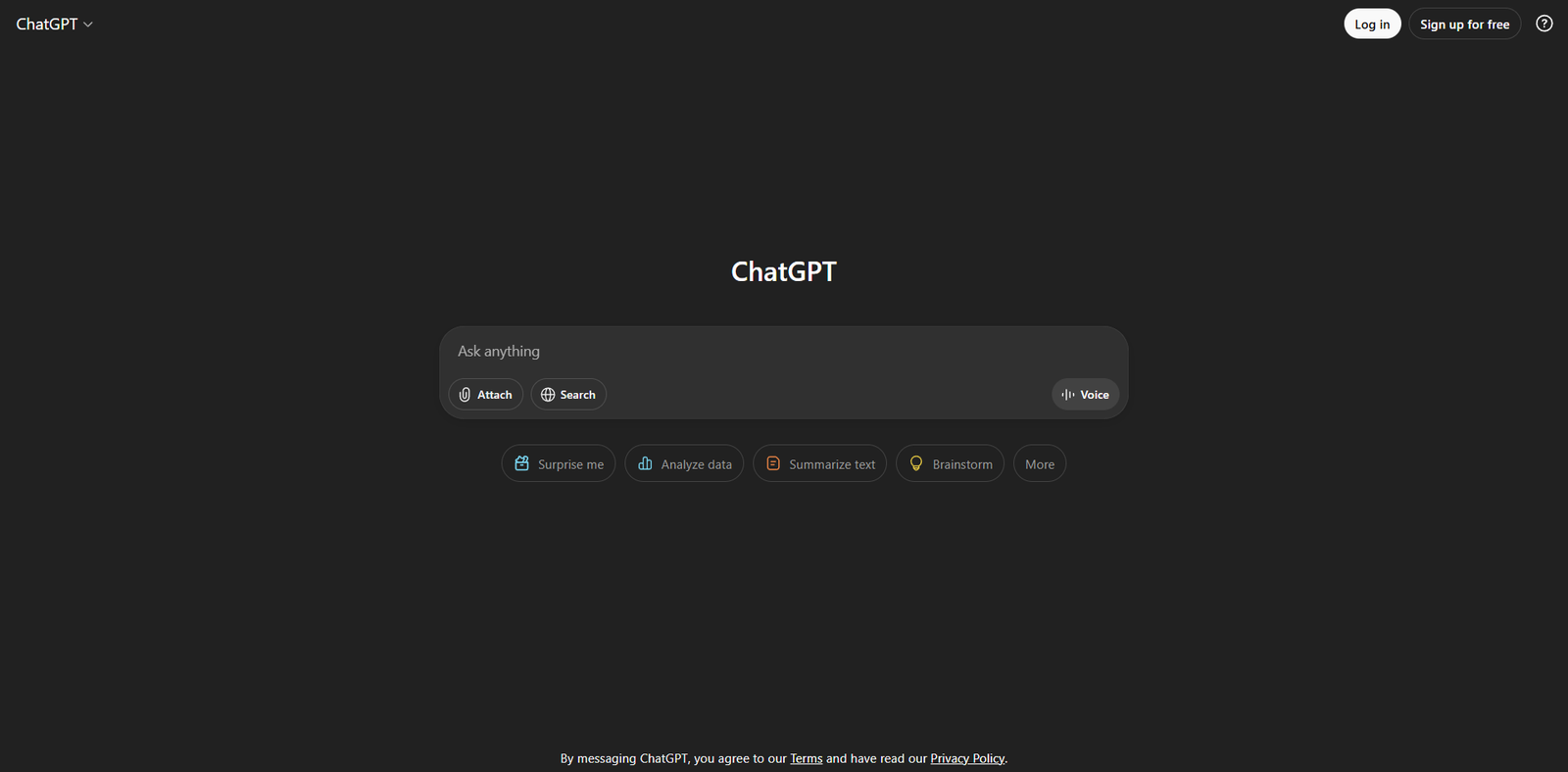


Artificial Intelligence has rapidly evolved from futuristic fiction into a daily reality. One name stands out at the center of this transformation — ChatGPT. Built by OpenAI, ChatGPT has become one of the most powerful and widely used conversational AI tools in the world.
It can write articles, answer questions, create code, analyze data, and even simulate human conversation. But beyond the buzz, ChatGPT represents something much bigger — the future of how people interact with technology.
What Is ChatGPT?
ChatGPT is a conversational AI model developed by OpenAI, designed to understand and generate human-like text based on the prompts it receives. It’s part of the GPT (Generative Pre-trained Transformer) family — advanced AI models trained on vast amounts of text data to understand patterns, language, and meaning.
In simple terms, ChatGPT is an AI that can “chat” intelligently. You can ask it questions, give it tasks, or request explanations — and it responds in natural, human-like language.
Its latest generation, GPT-5, brings even more improvements in accuracy, reasoning, and multimodal abilities, allowing it to process not only text but also images and data.
How ChatGPT Works
At its core, ChatGPT uses a type of machine learning called a transformer neural network. This architecture enables it to predict the next word in a sequence of text based on the context of the words before it.
Here’s a simplified breakdown of how it works:
- Training on Massive Data
ChatGPT is trained on billions of words from books, articles, websites, and code samples. This helps it learn grammar, logic, tone, and real-world information. - Understanding Context
Unlike basic chatbots, ChatGPT doesn’t rely on fixed answers. It analyzes your entire prompt, understands the intent behind it, and generates contextually relevant responses. - Generating Responses
Using probabilities, ChatGPT predicts the most likely words to come next — crafting coherent and meaningful sentences in real time. - Continuous Improvement
Each version (GPT-3, GPT-4, GPT-5) improves through reinforcement learning, feedback loops, and additional training data to make interactions more natural and reliable.
Key Features of ChatGPT
- Human-Like Conversation – ChatGPT can engage in realistic dialogue that mimics natural human communication.
- Multi-Domain Knowledge – It’s trained on a wide range of topics — from science and history to business, health, and technology.
- Content Creation – Generates blogs, scripts, emails, and marketing copy quickly and efficiently.
- Coding and Debugging – Helps developers write, fix, or optimize code in multiple programming languages.
- Multilingual Support – Understands and communicates in dozens of languages, bridging global communication barriers.
- Customization and Fine-Tuning – Businesses can train custom versions of ChatGPT for specific workflows or company data.
Real-World Uses of ChatGPT
ChatGPT’s versatility has made it a go-to tool for millions of professionals, students, and organizations.
1. Education and Learning
Students and teachers use ChatGPT to simplify complex subjects, generate study notes, and prepare assignments. It acts like a virtual tutor that’s available 24/7.
2. Business and Marketing
Companies use ChatGPT to write ad copy, social posts, blog articles, product descriptions, and customer emails — saving hours of manual work.
3. Customer Support
With ChatGPT integrated into chat systems, businesses can provide instant responses to customer queries, reducing wait times and improving satisfaction.
4. Software Development
Developers use ChatGPT as a coding assistant. It can generate snippets, explain bugs, or refactor existing code — all within seconds.
5. Research and Analysis
Professionals rely on ChatGPT to summarize articles, analyze trends, and generate insights, making it a valuable tool for data-driven decision-making.
6. Creative Projects
Writers, musicians, and artists use ChatGPT to brainstorm ideas, draft scripts, and even co-create storylines, poetry, or lyrics.
Benefits of Using ChatGPT
- Time Efficiency – What normally takes hours can be done in minutes with ChatGPT’s instant generation.
- Accessibility – It’s available 24/7, providing on-demand support for work, study, or creativity.
- Cost-Effective – Reduces the need for multiple software tools or outsourcing routine tasks.
- Personalization – Adapts its tone, writing style, and complexity level to fit your needs.
- Scalability – Ideal for teams and enterprises handling large volumes of content or data.
- Learning Companion – Helps users explore new topics, practice languages, or develop professional skills interactively.
Limitations and Considerations
Despite its power, ChatGPT isn’t perfect. Understanding its limits helps users apply it responsibly.
- Information Accuracy: ChatGPT can occasionally produce outdated or incorrect information. It’s best to verify facts independently.
- Dependence on Prompts: The quality of the response depends heavily on how you phrase your question or instruction.
- Lack of Emotions or True Understanding: ChatGPT doesn’t “think” or “feel”; it predicts patterns in text rather than forming opinions.
- Privacy and Data Concerns: Always avoid sharing sensitive or confidential information when using public versions.
- Ethical Use: Using AI responsibly means avoiding plagiarism, misinformation, or misuse of generated content.
ChatGPT’s Impact on the Future
ChatGPT has sparked a massive shift in how people approach work, education, and creativity. It has also accelerated the development of countless AI-driven tools and industries.
Some of its major long-term impacts include:
- Revolutionizing Workflows: Many professionals now rely on ChatGPT as a productivity partner, not just a tool.
- Bridging Language Barriers: Its multilingual ability enables cross-cultural communication and collaboration globally.
- Driving Innovation: Businesses are embedding ChatGPT’s API into software, websites, and apps to build smarter systems.
- Transforming Education: It’s helping educators modernize teaching methods and students learn interactively.
In essence, ChatGPT isn’t just another chatbot — it’s a foundation for the next wave of human-AI collaboration.
Best Practices for Using ChatGPT
- Be Clear and Specific – The more precise your prompt, the better the output.
- Use Step-by-Step Prompts – Break down complex requests into smaller parts for accurate results.
- Verify Information – Always double-check facts, data, or statistics before publishing or sharing.
- Refine and Iterate – If the first response isn’t perfect, adjust the prompt and try again.
- Use Ethically – Apply generated content responsibly to maintain authenticity and integrity.
Conclusion
ChatGPT represents a new era of human-computer interaction — one that blends intelligence, creativity, and accessibility. It has already transformed industries from education to marketing and continues to shape the way people work and think.
While it isn’t flawless, its potential is undeniable. As AI continues to evolve, ChatGPT will remain a cornerstone of innovation — empowering individuals and organizations to create more, learn faster, and communicate smarter.
In short, ChatGPT is not just an AI chatbot; it’s the beginning of a smarter, more connected future.