
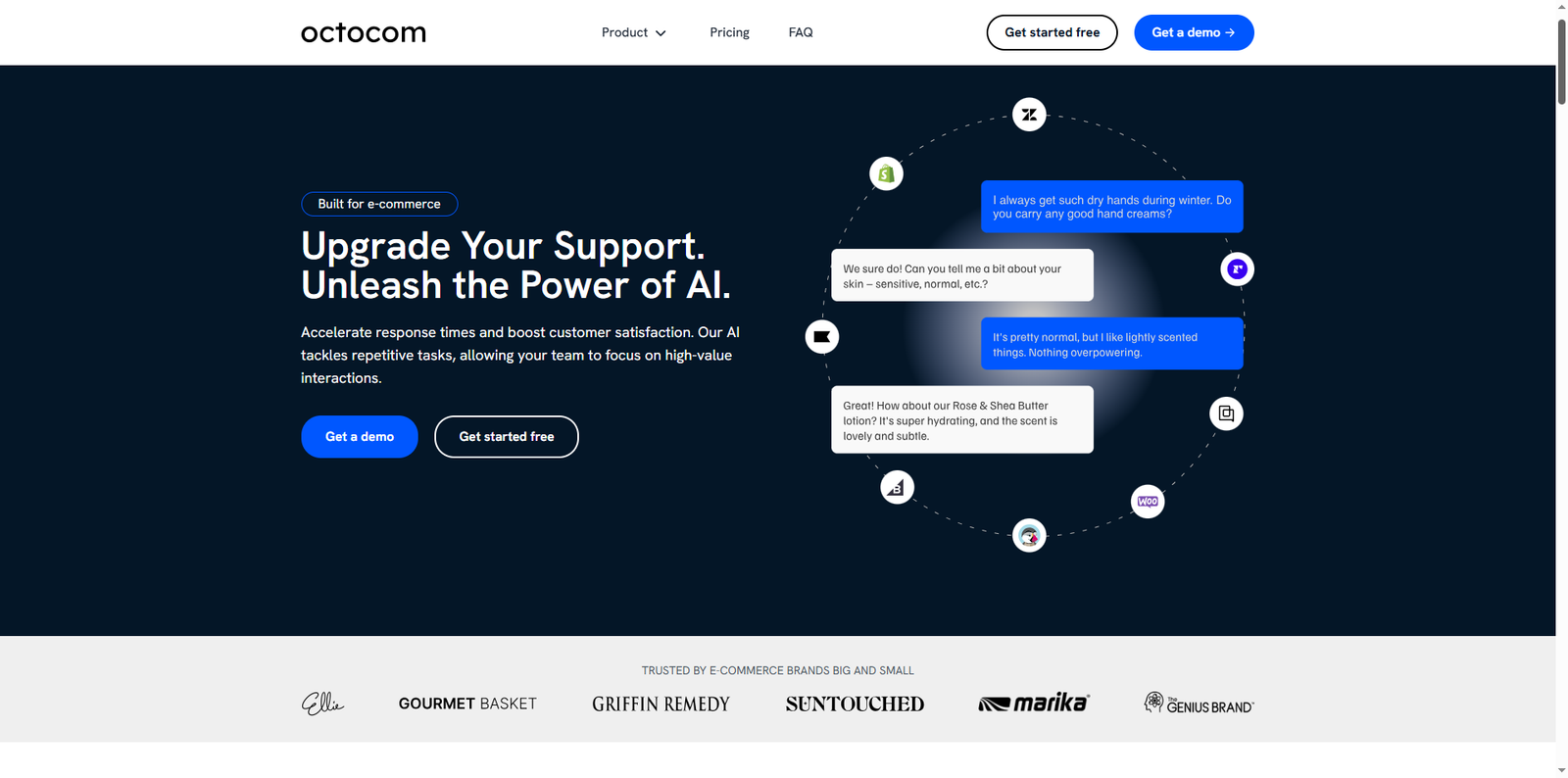


Octocom AI emerges as a pioneering platform in the realm of artificial intelligence, specifically tailored for e-commerce businesses. Launched to address the growing demands of customer service in online retail, it automates up to 90% of support inquiries, allowing teams to concentrate on intricate matters. By integrating seamlessly with major help desks like Gorgias and Zendesk, the tool ensures that support operations remain within familiar workflows while infusing advanced AI capabilities. This AI-first approach not only accelerates response times but also personalizes interactions, mimicking the expertise of top human agents. As e-commerce continues to expand globally, tools like Octocom become indispensable for maintaining competitive edges through efficiency and customer loyalty.
Core Functionalities and Key Benefits
At its foundation, Octocom AI excels in handling both pre-sale and post-sale queries. It provides instant answers to product-related questions, manages order tracking, and facilitates returns and refunds with automated processes. The platform’s omnichannel support spans email, Instagram, Messenger, WhatsApp, SMS, and website chatbots, ensuring consistent experiences across touchpoints. Businesses can customize the AI to reflect their brand’s voice, tone, and style, fostering authentic conversations that build trust. Additionally, it offers smart product recommendations and comparisons, guiding customers toward informed purchases and reducing cart abandonment rates. Upselling features trigger personalized suggestions based on user actions, such as cart additions or order completions, which can elevate average order values by up to 20%.
The tool’s analytics dashboard delivers actionable insights, tracking metrics like sentiment, conversion rates, and resolution times. This data helps identify trends and optimize store performance. Multilingual capabilities support over 100 languages, enabling global outreach without additional staffing. Case studies, such as with Tolink, demonstrate tangible impacts: automating 87% of inquiries, saving 570 hours monthly, and boosting conversions by 32%. These functionalities collectively reduce operational costs while enhancing customer satisfaction scores.
Importance in the E-commerce Landscape
In an era where customer expectations for rapid, personalized service are at an all-time high, Octocom AI addresses critical pain points. Traditional support teams often struggle with repetitive tasks, leading to burnout and delays. By automating routine interactions, the platform frees human agents for high-value engagements, improving overall efficiency. Its integration with e-commerce platforms like Shopify, WooCommerce, and Magento ensures real-time synchronization of product catalogs, discounts, and orders. This connectivity prevents outdated information from hindering sales.
For small to medium enterprises, the tool levels the playing field against larger competitors by providing 24/7 availability. It proactively resolves issues like late deliveries or complaints, turning potential negatives into positive experiences. Moreover, AI-driven upselling and cross-selling strategies drive revenue growth, with features like smart bundling based on purchase history. In healthcare-adjacent e-commerce or fashion, where product inquiries are complex, the AI’s empathetic, precise responses mimic in-store consultations, fostering loyalty and repeat business.
Security and compliance are paramount, with encrypted data handling and seamless handoffs to humans for sensitive cases. As per user feedback on G2, the platform’s reliability scores highly, at 9.7 for data security, making it suitable for businesses managing sensitive information. Overall, Octocom contributes to broader industry shifts toward AI adoption, where statistics indicate that 11-30% of support volume is resolved via such technologies, saving significant resources.
Recent Updates and Innovations in 2025
Entering 2025, Octocom AI has focused on enhancing its offerings amid rapid AI advancements. A notable update includes expanded web scraping for real-time data pulls, improving dynamic responses. In June, multilingual support was refined for better accuracy in nuanced languages, aiding international expansion. July saw improvements to the prompt editor for finer control over chatbot behaviors, allowing more precise brand alignments.
August introduced early access to AI vision features, enabling visual analysis in customer queries, such as product identification from images. The company also hit $1.3 million in revenue with a lean 12-person team, signaling strong market traction and investment in scalability. Community feedback on platforms like G2 highlights quick iterations, with users anticipating integrations like website search functionality soon. These enhancements underscore Octocom’s agility, responding to user needs for more sophisticated automation.
Challenges and Future Outlook
Despite its strengths, Octocom faces hurdles common to AI tools. Initial setup can be time-intensive for advanced customizations, requiring IT involvement. Some users note a learning curve for complex features, though the intuitive interface mitigates this. Dependency on third-party APIs, like GPT-4, may introduce variable costs during peak usage.
Looking ahead, the platform’s future appears promising with potential voice integration and deeper CRM ties. As e-commerce traffic surges, with chatbots handling increasing volumes, Octocom positions itself as a leader in sustainable growth. Its focus on ethical AI, including bias reduction and privacy, aligns with evolving regulations.
Conclusion
Octocom AI represents a transformative force in e-commerce customer support, blending automation with personalization to drive efficiency and revenue. Through its robust integrations, analytics, and continuous innovations, it empowers businesses to thrive in a digital-first world. As adoption grows, its role in reshaping customer experiences will only amplify, making it a strategic asset for forward-thinking retailers.