
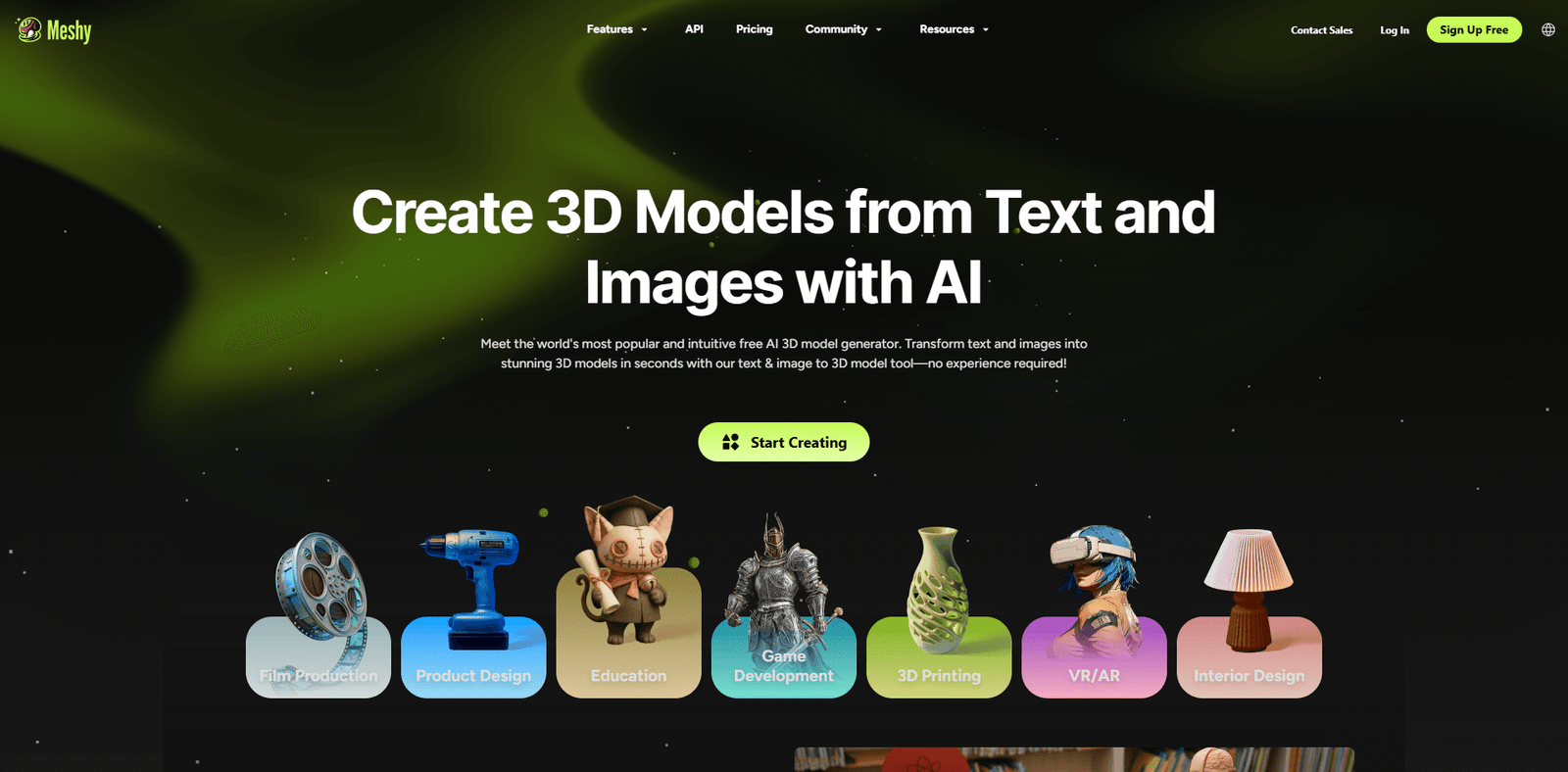



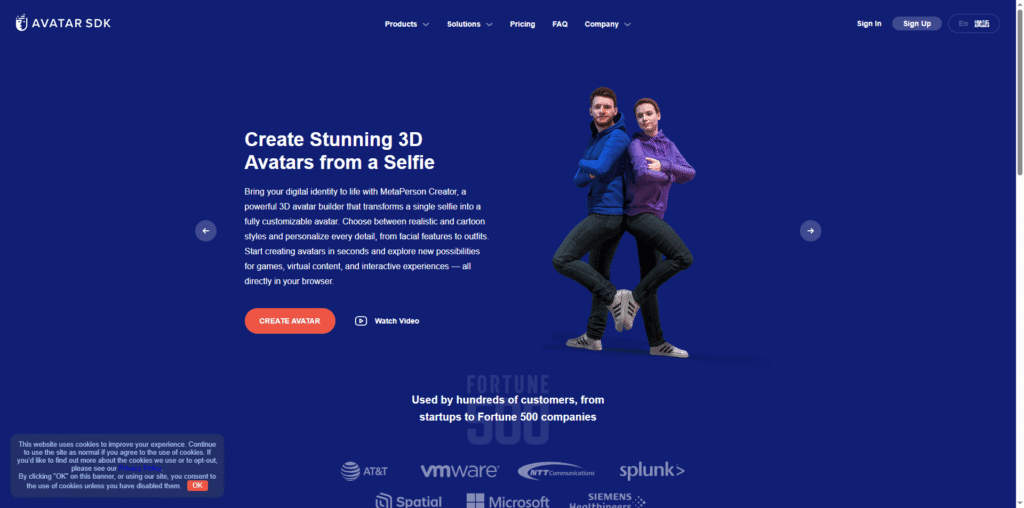
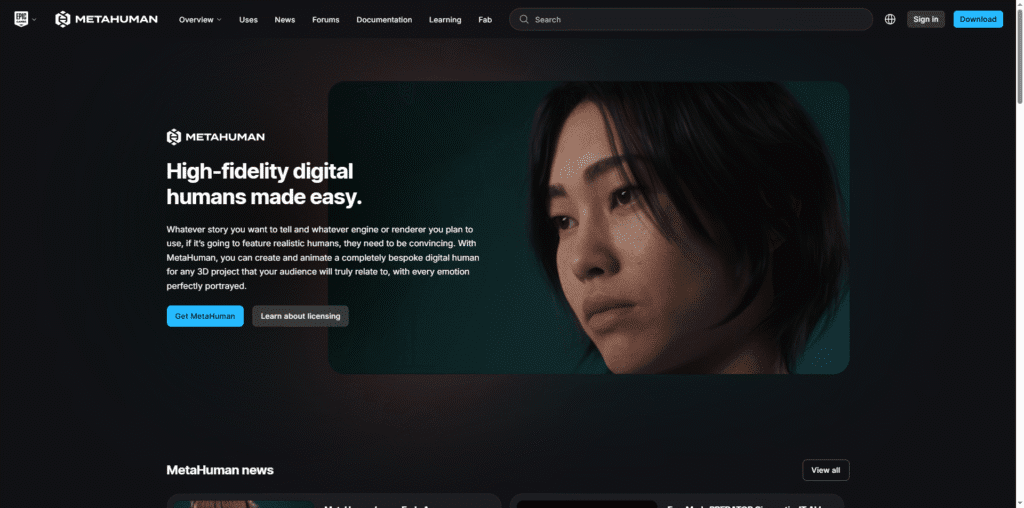
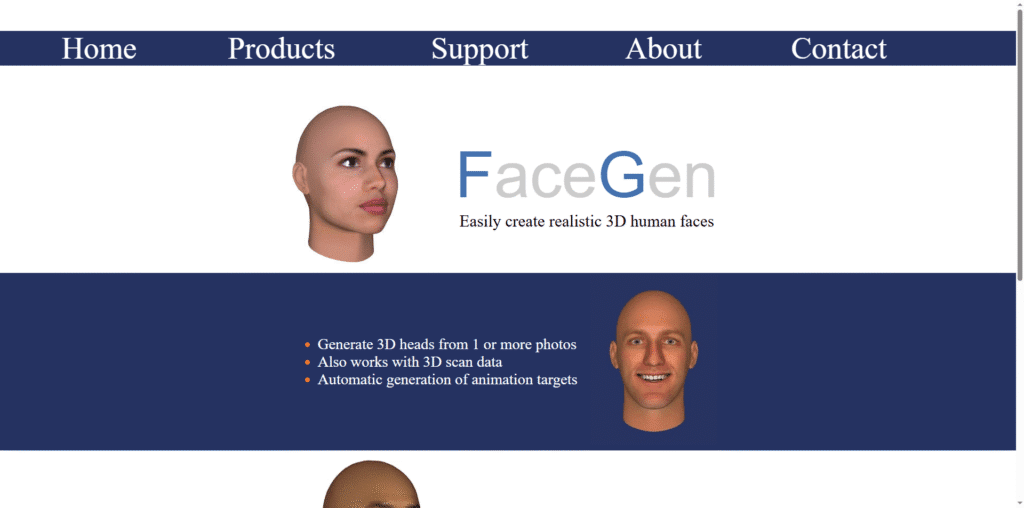
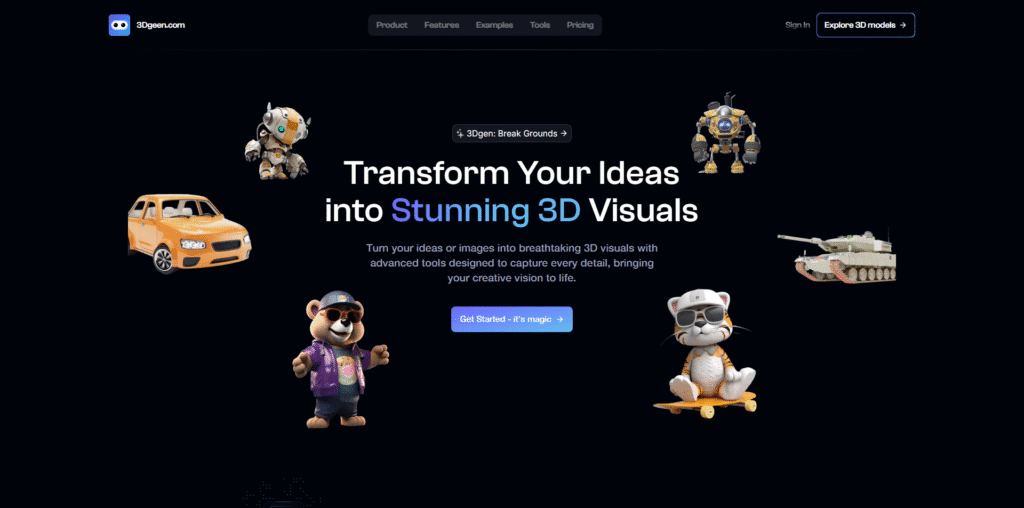

Meshy.ai is a generative AI platform focused on transforming images and text into 3D models and related assets. It aims to democratize 3D creation, making it accessible without specialist skills or programs. Users from fields like game development, product design, education, VR/AR, and 3D printing can leverage Meshy to accelerate their workflows, produce high-quality assets, and reduce costs.
Core Capabilities
- Image to 3D Model & Text to 3D Model
Meshy allows users to input a 2D image, sketch, or illustration and convert it into a 3D model. It also supports creating 3D models from simple text prompts. These models can be refined, textured, rigged, and animated, depending on what the user needs. - AI Texturing & Smart Remeshing
Users can upload existing 3D models and apply textures via text prompts or reference images. The tool supports altering topology (smart remeshing), adjusting polygon/quadrilateral counts, and optimizing models for performance vs. detail trade-offs. - Animation & Rigging
Meshy enables automatic rigging and includes a library of animations (walks, jumps, poses etc.), useful for game or film production pipelines. This feature helps users animate characters or props without manually building rigs from scratch. - Plugins & API
To integrate into existing 3D pipelines, Meshy provides native plugins for tools like Blender, Unity, Unreal, Godot, Maya, etc. Additionally, it offers an API so that developers can embed Meshy’s generation and asset-management capabilities into their own applications or workflows. - Enterprise & Production Readiness
For teams working at scale, Meshy includes features such as multi-team workspace management, centralized billing, enterprise-grade security (e.g. ISO 27001 compliance), data privacy, and dedicated support. Asset retention (keeping created models), flexible export formats, and realistic PBR texturing support are part of its production offerings.
Use Cases & Industries
Meshy finds users in product design (rapid prototyping), game development (creating characters, props, environments), VR/AR (low-poly optimized assets), interior design (furnishing, mood-board to assets), and educational settings (3D printing classes, student projects). It’s also useful in animation or film pre-visualization, where speed and iteration are key.
Advantages
- Speeds up 3D asset creation dramatically—what might take hours or days via manual modeling can be done in minutes.
- Allows those without advanced modeling skills to produce usable 3D models with rigging, texturing, animation.
- Wide range of export-ready formats and performance vs. detail controls.
- Strong pipeline integrations with commonly used 3D software.
- Enterprise features like team workspaces, central billing, security, and asset retention.
Limitations
- Since it’s generative, results may require cleanup or manual refinement for high-precision requirements.
- Text prompt → model conversion can depend heavily on how well the prompt is written.
- Performance (detail, mesh count) may trade off with speed or complexity.
- Some features (like enterprise or large volume assets) may only be in paid tiers; pricing info is not fully transparent.
Final Thoughts
Meshy.ai stands out as a powerful tool for creatives who need fast and flexible 3D asset generation without deep technical skills. For designers, educators, game developers, and small studios, it opens up new possibilities for prototyping, visualization, and production. It’s likely to be especially impactful for those who iterate fast and need a wide variety of assets. As generative AI for 3D continues to improve, Meshy is positioned well to be part of that future.